Showing posts with label Christianity. Show all posts

Monday, July 1, 2013

Saints who once were crooks, criminals and bad people in general

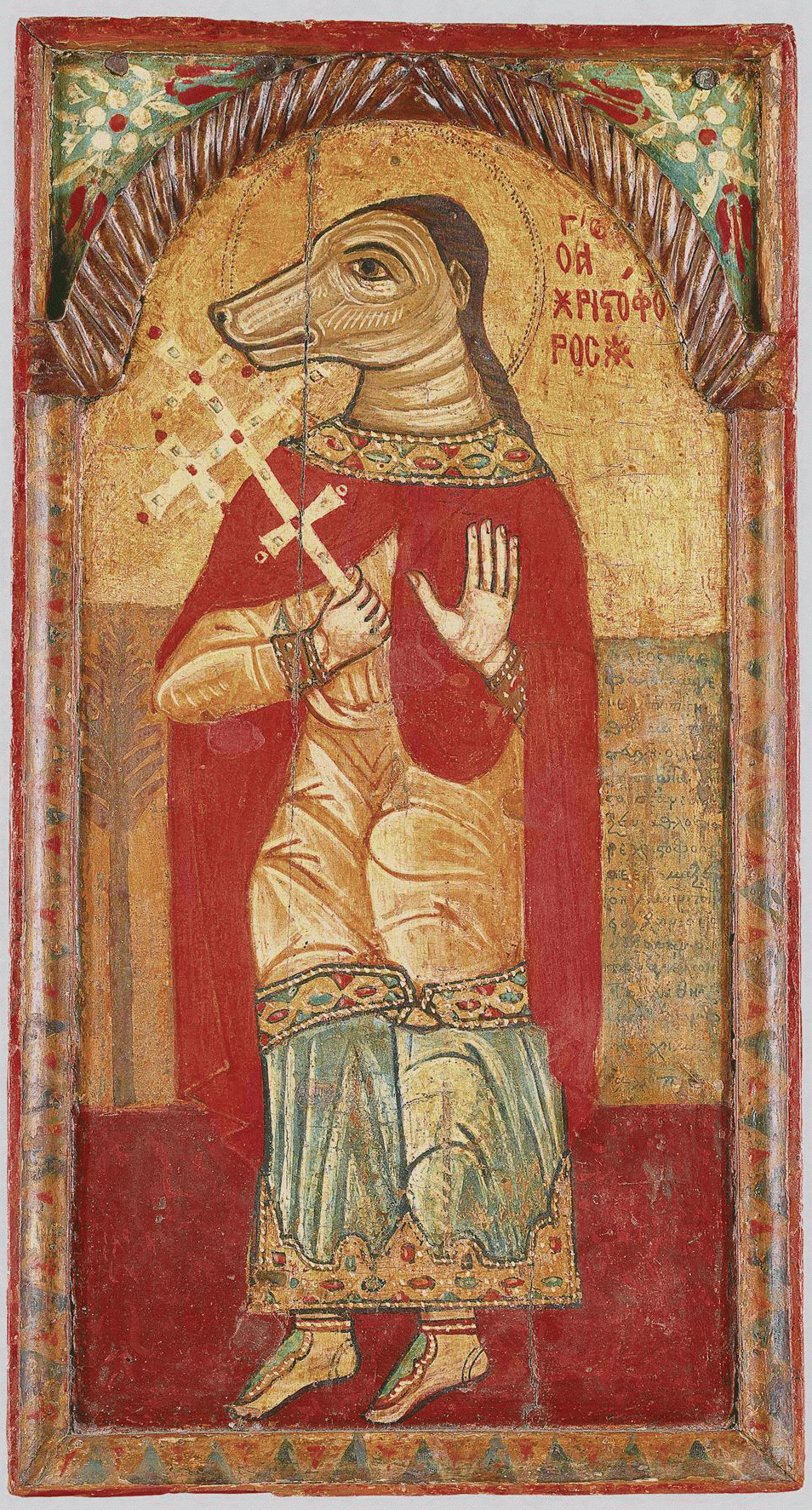
St Christopher, dog-headed saint,  icon
This entry will be not a light read partially, for it is about bad people who changed their ways and became saints, were reformed individuals.

 I was writing about Mary Magdalene and I see from my statistics that entries about her are quite popular. She was also an extremely popular saint, also in Catholicism which described her as a reformed prostitute for over a millennium.There is a disbelief, in general, regarding her alleged former profession and her super star status. It seems that branding someone as a prostitute would be a social death, and it was, normally. And here the logic of old days and logic of today clash: we talk today about erasing Mary Magdalene through smear campaign, all very upsetting. Logical point, not much to dispute from today's view point. After all we live in a society  in which  we can for example discredit a politician for marital infidelity. But she was a saint and she was worshiped by a society different than ours. She wasn't an average person: she was a saint.

We can't always apply our today logic to societies of days gone. Mary Magdalene was described as a  former prostitute, but also was called no less than Apostle to the Apostles. She was also the second most depicted saint: Virgin Mary was first. I know that modern day people struggle deeply with this paradox. Which is logical, of course. But keep in mind that societies of old were in some regards very, very different than ours, their beliefs, social mores, social system, in general their culture was different.

This maybe come as a surprise, but Mary Magdalene was not the only saint who "was a great sinner," as those saints were described relating to the phases in their lives before changing their ways. In her alleged status as a former sinner she wasn't even the worst one. There is over thirty saints who were very ungodly before they changed and after some time achieved saintly characters. (There were saints who had human lives on their conscience, for example). Hard to grasp? Maybe. If we don't know the cultural attitude toward transformation in earlier days, yes, those issues become incompatible, and it is surely  understandable that they are incompatible.

 Yet people during Medieval times,  Renaissance, and Baroque had different views. Actually as late as until Victorian times people were not shy about retelling the sins of the saints. Not at all. They told that St Olga had lots of blood on her hands, as she decided that revenge against murderers of her husband should be bloody and no ones life should be spared. St Paul, the one who authored parts of New Testament was forgiven prosecutor of Christians.  St Mary the Egyptian was a street prostitute. Margaret of Cortona was a sex addict. The first saint of all was the Good Thief:  he was one of the two criminals crucified with Jesus. St. Callixtus of Rome was convicted twice for felony, in addition embezzlement wasn't something he shied away from. St Moses the Egyptian was  boss of a violent gang, those men were killing people. St Camillus de Lellis was a con man, a mercenary, and card player for profit.And so on,this  list is not complete, and I don't see the reason to make it complete in this blog. You see the point anyway.

St Mary of Egypt, Russian icon, XVII c.
But Christianity isn't the only religion which has converted criminals as saints: Tibetan Buddhism has one such a person: Milarepa. He killed 35 people before he repented and became an example of goodness. Role of religious changes which emerged during  Axial Age was to tranform human ethics deeply on individual level.

So, not every saint was a paragon of virtue from early on. Some were examples of evil who later changed in the process of true alchemy of the soul. One of the last examples, from XX c. is a man who killed a policeman, and was the last person guillotined for his crime in France. He experienced conversion in prison and become unusually good and a shining example to others, his name was   Jaques Fesch. And here is the controversy for and against Jaques Fesch's case for sainthood as seen by the Catholics themselves.

Oscar Wild once said: "Evey saint has a past, every sinner has a future." For sure not every saint had "a past"  in sense of bad past, as there were some individuals who very immaculate from the beginning. But for sure path to sainthood wasn't excluding anyone. Mary Magdalene in her alleged profession was not paragon of virtue, but she was quite innocent in comparison to the others. So was another beloved saint,  Francis of Assisi, who according to  hagiography  was a bad boy who matured gradually to sainthood.Early on he wasn't a pacifist as he lived as a soldier, lead decadent life of revelry financed by his wealthy father. It was later when he changed his ways, and also married  "Lady Poverty." Word marriage symbolized his commitment to life in poverty.

Dog-Headed Cannibals, woodcut from Cartha Marina,  1530
What about the icon above, the saint with the head of a dog, adorning this post in a way so strange for us, the modern people? It is St Christopher, who was believed to belong to a cruel kind of people who were born with dog heads, and were extremely violent. In fact cannibals were depicted as dog-headed. Cane was Latin name for dog. St Christopher was such terrible man who after he met Jesus became a very good person, and one day he became saintly.

 Sainthood was and still is considered to be the life as most human and humane as it possibly can be. It was believed that every person without exception can become a saint, and the true miracles of transformation of a soul are possible. Miracle of changing water into wine was a miracle of transformation, and such transformation was considered possible for human soul with divine intervention and openness combined with willingness from the side of the sinner.

Today those things may appear difficult to grasp, but were quite simple for people of earlier days:  those saints were illustrations of great workings of divine grace. They were miracles in action and  embodiments of  hope given to every person, however imperfect a human being was, for sure there was hope. The hope was the promise that perfect transformation was possible because perfect forgiveness was possible, that God's love was all inclusive. If one abandoned for good the path of evil, the person could even become sanctified if the transformation was complete. The person was forgiven, and you didn't question divine forgiveness. To do so it would be to dwell on peoples' sins who were forgiven already, washed totally clean, no-existing. People went to confession and believed that their sins were forgiven also, that they were cleansed also.Accepting that this happened to others as well wasn't a big deal for them.It was the world in which confession and repentance was a sacrament of reconciliation, of giving freedom from sin.

Forgiveness as a concept and mystical experience is very prominent in Christianity. It makes transformation possible. Transformation into what? Into purity, life in sanctified grace.Mary Magdalene was considered completely transformed, and as someone who was pure she was also depicted as ascending to heaven. Those things need to be understood in relation to saints, specially those of them who had difficult past, who were not from the beginning like Mother Theresa. They had bad past but grew so far beyond it,that  they were not soiled by it anymore. Bad past was the memory of a  battle won, not something which was supposed to be held against them, as it showed the severe spiritual obstacles they overcame. You couldn't slander a saint, as the sins forgiven were considered erased forever, sins of any person, and not an object of discussion or doubt after they were removed.

 Holding their past against them would be like not accepting God's verdict of forgiveness, to be unforgiving against God's will, and people were warned that those who are unforgiving can't expect much forgiveness themselves. It was much deeper matter than we think about it today from our perspective, "oh, this saint had bad past, therefore was discredited." They couldn't be discredited, as their sins were considered forgiven, what was forgiven wasn't existing anymore.
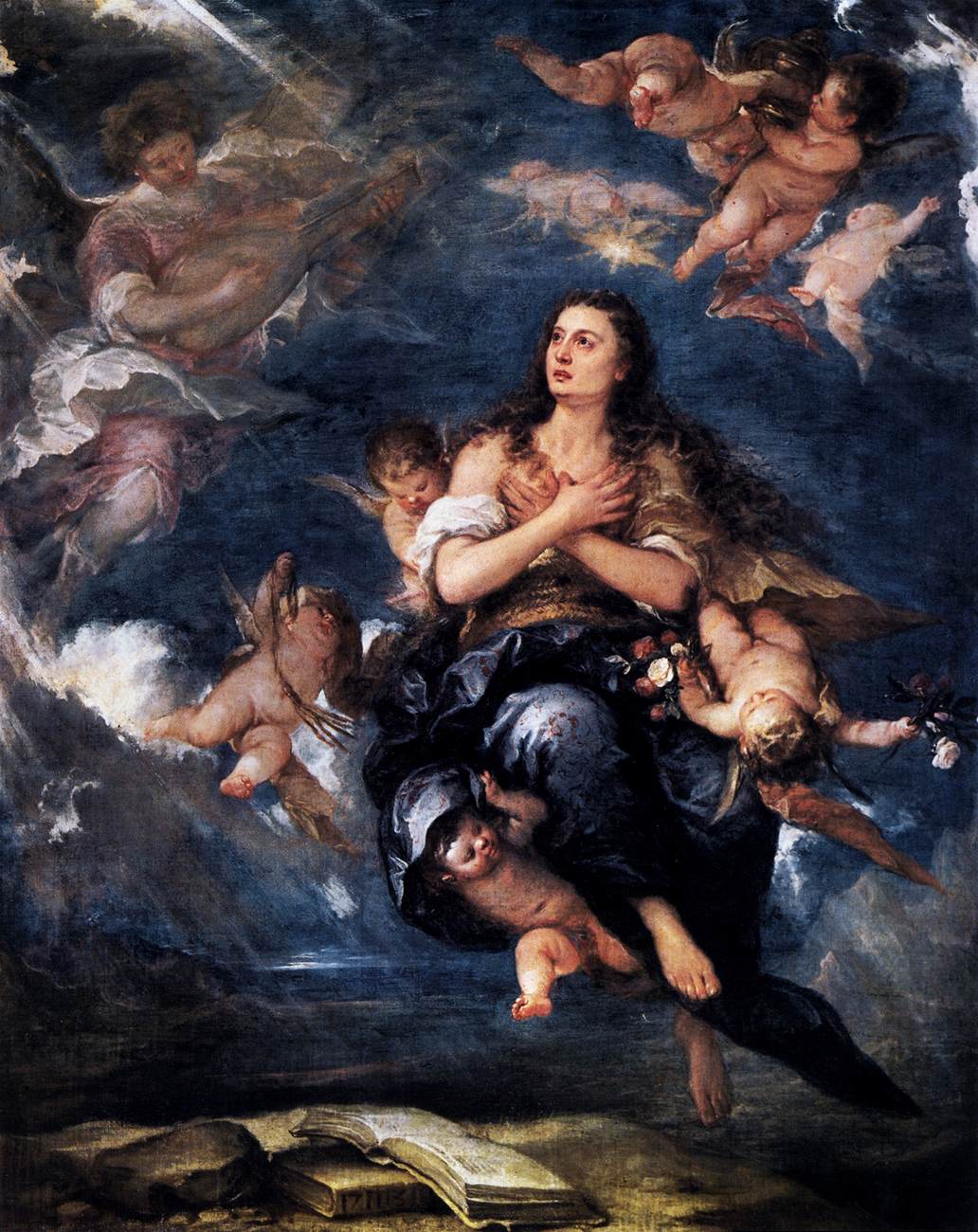
Assumption of Mary Magdalene by Jose Claudio Vicente Antolinez, XVII c.
Mary Magdalene has black hair here, not red. This is Spanish painting. Spanish artists depicted her with black hair, not as  a redhead.

As you see Mary Magdalene wasn't the only saint in Catholicism who had bad past, and who was sanctified in spite of it. Yes, early Christianity tried to figure out what to do with women, if they were allowed to be for example priests or not, etc. Misogyny was there. According to comparative religion scholar Karen Armstrong as long as Christianity was a secret and forbidden religion, when Christians met in catacombs or private homes, women were prominent. When Christianity became state religion, power was regarded as right  of men. And I say, no wonder, Mediterranean cultures were very misogynistic those days. People are very surprised when they read for example about position of women in Greece of Antiquity. And gender was not considered polarized, as we believe today. It was a different, kind of evolutionary concept which dealt with the belief what every thing was developing in nature. In this system which was linear and not polarized as today, man was the highest sentient being in the  hierarchy of life, woman was below him.She was the link between humans and animals. Yes, it was "really so bad." Religions as systems often adopt a lot of surrounding culture. Early Christianity maybe was socially very different at the beginning, but than normative  cultural prescriptions started to settle in. And for that no conspiracy was needed. People are not only products of their religions, but also of their cultures, and their times.




Sunday, June 30, 2013

Forgoten Patron-Abbot Suger

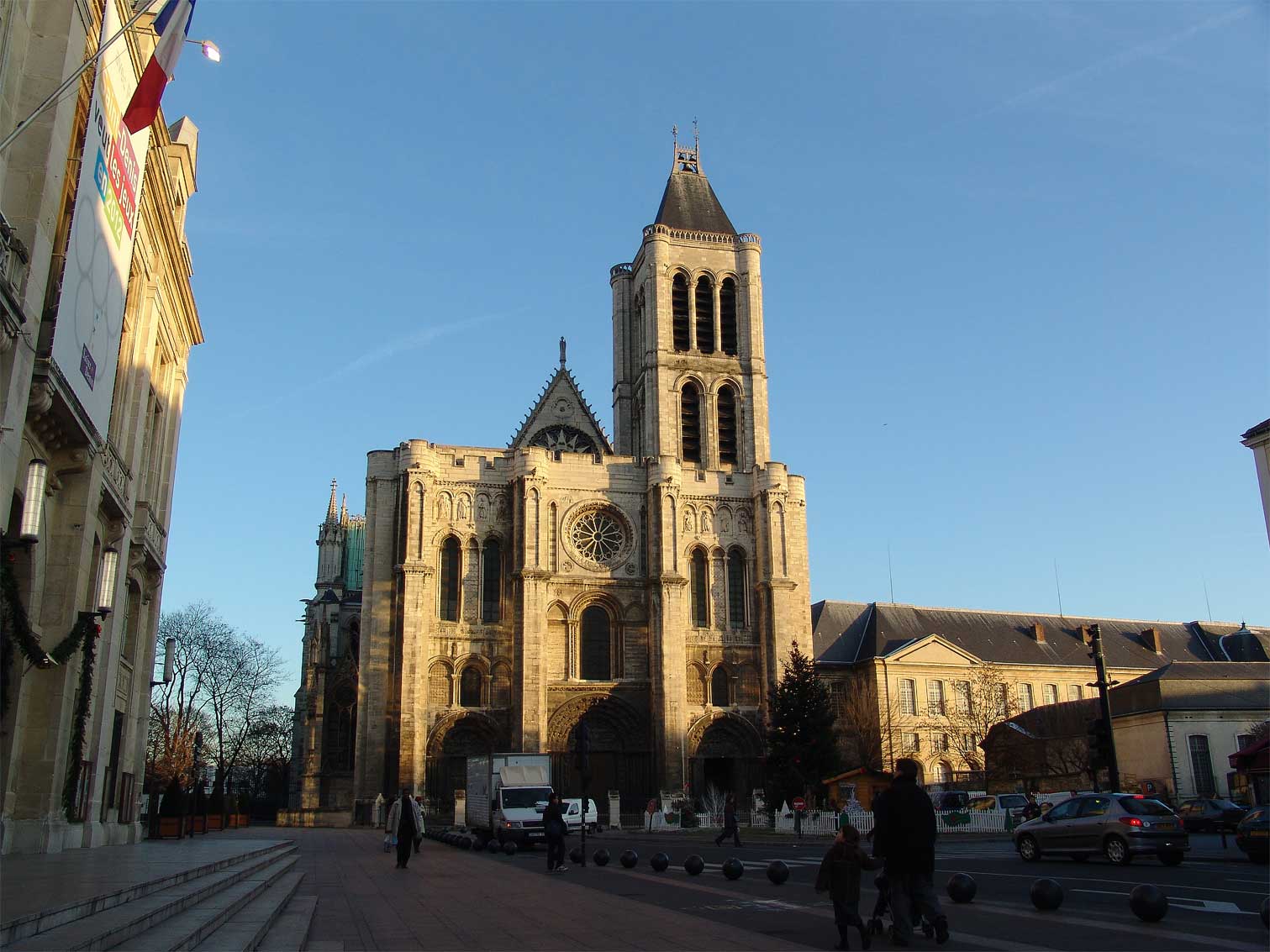
If you are interested in art history, specially if you are interested in Medieval art, sooner or later you will run in your conversation, or books people recommend to you, into stories about Templars, how they introduced and built Gothic cathedrals, and so on. One name is never mentioned in such conversations,  or books: Abbot Suger's. It seems he disappeared from popular culture as contributor to Gothic art, or maybe he was never accepted. Pity, as he did as much for the development of Gothic architecture as the Medici's family did for the Renaissance. Of course, he is known to people who are serious about art history, but doesn't he deserve his place in the pantheon of movers and shakers and patrons who fueled new forms?

Chapel of the Virgin, St Denis basilica, via wiki commons by Myrabella
Abbot Suger was a man of many talents: he was a politician, statesman who served as regent of France when king was on crusade, he was a historian, art theorist, theologian and of course manager of a big and influential Abbey of Saint Denis. Not to idealise him: as many people of his times, he was sometimes opposing crusades, but sometimes he was in favor of them. Basilica of St Denis on wikipedia article

He was friend and confidant of the kings, and patron of artists and builders who had new ideas but were not given proper chance to bloom.

Sometimes, however, another situation happens: Abbot Suger is talked about as a single inventor of a Gothic style. This is not completely true: he wrote about aesthetics, wanted the walls to be higher, lighter, windows big and colorful, designed himself, introduced new features, loved things ornate and precious. But he collaborated with people who wanted to do things in a different way.Redesigning of St Denis wasn't his and only his project. He was very engaged, but didn't handle projects and firmly said: "build exactly what I drew." He was giving ideas, he accepted ideas, he was the project manager. Through him was possible to introduce large windows with pointed arches, ribbed vaults, clusters of columns, flying buttress, ambulatory with chapels radiating form it, and lots of light.

As you see on the picture above some features are still Carolingian, like for example columns, they still look like those from Antiquity. But arches are pointed already, vault is more complex, and windows are big.

Gothic style was a natural development of Romanesque style: what happens the newer style tended to make the building more spread in smaller part, branching out, more differentiated in forms, less compact, in comparison to the solid mass of Romanesque churches. The style was adopted fast, specially in royal domain of Ille de France, but still a lot of experimentation was going on. It happened that not all architectural ideas worked perfectly, talking about Europe now in general, not only France. There were instances when parts of cathedrals collapsed, or bad accidents happened. But with time building science was catching up with new aesthetics of creating higher and higher churches with bigger and bigger windows.

Rosette window in St Denis, North side,via wiki commons by Amirwiki
About Zodiac, see my blog entry about Charters and Zodiac
A lot of enthusiasm was involved in such projects, specially in France. France was the cradle of Gothic style and from here the style radiated to other countries. More stones were moved in France during the era of building Gothic cathedrals than in old Egypt in construction of pyramids, and cathedral builders were properly compensated. People who helped were volunteers, no slave work involved.

Volunteers were amazing enthusiasts.They were religious, of course, those people were products of their times like we often are products of our times. Haimon, abbot of Saint Pierre sur Dives wrote in his letter from 1145 about the wave of building enthusiasm among people in France. He wrote about building of Chartres cathedral. According to him even princes and nobility together with those of humble origin were pulling carts full of olive, wood, crops, stones, and anything which was needed for fulfilling the needs of the people working on the construction, or for the building of the church. Often a thousand or more people were pulling a cart full of stones, in great silence, in spirit of forgiveness of each other imperfections and in spirit of universal brotherhood and sisterhood. If you could hear anything at all , those were only prayers, or confessions of wrong doings and words of forgiveness among them. It was like a contemplative movement of peace among people for whom at such times differences among humans were not important, they worked in the spirit of brotherly and sisterly love. So wrote Haimon.

 Suger's ideas of the new style spread fast, but it doesn't mean that they were widely accepted without criticism: some churchmen said that ornate and rich style shouldn't be part of church buildings, church interiors, or church services. Cystersians were proponents of such ideas of humbleness and actually during Medieval times there was ongoing controversy about humbleness versus showing things divine through color, gold, light   and all things which could inspire awe. A little about Cystersian aesthetics in my other entry. I am not saying one approach was better than the other,but  they were competing.

 Abbot Suger not only broke frames of Carolingian building, (the abbey was built in this style) when he commissioned the rebuilding, but also asserted that awe is important part of religious experience.

Cystersian were more for soft quiet focus and contemplation, were against appeal to senses in churches. Colors, sumptuous decorations, music, incense, this was not important, they viewed it as distracting form the experience of closeness to God. Suger said the divine manifests in beauty, light an d color. He wasn't alone: this idea was well and alive because of monastery in Cluny. Founder of the Cystersian order, St. Bernard of Clairveaux simply opposed Cluniac theories. But Suger was on the side of Cluny: to him the stained glass windows were like a vision,  gold reminded of divine wisdom, soaring heights of church ceilings were leading thoughts to heaven. For sure churches were sanctuaries of beauty and space in European, not only French cities, which were dirty, conditions were crowded, as for example width of a room was the width of a bed, etc. But people could just step in a church building  and were transported into another, more beautiful world.

Saturday, September 8, 2012

Green: Paradise and the color symbolism, history of color # 12

Green in Medieval times had rather varied symbolic meaning, depending if was used in the religious or secular context. In religious art it was a symbol of eternal happy existence, Paradise, and soul's hope for eternal bliss. Green robes symbolized eternal happiness through salvation, and often martyrs were dressed in red and green.

 As it was a happy color, specially the emerald was praised as the most beautiful jewel, in which all marvel of nature was incarnated and made imperishable. It was considered also an earthly representation of Paradise, and written about by monks. No wonder: emerald has strong color and is translucent, has light, and light and strong hues very important for the medieval aesthetics.

The painting on the left is by Hieronymus Bosch, who is often labeled as being  Northern Renaissance painter, but there is still so much of medieval elements in his paintings, also in this one. Bosch: a very mysterious painter, and lots was written about his speculated following of heresies. But this painting is quite conventional for Bosch's standards. It is the  left wing of the Last Judgement triptych, in the collection Gemaldesammlung der Akademie der Bildenden Kunste, in Vienna. It shows the fall of angels, and the story of creation of Adam and Eve, temptation and expulsion form Paradise. (Please click on the picture to view it bigger). It is about bliss, heavenly and earthly, and primordial sense of innocence, and about loss all of this. Also we see Jesus in Paradise. Why? Jesus was in medieval mystical writings and systems considered the Second Adam, the one who brings the Paradise back to the fallen human race.

But the hope of salvation was the expectation of something bigger, something which  could not be lost anymore, not a conditional existence in a Paradise in the story depicted in the Bosch's painting. It was about something above also the secular symbolism of green, which was found very limiting and temporary. In the secular world green was standing for Spring, new love, fertility. It was real hope for something beyond all  limitations, it was about the  life eternal, and the color of life was green, archetype of course,  but it got a new dimension: a heavenly one.

 And as such was totally elevated, wasn't anymore about life like in the Nature, where seasons  pass, or impermanent state of natural fertility which was bound with rebirth, suffering, aging and death. This life was about absolute perfection which never faded.

 And the hope, longing  for such existence was made one of the most important Christian virtues, (along with faith and unconditional love), and of course the color of it was green, because already showed symbolically what the all hope was about.

Mosaic of the apse int eh church of St Apolinare in Classe, Ravenna, Italy. Thank you Berthold Werner for releasing this picture into public domain.
 This happy symbolism of green came from the earlier Christian art- early frescoes and mosaics. In this post I follow the line form the youngest to the oldest art. Now a mosaic which is c. 900 years older than Bosch's painting. The picture above shows VI c. mosaic with St Apolinare in Paradise, adoring the cross, sheep around him, a very typical composition. Above, on the wall, Christ is giving his blessing, and we have the repetition of Paradise and the sheep. Click on the picture to see it bigger.

An earlier mosaic, this time from V c, is on the entrance wall of the mausoleum of Galla Palcidia, Also in Ravenna , Italy.

Jesus as the Good Shepherd, mosaic, V c. Galla Placidia Mausoleum, Ravenna, Italy
This type of mosaic is part of the iconographic tradition of  mosaics seen in the one with St Apolinar. The iconography is overlapping. But here we have Christs who is depicted as beardless youth was the typical figure in early Christian art. He is not the Pantacrator Jesus giving blessing, he is tender and pensive, and all sheep are looking is his direction.This was a common way of depicting Jesus: among his sheep, in Paradise, not hanging on the cross. He was shown as such even in earlier art, in a fresco, still in the catacombs, also as a good shepherd. One stream of the symbolism of the color green has a long lineage dating from early Christian art.


Wednesday, September 5, 2012

Paradise on Earth-the legend

Legends were extremely important during the Middle Ages, sure. Some were the source of psychological strength, like the legend of the terrestial paradise, which gave people sense of hope and was interchangeable with the idea of heaven. First during the Renaissance this belief  faded away, but not completely, and when people stopped to believe in the paradise on Earth, their belief system became more gloomy, more fearful of devil and the punishing God. The disappearance of the belief  in terrestrial paradise is not the only factor that the times became very somber: more of natural catastrophes, more wars, including religious wars, legacy of black death,  increased activity of Inquisition, all combined with fire and brimstone preaching through XV-XVII c. gave way to a more depressive mood.paradise was no more to be found on the Earth full of suffering.

Medieval people were more optimistic: they believed that Paradise existed on Earth in their present times in some far away land, and trusted that some travelers indeed have seen it with their own eyes. Ancient manuscripts have maps, the Paradise was located somewhere in Armenia, China, India, later in Japan: in general it was very far  in the East. The Tree of Life was there, wonderful climate, of course vegetation was fabulous and abundant, with plenty of fruit to eat. There was not even a glimpse of darkness, day time always, never falling of a night,  and the Paradise was filled with light seven times brighter than the daylight on the rest of the planet.  The multitude of precious stones of many kinds was joy for the eyes. Abraham and Jesus was there too. This illuminated page from shows Christ on the lap of Abraham, with personifications of fours rivers in the circles of four corners of the mandorla. Those rivers are Euphrates, Gihon, Pison and Hiddekel were the four great rivers of the Paradise.


The Three of Life was in the center, also a Fountain of Life, which cured all imperfections a human  body could have. Sabine Baring-Gould wrote about this myth ( Curious Myths of the Middle Ages), mentioned maps pointing the location of the Paradise, but also writes about the manuscripts in which the legend is recorded as a  true fact, also he lists the various authors of the narration. For example he states that St Brendan took the journey to Paradise because one monk traveled there, and told about the wonder for this place, and St Brendan became very curious. St Brendan went to the East, very far, and reported on the Paradise he visited, and told about going further until he came to the place no one alive was allowed to cross.  According to Sabine-Baring a map in the Cambridge collection depicted the Paradise as a round island  located close to the mouth of Ganges. According to another legend  Alexander the Great was eager to see this land of delights, but hadn't possessed proper mind, as it was an inner Paradise, not the physical one. But the most detailed account was given in the Icelandic narration of Eirkes Saga Vidforla, form XIV c. mixing pagan and Christian beliefs. The following centuries the Paradise narrations didn't die completely out, the occurred as "learned  treatises."

What I was not aware of is the fact that the legend was also given strong  theological validity, and is found often in the books of sermons. Books of sermons in general are quite numerous, and give a good insight into medieval religiosity,  they also repeat legends. The master dissertation by Gavin S. Fort gives examples how this legend was functioning in religious life, specially interesting is the relation of this legend to medieval  monasticism. Monasteries were supposed to be images of Paradise on Earth, were people had the great opportunity to cleanse their souls ans enter the state of perfection, and have angelic habits. In monastic life celibacy was equated with the attempt to live like angels, than celibacy was a requirement in monastic life, later the argument for angelic life became a point in deciding that the celibacy should be extended to priests also. Later the belief  in a geographical location of the Paradise developed into the abstract meditative practice on the inner Paradise. Are you interested in additional reading? I recommend the Master degree thesis by Gavin S. Fort about Paradisal language in Medieval reform

  Take a look at this mysterious  diagram of a mystical Paradise  from the Rare Manuscripts Collection of Walters Museum of Art, by Conrad of Hirsau, XIII c.

I didn't find the remnants of this legend in today's Europe, not a full narrative but just some short mention about which I am not sure if this is  truly oral tradition as told,  but this fragment is similar what wrote Baring-Gould. According to this mention the Paradise was sealed by the walls of fire, and is guarded by an angel and no one could step in. The walls of fire are relating to some medieval reports about inaccessibility, (Baring-Gould), the angel with sword is of course the cherubim of the Genesis.


Thursday, August 23, 2012

Mountain of Venus: legend about Tannhauser

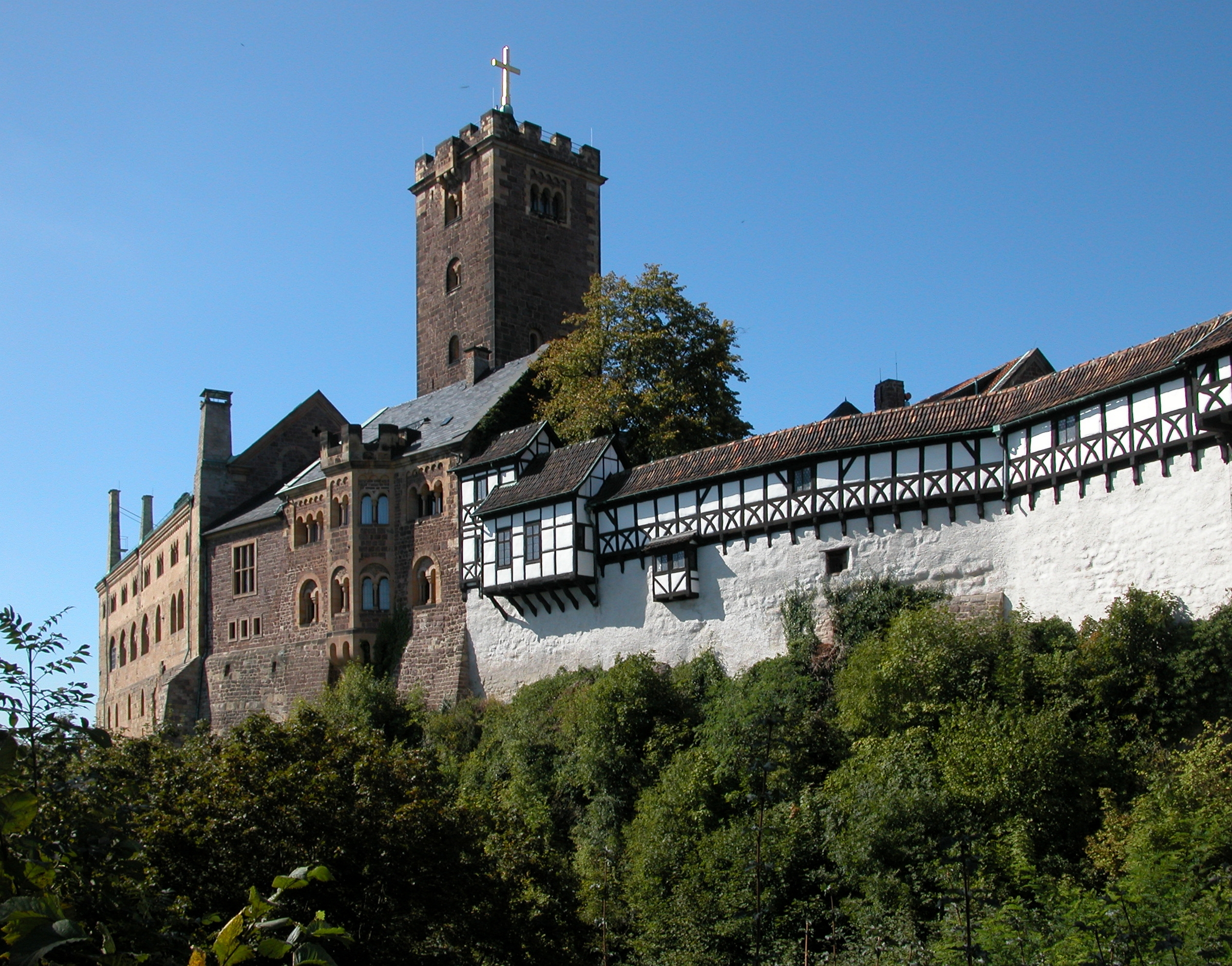
Recently I saw with my husband the movie Wagner's Dream. Totally fascinating documentary (and my husband told me it was very interesting to watch me watching the movie, my reactions, etc.) It was about the Ring of Nibelungen cycle, but this brings me to Tannhuaser, the other hero of Wagner's operatic world, and the legend about Mountain of Venus, a real mountain called Venusberg close to Horschelsberg. Located between Gotha and Eisenau in Thuringia, Germany. This area was explored by ethnographers of the XIX c., the Grimm Brothers included.Certain legends are as significant in German cultural heritage as the legends of King Arthur in Britain. This one is about Tannhauser, a knight and  a poet who supposedly took part in the literary competition at the Wartburg Castle, along with few of other historically known knight-poets.The real life Tannhauser (or Tannhauser, as his name was also written), as a poet wrote very erotic and easy-going pieces, not as refined as the courtly love poems by the other knight-troubadours (Minnesangers in German,  literally singers of love).

The Mountain of Venus itself is located somehow close to the  Wartburg castle. Here according to records (which may or may not be true) took place a competition between Minnensangers, who were German troubadours. Among others beside Tannhuaser very famous names come up: Walter von der Vogelweide, also Wolfram von Eschenbach, who is probably most known as the author of the Grail romance; Perzival.
You can see  them and their poetry in the Codex Manese manuscript

Here at  this mountain  with caves,  according to the legend, Tannhauser, their real life peer,  knight and poet,  met the goddess of love, Venus herself. She was surrounded with her court of beautiful women, and invited him to her subterrean world. He followed gladly, as he was a very sensual person, and through they entered  through the cave into the earth. The knight resided there for seven years. Some versions talk about one year. He enjoyed the easy fulfilment of all his carnal desires, and was very happy, unaware of passing time.  But finally he started to  feel empty, longing for earth, in spite of all delights, including pleasures given by Venus herself.

Venus Cave bellow, auhtor: Metilsteiner.
Venus Cave, Venusberg Mountain, Thuringia
Venus, however, didn't allow him to leave. When he was thinking of Virgin Mary, yearning for freedom, the Virgin appeared in an instant, and all charm of the under-terrestial world disappeared. At once Tannhauser found himself at the feet of the Wartburg Castle.

Wartburg Castle,  by Robert Scarth                          .
Yes, the same where Luther was given protection, the house of St. Elizabeth, and the place of competition of Minnensangers, and featured in Wagner's opera Tannhauser. Click on the picture to see high resolution.
Here he felt free , and in a state of rapture collected flowers. It was a kind of religious ecstasy. He decided to confess all his sexual debauchery, and ask Got for forgiveness. However, every priest who heard his confession was too shocked and didn't want to grant him absolution, telling that God will never, ever forgive such sins. Tannhauser even went to Rome in despair, confessed to the pope Urban IV himself, and asked for  forgiveness again. All this made the stern pope very upset: he said that first his pontifical staff  "will rather grow green, and bloom than God will forgive such lust." Depressed Tannhauser departed, decided to go back to the Venusberg, as there was no place for him on earth, he went back to the goddess and her realm of carnal pleasures. But after three days the pastoral staff of the pope greened with lush leaves, and flowered profusely. The pontiff send his  messengers after the desperate knight, but they couldn't find him anymore. The people in the village close to the  Venusberg told them he passed by, with somber face.He was never found again.

Picture on the left  is Tannhauser himself, from page of Codex Manese where some of his poetry are compiled, among them also a repentance song. The Codex is an anthology of medieval German poetry. The legend of Tannhauser made to German literature during XIX c. when literati  started to be interested in folklore and medieval world. But the strongest increase of popularity came after Richard Wagner's opera, named after the poet and retelling the Venus  legend, and the story about   competition at the Wartburg Castle, combined with Wagner's own creative liberties.

The Venusberg story is very interesting for three reasons: first it talks about real-life poet and maybe a real-life poetic competition, fits the history of a  personality, and his creative output into a legend. Second, it is an old legend Christianized, similar as the grail story was Christianized,it is a hybrid. It shows dynamism of a society which was in transition from culture of paganism to conforming into a new religion, and still quite new fedaul reality. The third reason: it gives a moral lesson about forgiveness, which it is not granted freely, and forces the protagonist to go back to the old ways.It shows that people are not forgiving, but the divine forgives. A lot of moralising here: about the goddess Venus and her court, personality of the  poet knight, but also about the hard hearts of the clergy.No one is spared, and in this story the divine gives a lesson that forgiveness should be granted freely and quickly, and this is a true loving way. The story is of course about carnal and spiritual love, and about serving a lady, but it is so multi layered. This were also times when Europe clarified its own ideas of romantic love.

Regarding an old legend combined with Christianity; Sabine Baring-Gould mentioned this one  in his book Curious Myths of the Middle Ages. He reported that the legend appears in its basic version in many countries in Europe, on which the local folklore built other layers. No confession and clerical invlovement is seen except Taanhauser story.Which I was not aware of. Basic version is that under-terrestrial beings want to contact human beings. A man comes in contact with them, has a very beautiful women as  a lover. He longs for earth, and escapes. However, he needs to return, as the earthly world is not receptive to him anymore. Baring-Gould gave examples of stories which have variations, but retain the basic roots. A very folklorist  view. Sometimes a pagan goddess, sometimes the goddess Venus herself  is present, and there is also a motive of ring and the marriage. There are also more mountains of Venus in Germany, also in Italy, there called Venus mountains, or mountains of Sybil. (I wonder if this has to do with Roman presence there). Baring-Gould also mentions that  the story of Tam Lin, tells stories from Catalonia, Farroe Islands, Sweden, Pomerania, Switzerland, etc. and mentions written versions by various ancient authors.Some are more related, some are more distant relatives.

 I also see now the connection between a legend from Poland, about a young knight who went through the waves into the heart of the lake to be married to some beautiful woman who held a court there. He was telling his loyal horse-or loyal friend who was a rider, depends on version- to go to and to tell his family he wedded a beautiful lady of the lake. The mother of the knight in the bottom of the lake knew the  he will never come back. Poland has of course many stories about aquatic world, courts and the cities, as there are so many lakes.

Tannhauser was present among supernatural beings, under the earth. Main ruler of the court here is chtonic type of the goddess, in spite of the goddes being Venus,a conflation. And the idea of under-terresatial folk itself reminds me of a huge bestseller, kind of  the Da Vinci Code of the turn of XIX c. It was a novel about Vril and subterrean super race living in  caves under the earth. The novel was an enormous financial success. Many people actually believed in reality of such race, and this belief was rumored to linger for long. Some of the Nazis supposedly believed it, it was believed in some occult circles, in Theosophy belief in Vril still exists to some extend. It was a novel, but seriously captured people's belief in reality. Vril, similar like the grail, is the idea about power granted, about  fulfillment of wishes. No wonder that both, the grail and the vril resonated so strongly with the audiences.  Recently we had The Secret phenomenon, which falls in the same category:  power of fulfilment of wishes, power of belief. Law of Attraction, another magical world for the frustrated. But I prefer the legends, I confess, Vril and the Secret don't attract me.  Are they an equivalent of today's court of Venus, where first after some time one sees the illusion?

As for the caves in Venusberg: local society hopes they will attract tourism, and the caves were explored. In them are diverse colonies of rare  bats, which hopefully will not suffer in case tourism increases one day. Iron bars at the entrance of some caves make a lot of sense, and here is a responsible way of protecting nature.

Monday, August 20, 2012

Yellow: Triumph and Fall, history of color #11

Yellow is unusual in art history regarding the attitudes people had toward this hue: it was held in high esteem until did fall low.

First during medieval times yellow was replacing gold when it was too expensive for the project, like for example usage for the background in frescoes, large surfaces. Sometimes of course, gold was used on frescoes also, it depended on how much a community could spend. Yellow was a much cheaper alternative and still represented divine light. In an earlier post I wrote about symbolism of gold as representing divine light, as the color symbolism is theological). But yellow wasn't used symbolically only, also when needed to give some beautfil robe to a saint, for composition purposes, the color was used freely.

Chromatically yellow is also the lightest color from all chromatic ones. (White is non chromatic). Also it was used in illuminated manuscripts, as we see in this masterwork of medieval art: the book of Kells, from Iona, dating from the times when Irish monks spread their culture and knowledge in Europe. Columba was visiting Reichenau, as I told you before. This folio showing Christ enthroned makes use of yellow, which is fine of a color to even line the cross and painted as color of Jesus' hair. The birds are peacocks, about symbolism of this bird in this this article. The circles at the feet, surprise, surprise! Those are angels, called Thrones, often depicted as wheels, sometimes as wheels with eyes and wing, specially in medieval Byzantine art. Wanted to mention it, as they are not uncommon, and people wonder about what is it. But also can mean the heads of the nails of the cross. The book Christ is holding represents the divine law.


Christus Enthroned, Book of Kells, Ireland, library of Trinity College, Dublin, via wiki commons


 The figures are angels, one angel is a seraf as the posture of his wings indicates (lower corner on the right, will write more about angels another time). This part of a wonderful lecture later describes the peacocks too: as incorruptibility of Christ's flesh, with chalices and hosts.

Closer to Renaissance the elevation of yellow to color of light started to diminish, when art started to be more realistic, the golden backgrounds fell out of fashion. Now yellow started to be viewed as color of falshood and treason. It was used to brand those who were considered socially less acceptable: prostitutes, Jews, heretics. Jews were ordered by law to wear yellow badge. About yellow as color of prostitution I wrote already when I wrote about Mary Magdalene.

And as we see in this fresco by Giotto, yellow was assigned to bad people.Jesus has a loving peaceful face, he is dressed in red and blue, Judas in all-yellow garment.
Giotto, Kiss of Judas, Scrovegni Chapel, Padua, Italy, via wiki commons

Cathars after Albigensian Crusade were forced to wear yellow cross, as badge of shame. Of course they couldn't be Cathars by choice, they needed to provide prof of marriage and repent, than their live were saved. Repentant heretic was important, as too many heroic personalities burned on stake wasn't good advertisement for ideological side of religion. Some of  information about Cathar religion we know from writing of a Cathar convert to Catholicism. Those crosses called las debanadoras were to be worn always outside the house. It depended on the depth of involvement in Catharism judged by the Inquisition in a trial of , if a person needed to wear one cross or two (front and back). Those crosses were usually six inches wide and had height of eight inches. Unless one was of aristocratic birth, the badge of shame was to be worn for the rest of someones life. Many simply didn't comply, or were unrepentant. It was not a simple badge of shame:Cathars didn't like the cross as a symbol, this refusal of the symbol was written in their religious philosophy. It was much more cruel punishement than a known more widely and younger scarlet letter for adultery. Following link will bring you the wikipedia articles about Cathars and yellow cross http://en.wikipedia.org/wiki/Cathar_yellow_cross 

As for heresies: they were not considered a religious offenders only, but in Western Europe heresies were viewed also as treason against the state, and considered anarchy. This was also one of the  reasons why it was relatively easy to prosecute those who didn't conform. Rulers were offended by heresies, specially because almost every heresy also criticized materialism of the status quo, preached poverty or renunciation of material world, Catharism did it to.


Sunday, April 22, 2012

Templar Legends in Poland, part 1

 
   The Knights Templars' history can induce flights of imagination, and no wonder: given the rise to power, their wealth and tragic dismiss of this chivalric order in France. From the legends someone can have an impression that not many Templars stayed alive after the imprisonment, torture, and killing of some of the knights in France.

 Templar chant Salve Regina

However, Templars were present in other countries of Europe, and when the order got dissolved; they joined the ranks of the other chivalric orders, as for ex. Johannites, or the Teutonic Knights. After the land ownership was transferred to others, some Templars still were allowed to stay. French king's power didn't reach to other parts of Europe. But the power of the Pope who was pressed by the king did. The puppet pope decided to dissolve the order, and told Templars to change alliances. His word was taken seriously. However, the Vinci Code-style Templar pogroms across all Europe just didn't happen.

When we look closer at some Polish legends, we find a story where a Templar commander was killed by the burghers of a specific town.  There is a stone cross on the place of the alleged murder. I didn’t see the cross, if it is stone it may be so called “penitent cross” put often on a place of crime. Why the people killed the Templar? Most likely abusive conduct of the Templar in question, nothing to do with the events in France. The Knight Templars were crusaders after all, and similar to other crusaders in Poland they not always were treating the locals gently.

 Description in Polish language of someone who is nasty and arrogant as  "haughty like a Templar" may point to not-so-mysterious and holly direction. The knights are the stuff of legends and mystery, but also they took parts in rides against the pagan population. The massacres of civilian populations were seen by the crusaders of any kind as normal behavior towards the non-Christians. Teutonic Knights, the other crusaders in situ, also complained that the pagans in the region were very rebellious and rotten: they didn't want to submit to "proper" power. There were of course uprisings by pagan populations and by the Christians alike. And Templars, like any other crusading orders, got also great latifundia donated to them by the Polish dukes, with local population included.

One legend, written down nicely by Mr. Gralinski, relates to Templars’ memory when they are seen as murderous crusaders. Not painting a pretty picture of the knights. This legend is alive in the village Dankow. Centuries ago Dankow was a city on its own right, but  fires reduced it to today’s simple village with two  beautiful lakes, ruins of the castle fortification,  and decaying remnants of a manor house. Archeologist are conducting digs right now, trying to find what is left from one of the most powerful castle in the Brandenburg March. Also archeologists are diving, looking for ev. remnants of the Medieval pagan fort (Slavic Wends?)  whom the legends also includes. So far there seem to be some parts of armors and weapons on the bottom of the lake.
The legend talks about a great battle between the Knights Templars and the pagans. The pagan warriors lost the battle and were all killed, no prisoners were taken. Only the women and children remained. In addition some material goods and cattle were in the fort, as spoils of war. The pope’s legate was there, among the victorious knights, and the Templar commander Friedrich von Alvensleben (commander in years 1302-1305). Von Alvensleben was initially proposing that the population which was still alive was to be treated relatively gently, in order not to cause hatred toward Christianity, which could lead to future additional uprisings.

 All invaders went to the fortress, and the daughter of the slain chief was now the ruler there. She met the victors, and a group of beautiful young women stood behind her, all festively dressed. The female new chief tried to negotiate with the invaders addressing Friedrich von Alvensleben: "Please, let after the times of tears be times of joy and peace, let be here a better future. As an act of forgiveness, and as a peace offering, let the music play, and come ye knights, and dance with those women." This peace offering was very upsetting to the papal legate. He slurred some nasty insults toward the women accusing them of pagan seduction tricks, and gave a hand signal toward the Templars, ordering them to kill off all women and children. The massacre started, and amidst the horrible screams of the victims the daughter of the pagan chieftain cursed the knights and the legate, and high water rose from the lake and swallowed all which was left from the fort, and all the women and children, and all cattle. Since then every year during the evening of the Summer Solstice  from the lake appears a group of young and beautiful women, dressed festively, and they sing  trying to lure any young men do dance.


Tuesday, April 3, 2012

Red: Mary Magdalene's Case:Medieval Art, History of Color # 7

Mary Magdalene wasn't depicted only in red though history, as Virgin Mary wasn't depicted in blue only. But let take a look at the red, as both Marys were depicted in red garments. For example the red of the robes of Mary Magdalene had a different, double symbolism, than for example red of other persons' cloaks. Mary Magdalene's robes were painted in cinnabar red, (vermillion), having more hint of orange. Red in general can tend toward more to direction of yellow, or blue, and during the Middle Ages the quality of red was important, which red was symbolizing which idea. The other red symbolized regal values and charity.

 Here comes Crucifixion by Juan Rexach from Northon Simon Museum, Los Angeles. Due to poor lighting conditions the color of Mary Magdalene robes not very accurate on this photograph, in person is like on the photo bellow.

 Crucifixtion by Jaun Rexach, Norton Simon Museum Los Angeles


Here you can see desctiption and a better quality photo 
You can zoom into, and see very well the specific color of Mary Magdalene's garment.

Crucifixion by Masaccio, Museo di Capodimonte, Naples,public domain,  via Wikimedia Commons
 
 I am glad that Maria Rzepinska wisely comments is her book about color that red in Middle Ages was not just red, but it had two aspects. Red was one color in which case people paid attention to its shade, shades had codified meaning. Two types of red were differentiated: the noble one, considered sublimed, and the earthly one, viewed as "sinful". Several examples of this red can be seen close to my living place in California: Norton Simon Museum and  the Huntington Library art collection.But today Massacio, as more widely known.

In general, red stood for love in sense of charity, blood of martyrs, sacrifice on the cross, redemption through crucifixion. But as it could be a color of love in spiritual sense, redemption, also when in specific tone, could symbolize sin, or lust, or both: redemption form sin.This dichotomy is visible in portrayals of Virgin Mary as the sinless one who is represented in another red than Mary  Magdalene  ( dressed in "sinful" red). A medieval painted wouldn't confuse those two reds.


We need to remember that color in medieval art isn't always symbolic: sometimes just the need of decorative usage of color was important. In Latin Christianity (Byzantium was another case) the robes of such a person as Virgin Mary wouldn't have been painted in the same as red of Mary Magdalene's.

Above the crucifixion scene by Masaccio, Mary Magdalene in dramatic gesture of devotion and anguish dressed in red so typical for her. Although there are quite a number of representations of Mary Magdalene in this type of red, specially at crucifixion, this one is probably the most famous one. It is still very medieval. But there are hints of coming of the new era: the Renaissance in Italian art,there are more of human emotions shown. Gothic was very emotional in other countries, (for example showing suffering of Jesus),  but art in Italy was more reserved, making more usage of  Byzantine ideals.

 All  older medieval representations of crucifixion in Latin Christianity would show Jesus fully dressed, each foot nailed separately, and no signs of his suffering. With the passing of time Jesus became more humanized, specially in the art of Northern and Central Europe. The body was more and more exposed, agony and blood shown, feet nailed together. For example in German art Jesus was shown with great attention to expression. From Jesus as a symbol there was a shift  toward showing Jesus as a human being.

What about Masaccio himself? His name was Tommaso di Ser Giovanni di Simone. He died when he was only 27 years old, and he wasn't as famous as the other painters of his times. Even his name was a humorous take on his given name. Masaccio, as he is known even today, is a form from Tom, meaning "clumsy" Tom, as separated form his collaborator Masolino,  the "delicate " Tom.

Yet Masaccio influenced the other Italian artists. It was his example which caused a shift in art:  more and more toward realistic representations of the world around. Here we see a paintings which is still medieval: composition, golden background.  But carved into the golden background humans who were much more real, not idealized, captured in a moment of strong emotion. Figures are real, not ideal.

Other colors of Mary Magdalne's robes in another post, more colors.
And my post about Mary Magdalene depicted in blue click here

Byzantine Christianity depicted her also in red,  with an egg in her hand. In this tradition she was an extremely virtuous woman in similar age of Jesus's mother, and both women died in Ephesus. Mary Magdalene's body was was kept in Constantinople as a very venerated relic. This dissapeared still during the Middle Ages, but also later her relics started to be venerated in Western Europe, Latin Christianity. Relics were hot commodity then, and many stolen from the Churches in Constantinople in 1204 when crusaders sacked and looted this cultured city. Virgin Mary's house is believed still to be there, what was one part of the Byzantine Empire, among ancient ruins of Ephesus, today in Turkey, in a rather remote location but among the most wonderful ruins.

Monday, April 2, 2012

History of Science at Chartres Cathedral, and Zodiac

In the previous post there was Zodiac window form Chartres, today is the astronomical clock. Strange setting for such symbols?

No way. Zodiac then was nothing unusual in churches. So, why all the mystery so many tourists talk about? Actually there is nothing mysterious about it. Explanation follows.
Chartres Cathedral Choir, Astronomical Clock, via Wikimedia Commons, thanks to Harmonia Amanda
First, the clock comes form XVI c. but its ideological roots are medieval, and proto-scientific, not really esoteric. Astronomy, astrology, the synthesizing medieval minds didn't see the difference.

 It is a common misconception that the Middle Ages were not interested in science, only in religion, or there was no reading of Classical texts before the Renaissance. Actually the classics were read, not as widely as  during the Renaissance, of course, but were not unknown, rather kept in high esteem. Many Classical and Arabic texts of science were translated into Latin. Arabic texts about astronomy, mathematics, anatomy and chemistry, and medicine contributed a lot in development of Western medical sciences, we often forget about it. Or simply don't want to know. And there was no agreement about if the Sun was the center of Universe or moved around the Earth. The official decision   in favor of the Earth as the center of the Universe came later. Science was fine as long it didn't oppose any dogma. For example the theological idea of dignity of the human body was applied to the medical field, and this particular idea didn't allow dissecting human corpses for anatomical research. Dead animals were dissected instead, specially pigs. Sometimes, rarely, human bodies were dissected also.

Chartres itself had a cathedral school, as often was the case with such buildings: there were also centers of learning, not only part of religious live of communities as today. Chartres was one of such centers, and was among the famous ones. Neo-Platonism was flourishing there, sciences were treated as separated from theology. A number of so called than natural philosophers (philosophers interested in science) came from Chartres. School of Chartres became less influential when universities started to compete with cathedral schools, but this was a case with all cathedral schools.

So, if the clerics of Chartres were so scientifically minded, why such thing as Zodiac in the cathedral?

 Here we need to understand the mind of people who lived before us, and don't project our XXI c. world view on them. The clerics form Chartres were still products of their times, and during their times astrology was science, before the Catholic Church opposed it, and before it was mocked  by the scientists of the Enlightenment era as superstition, not a scinece. Medicine was part of curriculum at Chartres school, and astrology was officially part of medicine also. Here is the illumination dealing with the human body as related to Zodiac.

Anatomical Zodiac Man, Limburg Brothers, Book of Hours of Duke de Berry, illuminated manuscript tempera on vellum, public domain, via Wikimedia Commons, thanks to Petrus Berbygere


In addition to proto-scientific reasons, Zodiac was a very popular motive in depictions of passing time. One  was very common:  the labors of the months. Frequently months and Zodiac signs were tied together, and this is often found in medieval churches and religious  manuscripts. Labors of the months showed secular world. Zodiac window at Chartres belongs to this popular category. Here is incomplete list of  zodiacs and labours of months in churches.

 Another example, most famous of this type is the series of illuminations from the mentioned  Book of Hours of Duke de Berry, (the same book from which the illumination above comes from). It is not the only example of this kind, but among the most beautiful ones, if not the most skilfully rendered, so far. Here it is, via Wikipedia article and picture gallery.

The Book of Hours of Duke de Berry is  of the most beautiful examples of book illumination in International Gothic style, and contains a very good example of Gothic blue, specially loved and used in France.

 Art history itself is an interdisciplinary endeavor, and understanding history of science or cultural history can enhance knowledge of art. Art doesn't exist in historical vacuum. It is connected to the world around, it exists in historical contexts. Striping old art form its historical context can give us only partial insight, and lead to some  misunderstanding too, some of them can be quite funny.

Wednesday, March 28, 2012

The Famous Blue: History of Color # 5- the Middle Ages


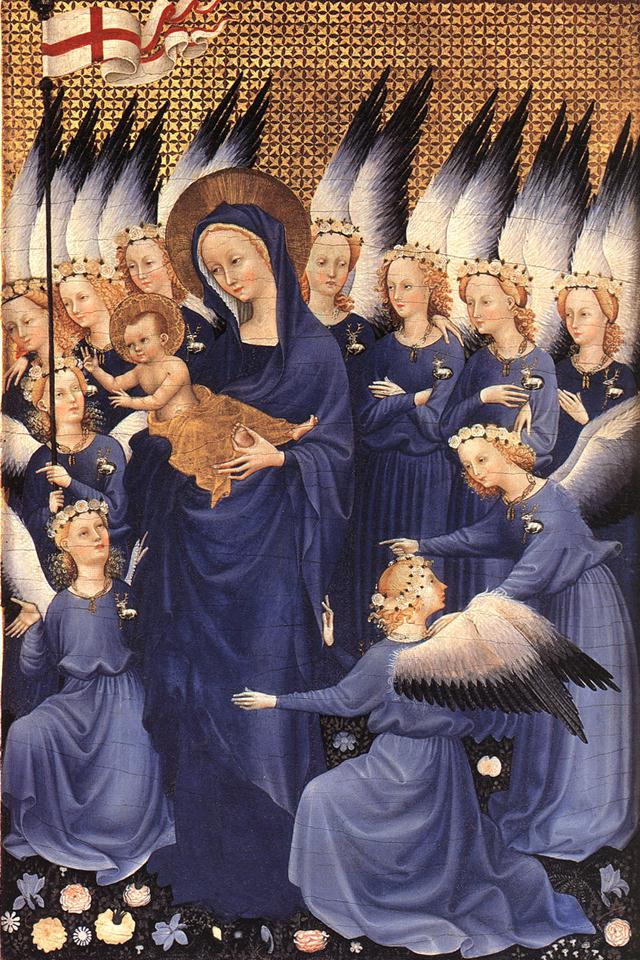
 Wilton Diptych: Virgin and Child with Angels, Unknown French Master, via Wikimedia Commons
Blue was famous during the Middle Ages. People valued the color of the sky, it reminded them of heaven, and its symbolism put it close to gold: it was also the color of divine wisdom, (but gold was used also as light), color of spirituality, calm, contemplation, and all things heavenly. It became also the color of power, but about this on another occasion. Today I will explain the dense code of visual symbolism of the picture above.

Still during 15th century Cennino Cennini, (artist, who was also a writer and theorist of painting techniques) wrote that blue was “illustrious, beautiful, and most perfect, beyond all other colors”.

People talked and wrote a lot about this color. It was considered extremely beautiful and working good on human psyche, it was praised a lot. Also blue pigment was extremely expensive, and for this reason people talked about it in a very different context: painting was a business like any other enterprise, and business talks and written contracts regarding  commissions in which using blue was necessary, specified how much blue should be used. Blue pigment was almost as expensive as gold, sometimes more than gold. It had a beautiful name: ultramarine. It was imported from a valley which is today Afghanistan, made from nothing less than high quality semi-precious lapis lazuli stone, also used in jewelry. The poetic name ultramarine means "from beyond the seas." The stone was extremely difficult to grind, which added to the high price of the pigment.

Artists wanted to make sure how much of ultramarine was to be used, on which parts of the painting. Because of the high price of the pigment, and together with red it was usually reserved for painting robes of the Madonna and Jesus. This example is saturated with blue. Blue was specially the color of French Gothic, especially Late Gothic. Many Madonnas in French art had blue robes, after times of purple and red. (Red for Madonnas’ robes was used more often in the North).

What is the symbolism included in this painting? You know already about gold as diving light and wisdom, blue as divine wisdom and contemplation, things heavenly. This picture is about joys of heavenly existence. First, we have the banner of victory, the banner of resurrection. The colors represent purity of the soul, the sins of humanity washed clean with blood of love ( the sacrifice on the cross) . Wreaths of white roses on the heads of angels symbolize purity and joy of heavenly life. The broaches of the stags represent Jesus: stag means purity and destruction of evil (stag tramples on evil and destroys it). Black on of angels wings stands for depth of the divine mystery. 

Flowers: white rose represents purity and is the flower of the Virgin. The iris was also her emblem, and daisies stand for baby Jesus, his purity and innocence. A lot about purity, right? The vegetation was also emblem of purity; the Virgin was often shown in a garden, which was her emblem, hortus conclusus, "enclosed garden," symbolizing her virginity. Garden had also other meaning starting from early on in Christian art: it was representation of heavenly paradise.

This painting was commissioned for King Richard II. Here the Virgin looks like a fine courtly lady surrounded by ladies in waiting. During Medieval times adoration of the Virgin and courtly love had often similar visual and linguistic vocabulary.

Sunday, March 25, 2012

Symbolism of Color, Medieval: Red, Blue, White and Gold History of Color # 4

During the Middle Ages the idea of splendor and light was extremely important in material creative expression. Very rich vocabulary was  used to describe light in art theory and in theology. Colors were seen as a part of symbolic expression, they were not supposed so much to imitate nature, as it happened later, during the Renaissance, but the goal of using colors was to express an ideal reality. Therefore was not much interest in showing shadow in art, but a lot of interest in showing the most possible clarity in colors. Paints were even mixed such way that they stayed as close as possible to the ideal hue of the best of pigments. And beauty was a representation of some kind of ideal reality, was it  luxury of secular art, or visionary and also luxurious  world of religious art. This ideal reality was thought to exist in colors, and colors had, in opinions of medieval people, their own inner light.

This thinking about the  ideal essences of things was the legacy of the Classics, of Plato and than of Plotinus. I hope not to make things too complicated, but symbolism, philosophy, iconography, mysticism, theology, and technicalities of making art were all  interconnected.

Medieval art put extreme emphasis on purity of colors. When digging deeper in art history we will see that there were some differences between Latin Christianity and the  Byzantine Christianity, but in general color ruled the art world.

Raw pigments, powdered metal. Yes, I prepare some of my paint from time to time, like in old days.

You see here the four most important colors of the Middle Ages. Yes, gold was considered a color, unlike today. Speaking of hues, we have almost primary colors, red, blue and yellow, as gold is close to yellow, and was replaced by cheaper yellow sometimes. Plus a neutral: white.

I start this part with two of those powders on the picture, (one raw pigment, one metal powder), which were relating to light: white and gold.

White: symbolized light, also  in theology which influenced art. White was a symbol of purity, innocence and renewal of spiritual life. During the early Middle Ages angles were shown as white, but later were colorful. It truly depends on time and place: later Middle Ages had colorful angels. Also the elders of Apocalypse, robes of Jesus, prophets, newly baptized people, considered innocent, the righteous people, Jesus in moment of transfiguration. But Jesus was not always shown in transfiguration in white robes only, Middle Ages had codified symbolism, but not rigid rules.

St Sever Apocalypse manuscript. Public domain, courtesy of French Wikipedia
 This example shows white as light (stars),  and as a symbol of innate purity as seen in  this white lamb from St. Sever Apocalypse manuscript.

Gold: as white was more representing physical light in the world, and also had symbolic meaning, the divine light was gold. The light reflecting properties were used freely, not only for decorative purposes but also to communicate theological truth, to show light out of this world. As the divine light was closely relating to the idea of absolute divine wisdom which it represented, the backgrounds of paintings and mosaics are golden. But not always, blue was used too. Gold symbolizing divine light represented spiritual illumination, and to indicate this state of blessedness, connection to the divine, or divinity itself. Halos were golden most of the time. But also there were halos painted blue.

 Here is the link to Hagia Sophia interior video. for those of you on whose search engines videos embedded in this blog do not show.Hagia Sophia means the Holy Wisdom in Greek, and it was the most magnificent church in the Constantinople,  the capital of the Byzantine Empire. Usage of gold is befitting the name of the church very well.

Red was color of love in sense of selfless love, like Christ's love fro humanity, agape which is the unconditional love, and blood of redemption and blood of martyrs. Blue was symbol of heaven,contemplation, things which are divine, life lived in accordance to the highest standards. More about those colors later.

 We need to keep in mind that system of  color symbol was not  rigid. There were canons in iconography, but it doesn't mean that the artists were slavishly following them. The philosophers and theologians were interpreting colors quite freely as well, a lot of abstract thinking went into writings about colors. Does it means we can't rely at all on color symbolism in Medieval art? Yes, we can. But we should approach it with open mind, and remember that there are no absolutes. Also the symbolic language of colors in religious art was adopted by secular art, but the meaning of one color in religious art many not be exact the same in secular art. For example white was worn by French queens as the color of mourning. Purple was color of mourning too, in addition of symbolizing royal, or imperial power.

A very informative article about color http://renaissanceclothing.blogspot.com/2011/02/meaning-of-renaissance-and-medieval.html in Renaissance and Medieval  clothing. Not only is the author very well informed, but also gives warning not to interpret things too rigidly.