Showing posts with label blood relic. Show all posts

Wednesday, July 10, 2013

Grail in Bezlawki part 2: Mary Magdalene patronage and pagans


The second part of the legend of grail in Bezlawki. How the grail was taken from Britain, by whom, in my previous entry about what happened after the battle of Hastings. 

This is a legend, we don't know how old it is, bu tit is very interesting as a story, and has historical events, as well people who lived in real life. A bit of historic  background of the story.

After Svidrigaila installed the grail and his army in today's Bezlawki, in a fortified tower which belonged to Teutonic Knights, military order crusading against the pagans of the East North, he lived like a prince. Historical records show food provided by Teutonic Knights, among them very costly morsels and spices imported from afar. Teutonic Knights promised him to become the grand duke of Lithuania, even though Svitrigaila didn't qualify, as Lithuania had the law of primogeniture, and he was the younger brother in line to the throne. His older brother, Jogailla was a pagan. They were also engaged in a bitter feud with their uncle, who also was keen of becoming the only ruler of Lithuania. It seemed that those three men had reasons to fear for their lives. The fortress in Bezlawki, in the middle of dense forest was a safe place for Svitrigaila.


 Here is video how Bezlawki tower was changing through centuries. For those of you who have trouble to watch the video's embedded in this blog, here is the to the youtube video.About  4 min on shows the change for Svidrigaila, making it more fit for princely residence.

One of the people who was on diplomatic missions dealing with Teutonic Knights, who were considered those days unstoppable, was young Polish queen Jadwiga. Or rather a young king who was a woman. Why? Because in Poland by law kings were ruling, so, if the sovereign wasn't male, she got the title of king, that meant she was a ruler on her own, not a queen consort.She was elected a king, and crowned as such at a tender age of 11, like some of the Merovingian child-king. But she was an extremely capable young genius.

Jadwiga of Poland was half Hungarian, half Bosnian, but from both parents she had genetic ties with native Polish Piast dynasty. She was also from Angevine dynasty, therefore the fleur-de-lys. Her mother, Elisabeth of Bosnia was ruling Poland, as the last king of Poland decided that his sons are no capable enough. Poland didn't have law of primogeniture. king or the nobles could decide who was the best candidate for the throne. But Elisabeth of Bosnia  wasn't  capable enough as a monarch to please the nobles and she  was replaced by her daughter, Jadwiga.

Jadwiga of Poland  by Antoni Piotrowski, at Jagiellonian University
Note the chalice on the right. Picture painted in 1901. 
Jadwiga of Poland grew up in Hungary in royal court of Buda, she was a polyglot speaking six languages, spent one year at royal court in Vienna, as it was common to send children of noble birth to be educated at other courts.She was supposed to be the future wife of William of Austria, one of the Habsburg dukes, was engaged to him as a little girl (sponsalia). The Habsburgs were expanding their influence by marrying heiresses, this engagement was an early attempt in such politics.

Jadwiga was a politician and patron of culture, in addition she was very religious: she revered four saints, specially Mary Magdalene and her sister Martha. Mary Magdalene was the patron saint of Angevin dynasty, after Charles II, Count of Provence and king of Naples discovered the body of Mary Magdalene in Provence, at  Saint-Maximin-la-Sainte-Baume.Mary Magdalene was immensely popular saint and enjoyed patronage of rulers, but the Angevins were the most important in spreading and strengthening her cult. Without them Saint Baume pilgrimage site wouldn't exist, her cult in France wouldn't be as strong.

Charles II discovered the body of Mary Magdalene in 1279, he was called Charles of Salerno at this time, he became Charles II later.  At this moment this popular saint became the dynastic patron, so, no wonder Jadwiga venerated dynastic saint who according to the legend converted pagans of Provence to Christianity A scholarly article to read about Angevins and Mary Magdalene as their patron saint, and Angevins role is spreading the cult of Mary Magdalene in Provence, Naples and so supporting also the legitimacy of their dynasty, of which they claimed, Mary Magdalene was a miraculous founder.
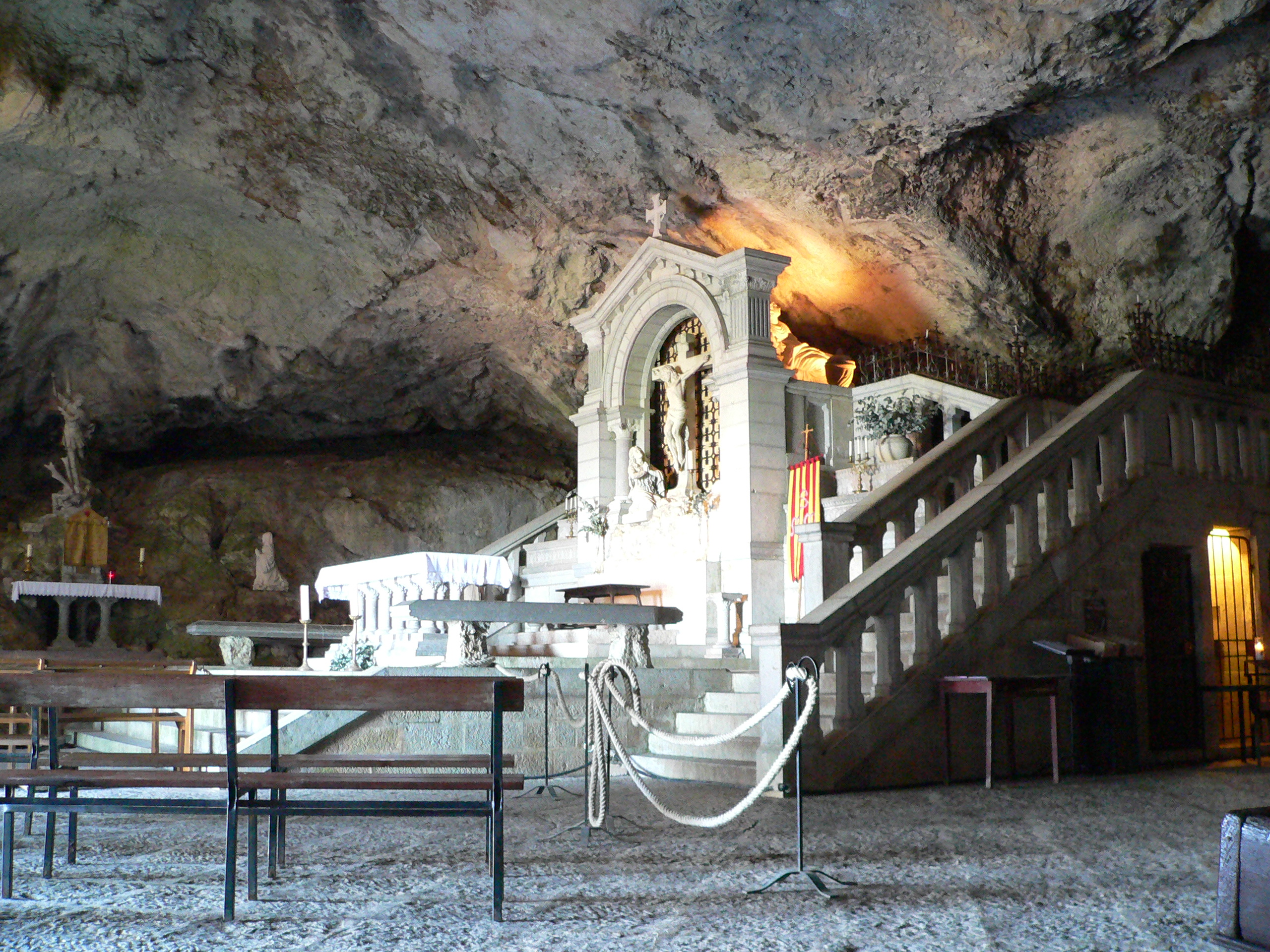
Grotto of Mary Magdalene in Sainte-Baume, by Disdero
http://www.escholarship.org/uc/item/7pz6w018
by Dr. Sarah Wilkins, professor of art history and design.

When Jadwiga was enthroned, however, several suitors appeared, hopeful for marriage and crown. William also appeared at the court in Krakow, as he was thinking now was the right time to got get married, after all Jadwiga was his fiancee. He was bitterly disappointed: the young sovereign declared the annulment of their contract, and the Habsburg duke went home.

Jadwiga got married three years later, she was 13 years old. Her king consort became duke Jogaila of Lithuania, who being a pagan needed to convert to Christianity. And through Jadwiga's influence the last pagan country of Europe was Christianized.She didn't need to preach to pagans: she just made the requirement that he husband to be needed to be Roman Catholic.

Svitrigaila  the owner of holy chalice (which one of two?)  lived with his hopes for Lithuanian throne in Bezlawki, in the area of crusader state of the Teutonic Knights, the military order which also targeted pagan Lithuania in their Northern Crusades. His alliance seemed easy, as the Teutonic Knights were believed to be invincible. Yet they were crushed, one day, and by no one else than his brother Jogaila with armies of allies.Life of Svidrigaila was marked by wars and dynastic struggles. He became grand duke of Lithuania for two years, noting more.

As Jogaila was baptised in Wawel Castle in Krakow, Christianization of Lithuania was official in 1386 The marriage couldn't happen without Jogaila's

 Svidrigialla also got baptized with his brother at the Wawel Castle. He converted from Greek Orthodox faith of his mother into Roman Catholicism.But in his case it was of no great political advantage. 

Because Jogaila became king of Poland, this didn't mean that Jadwiga was now a queen consort. She was the ruler, marriage didn't chip away her power, he was the king consort, but of course both were politically active. Jadwiga was known for her charity, good character and for her support of good causes. She was so much liked and revered by people that she was considered a saint, and legends of her miraculous powers spread. This was a queen of a true noble ideal of a virutous lady.She died young, only 26 years old, after complicated child birth. She and her daughter lived only one month. This was nothing unusual in those days, even among people who were very privileged, such deaths happened among ruling families too.
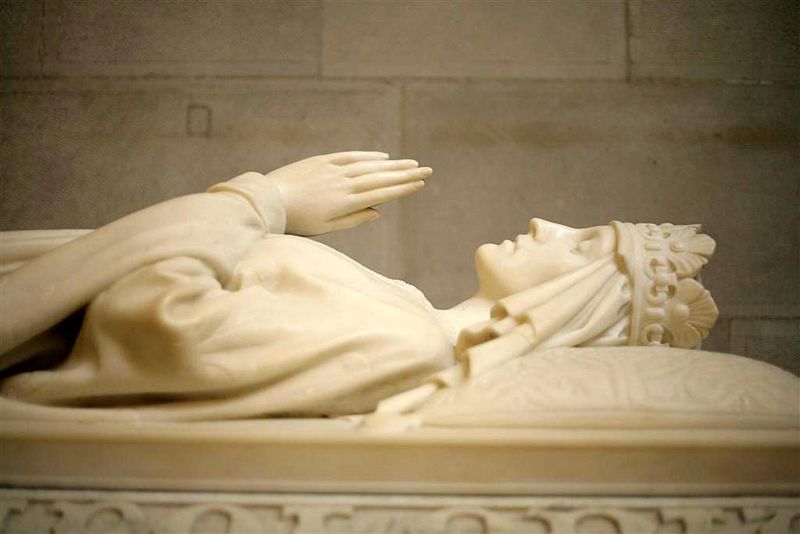
Sarcophagus of Jawdiga of Poland, Wawel Castle Cathedral
After Jadwiga died she was declared a saint by people, and her cult spread. Her relics are in the Wawel Cathedral under the crucifix at front of which she prayed. Even she was considered a saint and worshiped as such, her beatification happened as late as 1980, and she was officially declared a saint by Vatican in 1997, by the pope John Paul II as you may guess. He prayed at her sarcophagus. Pity I didn't take the picture, the sarcophagus sculpture includes a nice lap dog at Jadwiga's feet.Thank you Cezary Piwowarski for the picture. (Dog symbolized loyalty). Close to the sarcophagus her regal insignia are exhibited: the scepter and the globe. They are made of wood, painted gold. Maybe those were lighter for a child ruler to hold, but also she is remembered by her unusual generosity, she sold her jewels in order to support Krakow University (today Jagiellonian University) etc.

After Jadwiga's death it didn't mean that Jogaila as consort was now entitled to rule. There were several candidates, but he was considered the most suitable one, so, he became the king.

 As for pagans in Lithuania: they were left unmolested, their priests also. As officially Lithuania was a Christian country, crusades stopped after battle of Tannenberg in 1410.

Jadwiga's patronage of art and culture is continuation of  Angevin artistic patronage of the Neapolitan Angevin dynasty. She had good examples. In the article you will see also the image of funerary monument of Mary of Hungary, Queen of Naples, who was also patroness of arts, and like Jadwiga also connected to Hungarian Arpad dynasty. Mary's mother was a pagan of Cuman tribe who converted to Christianity in order to marry Stephen V, king of Hungary, and Dalmatia, Croatia, Rama, Bulgaria, Serbia, Galicia, Lodomeria and Cumania; Duke of Styria.

More about grail in Bezlawki, also historical background, soon, I hope, and I hope you enjoy it. Knowing the legend is one thing, but knowing the people in the legend can shed additional light, in my opinion. Again, we don't need to believe in the legend, that there are historical persons it doesn't make it automatically more credible. It is just a legend after all. Wasn't the legend  about Joseph of Arimathea who brought grail to Britain also a legend of Christianisation?


Sunday, June 23, 2013

Holy Grail in Bezlawki, part 1, Escape after Hastings


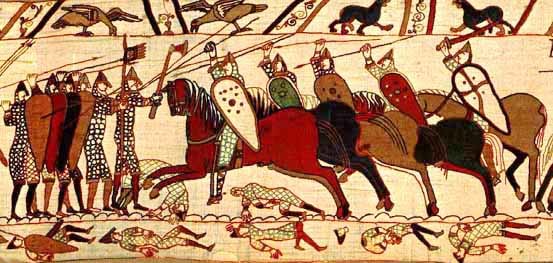
Bayeux tapestry, battle of Hastings. Via wiki commons, by Maxim

This blog has been neglected for long time. I planed and promised to write about the legend of the Holy Grail in Bezlawki, today's Poland. I mentioned before that it seems that Arthurian legends were very well received in Poland. But the legend of holy Grail in Bezalwki has some not very semi-historical events in it, and had people who are historical too. However, I am not saying here we need to believe the legend because of its historicity: it is just a legend based on real facts.

This is a story about a battle, escape, two chalices, two fighting brothers, the crusaders and a tower.
The battle in question was the battle of Hastings, when the last Anglo-Saxon king, the Harold II of England Harold II of England was killed. His children escaped to Denmark, as they were not safe anymore when  William the Conqueror became a new ruler. Short reminder: the mystical object of Medieval times, Holy Grail, was believed to be several things, one version was that it was the cup, or a chalice, into which Joseph of Arimathea collected blood of Jesus during the crucifixion. It became the ultimate  blood relic, which was brought by Joseph of Arimathea to the British Island. One version say that is connected to the Glastonbury Abbey.

 The tradition  also say that it was taken by escaping members of fallen dynasty more East, in order to save their lives, three people. They found refuge at the court of Danish king, their relative. They didn't escape empty handed, as you guess the story goes, they took  what they wanted, or rather what they thought was so precious they couldn't bear to leave behind. Among precious objects they considered worthy not to fall into the hands of William the Conqueror were two chalices, (from Britain and Greece). Finally  the grail was installed in this church, in Bezlawki, on the picture bellow. It stayed there for several centuries, still during the twenties of XX c. one travel book writer, Orlowicz, claimed he still saw one of the chalices in the church.

Church in Bezlawki today, empty, wiki commons, courtesy of Severus


Who were those three expatriate children of Harold II of England as real historical people? One of them was Gytha of Wessex Gytha of Wessex, who later became the wife of  Vladimir II Monomakh, the  ruler of  Byzantium influenced Kievan Rus. He is also known under name of Waldemar. Gytha's and Vladimir's son is mentioned in Norse sagas, there he is called Harald  his Slavic name was Mstislav. One of the brothers, Godwin, became the ruler of one of Lithuanian principalities, a duke. How it was possible? This was XI c. but Lithuania still was very similar to VI c. Britain: like at the court of king Arthur the knights took decisions during an assembly. Upward mobility was possible, still, during those days for a warrior who was considered worth of rule.

 Back to  Bezlawki: it was far away, actually when the chalices, (or chalice? ) first were installed there, the building which is the church today was not a church at all, but the fortified  tower of the crusaders. Not the Knights Templars, often they are associated in modern versions of the story with holy grail, but in this story we have Teutonic Knights, the worshipers of the Virgin Mary, with black crosses instead of red ones. They were  Order of Brothers of the German House of Saint Mary in Jerusalem. Knights form Europe joined them, not only from Germany. They were invited by pious Polish princes, Prussian Crusade was part of their military enterprise.


Church in Bezlawki, another view, wiki commons, courtesy of Jerzy Strzelecki

The Teutonic Knights came into the posession of the chalices later,but  it wasn't a war loot . It was a gift. From a rather pious ally.

Teutonic Knights, as a military order on a mission they  pressed East, however,  not South but  North, and who like those knights who went to the Holy Land got the blessing of  pope, they fought the  non-Christians, in this case the pagans, of today's Poland and Baltic states. They build a fortress which at the timescut the most east into the territories of the pagan Prussians, the Baltic people.  One  thing :  the English  version of article about Bezlawki mentions that the the fortress was a hunting lodge build by the Teutonic Knights. Not true, it was a fortified tower, a Wildhaus, as the knight called it, a house, a post in the wilderness. The forest was dense there, and I am sure there were hunters too, who hunted the wild  (it means game in German, also wilderness). However Jagd is hunting, hunting lodge is Jagdhaus. This was a fortress in which knights were stationed, not the hunters.

Two brothers, Lithuanian  dukes were in a bitter conflict. Jogaila, the older one,  who later became the king of Poland, was against the Teutonic Knights. His ascend to Polish throne happened after the Teutonic Knights were subdued and after Jogaila got baptized, it was the Christianisation of Lithuania. His younger brother,  Svitrigaila, sided with the Teutonic Knights, he also brought for them two mentioned chalices which were installed in the tower. Not too unusual, as the relics in the Medieval times were believed to help in difficult situations, and an outpost so far East probably was considered worth of help. Svitrigaila was invited to live in the tower together with his garrison. So, he didn't really give it away,  he moved with it. Svitrigaila still during XX c. was considered direct descendant of Harold II of England by Polish historians. Teutonic Knights promised him the crown of Lithuania.

More information follows soon.One Polish Medieval chronicle is somehow unusual,  it shows that Arthurian legend was taken seriously.Also two Lithuanian Grand Dukes were married to women who became divine: one was considered a goddess (she was a pagan), the other became a saint. Both were worshiped. Also the Nazis had it base very close: 30 buildings, 50 bunkers. It is today a tourist attraction, called Wolf's Lair.

As for the story, yes, it is kind of difficult to believe, it is a legend after all, we don't need to believe it. (I don't). Is it difficult to believe that such legend exists in Poland? Why? legends of escapes are not uncommon in Poland, it was a country to which refugees often went. And you can find this legend retold in polish on the net. Here are links to a website of a licenced tour guide (site in English) where the lady talks about  the legend, another is website of the town near Bezlawki. Not the only articles on net about this legend. This i part of tradition, really.

Blog entry by the tourist guide, she describes it well

Article in Polish, sorry, gmina Ketrzyn site, lots of hsitorical inforamtion


Friday, August 10, 2012

Reichenau: the Lost Glory and the Holy Blood Relic

Once Richenau was a monastic island, one big and famous monastery with over twenty chapels and churches, monks dormitories, gardens and scriptoria. Not much is left form its former glory, but still worth a trip. During my visit at the Lake of Constance several years ago in June, Reichenau Island was warm and full of nature's riches. Sweet cherries sold at the roads close to farms were sweet and warm form the sun, and gardens were greening with salads and other vegetarian delights. My photos don't do justice. The farms are small, island itself is small, and everything seems simply charmingly rustic. In the reeds I could hear birds. I went to what is  today UNESCO heritage site, Sankt Georg church, Oberzell, to see what is left from the former glory of Reichenau Abbbey. The monastic island once had 20 monasteries, 25 churches and chapels, and seven hundred monks were dedicated to cultural work. Today only three churches are left.

Columban (or Colomba in Latin)  the famous monk of Ireland came to the area in 610, but was not successufl in converting the Allemain pagans to new religion, went back to the Island Iona, today Scotland.Iona was a monastic island, well known today for the Book of Kells. Hundred years later, Pirin with whom is bound the simmilar legend like with St Patrick- expulsion of all snakes for the island-was the founder of the abbey  in 720,  just shortly after St Gallen was founded.

 Reichenau once was a monastic island, like Iona, had Benedictine Abbey, big and influential.It had the biggest library in the West. In its scriptorium many illuminated books were created, during the X and XI century it was a largest and most influential center of manuscripts creation, possessing huge library, very famous than, and school of painting. Renowned scholars of the day (among them Strabo) and men of great talent worked and lived there. The style of the manuscripts written and illuminated in the abbey is called Reichenau style. It is characterized by simplicity of design and soft, pastel-like colors.

 Click on the link to see an example of illuminated manuscript from Reichenau.
And another example, this time full codex, you can see every single page, in the collection of Walters Art Museum, Reichenau Gospel

And here is the splendid crozier from Reichenau, today at Victoria and Albert Museum in London.The first crown of German emperor was also made here.

And here is Sankt Georg church.  Often is seen on pictures surrounded by field of salad or sunflowers, I didn't have such luck.

Reichenau Abbey, Sankt Georg church,  Oberzell, Reichenau Island, Germany

Reichenau, Oberzell, St Georg basilica, Ottonian murals


The name Riechenau means in old German Rich Island, and it was really fitting. In addition precious relics were donated, important thing during those days, among them a crucifix containing blood of Christ, as was there, also the pitcher form wedding of Cana. Any blood relics were  very important. Still today in the treasury of St Mary and Marcus church,  there are some objects which are preserved, not as much of them as in the times of glory. Pitcher of Can is there, blood relic is in a preserved in the church of Mary, and it is presented in procession Monday after  Trinity Sunday ( don't know the day).


Reichenau, Sankt Georg church, interior with Ottonian murals, by Heidi Fuchs


Sankt Georg church, murals dating from the times of the Ottonian Renaissance. I apologize for the quality, but the light conditions are not favorable for photography. Could't use flash, by principle, and hate when people do, not good for the ancient paintings.


  Carolingian Renaissance was time of great learning, development of scholarship and arts. One of the renaissances predating Italian Renaissance, more famous and influential. What happened to this once famous abbey, center of learning spreading its culture wide? Bishops of Constance mismanaged it when he was in charge of it, starting during XVI c. also the fame of competing St Gallen not too far from the area was a downfall, in addition the forced secularization (XVIII c. finished beginning XIX c.) was a final blow: monks needed to leave, the library of precious manuscripts was send to museums. Over twenty churches and chapels were demolished with dynamite. And act of iconoclasm for sure, this time the secular one.

Here are some grave stones from the  St Georg church.


The glory of Reichenau abbey is lost, but what we have left is beautiful anyway!

 And in the garden of St Mary and Mrcus church is the plate which honors poet and scholar Walahfrid Strabo, (lived during the first half of the IX c.) mentioning that he wrote the first book about gardening in Germany describing 440 plants for healing and for cooking

And what about Ottonian renaissance? It was fueled by closer contact with Byzantium, where the traditions of Antiquity were still alive.And the schism between the Orthodox Christianity and the Latin one was not there, the church was still united. This came because emperor Otto had a Byzantine wife, Theophanu, learned and literate. (He himself was illiterate). Theophanu was an intelligent ruler who brought progressive Byzantine ideas, used diplomatic skills and learned in Byzantium strategies to make her place in history. There were also other learned and influential women of those days, princess Theophanu was the first one. From the family of the emperor there were also women who greatly supported art and learning.

Click here to go to UNESCO's description of Reichenau as the world heritage Site

There is another side in Reichenau: holy blood relic. About it tomorrow.