Showing posts with label heresies. Show all posts

Friday, July 5, 2013

The supposed "heresy" of "All men are born equal" part 1


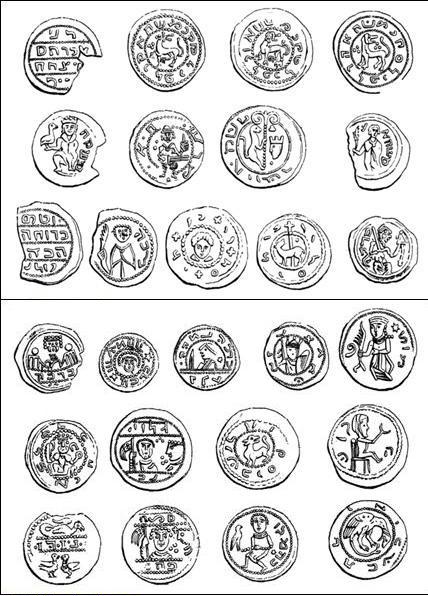
Polish Medieval coins with inscriptions in Hebrew
Yesterday was 4th of July celebrations in US. This time I am moving away from my chronological plan, and move in the next entry about this subject into 16th and 17th century Poland,  some "heretics" there dared to declare that "all men are born free." This included women too. Those people ideas influenced thinking in Europe, and then found it bloom in American Constitution. Do you know that Newton, Locke, Founding Fathers and other influential thinkers had their writings  in their libraries, or knew some of the thinkers in person?

The story of Socinians, Arians, or Polish Brethren as they were called, is the history of religious tolerance becoming persecuted fro freedom of conscience and pacifism. About them in the second part. Before I will write about them specifically, I need to explain a little bit more why I am doing it, about roots, and liberties  protected and abused.

This Summer I will write more about Poland, as there are interesting subjects you normally will not encounter easily. I hope I will not appear like Gus from My Big Fat Greek Wedding who promotes Greece such way that whatever is good it must be Greek. I will be writing about Poland, good and bad, also about roots of ideas, not only about Polish  Brethren who influenced Enlightenment in Europe and American Constitution, but also about Bogomils who influenced Cathars, Czech Brethren who were before Luther, and Arabs who influenced science and courtly love.

Poland once was a very unique country in Europe; had religious freedom guarantied by law.  There is a reason that there are Polish legends which talk about people escaping from other countries and finding safe haven in Poland. It was once called "a country without burning stakes." This is only partially true. And also the story of Polish Brethren, quite unique about whose ideas I was thinking yesterday in relation to American Constitution. Their story is story of intolerance in a country which was supposed to be tolerant,as declared to be so. Freedom can be very fragile, and needs to be protected. I will one time write more about burning stakes in Poland, but Polish Brethren were expelled form Poland. It was a tragedy because tolerance was guarantied by law.

Other people were not as fortunate to be "only" banished. Just some idea about it: Jews came to Poland because there were prosecuted in other countries. Many came from Spain. In Poland it was a unique situation Chapter of Jewish Liberties, known as Statute of Kalisz. It created a Jewish nation inside Polish nation. Please, take time to read this document, it is from 13th century, as it is very interesting, on English wikipedia are only some points out of original 36 , but still interesting.

Sounds good, right? For example the chapter forbade accusations of blood libel. Once world world's largest Jewish population lived in Poland, because they came there, escaped, looking for protection. Yet one Jew in Krakow was accused of desecration of the host, and he was burned on the stake. In Silesia 50 Jews were burned on the stake because they were accused of blood libel. Were such accusations forbidden by law?  Their freedom was supposed to be guaranteed by law, and I don't buy the argument " that it was unusually few casualties in comparison to the rest of Europe."  No, such comparison simply doesn't make it better, less tragic.  No need to ignore the problem, because the victims deserve better.  Even this one person in Krakow who was burned because he was accused of desecration, this is one human life too many.

There was also hysteria during epidemics, riots etc. No person should have been even harassed because of differences in creed, ethnicity etc. Those people came to Poland because they wanted protection. It is no need to be lured by numbers and compare it to other countries in Europe which were much worse. Comparing to even worse isn't ethically sound at all. In relation to  human lives and dignity. Even one victim is one too many, period. 

Wojciech Gerson, Reception of Jews by Casimir the Great, painting from 1874

History of Jews in Poland article can tell you more details, about riots, blaming Jews for black death and so on. It was not only freedom of religion and freedom profession on equal level with Christians. There were also abuses of freedom and human rights.

How strange is the contrast of Statutes of Kalisz in comparison to WWII. Non-Jewish victims in Poland were 3 millions, which was 20% of Polish population killed. Three million Polish Jews killed counted for 90% of Jewish population in Poland. We humans were we not supposed to be  "more civilized" during XX c?  After the era of Enlightenment people less enlightened than during Medieval times?  Antisemitism was than sponsored by the communist regime. Freedom need to be protected, always.

In comparison to those XXc. prosecutors, the king on the picture above was more enligthened. He not only reconfirmed the favorable laws of his predecessor who lived century earlier, but added additional protections. Freedom need to be protected, always.

Monday, August 20, 2012

Yellow: Triumph and Fall, history of color #11

Yellow is unusual in art history regarding the attitudes people had toward this hue: it was held in high esteem until did fall low.

First during medieval times yellow was replacing gold when it was too expensive for the project, like for example usage for the background in frescoes, large surfaces. Sometimes of course, gold was used on frescoes also, it depended on how much a community could spend. Yellow was a much cheaper alternative and still represented divine light. In an earlier post I wrote about symbolism of gold as representing divine light, as the color symbolism is theological). But yellow wasn't used symbolically only, also when needed to give some beautfil robe to a saint, for composition purposes, the color was used freely.

Chromatically yellow is also the lightest color from all chromatic ones. (White is non chromatic). Also it was used in illuminated manuscripts, as we see in this masterwork of medieval art: the book of Kells, from Iona, dating from the times when Irish monks spread their culture and knowledge in Europe. Columba was visiting Reichenau, as I told you before. This folio showing Christ enthroned makes use of yellow, which is fine of a color to even line the cross and painted as color of Jesus' hair. The birds are peacocks, about symbolism of this bird in this this article. The circles at the feet, surprise, surprise! Those are angels, called Thrones, often depicted as wheels, sometimes as wheels with eyes and wing, specially in medieval Byzantine art. Wanted to mention it, as they are not uncommon, and people wonder about what is it. But also can mean the heads of the nails of the cross. The book Christ is holding represents the divine law.


Christus Enthroned, Book of Kells, Ireland, library of Trinity College, Dublin, via wiki commons


 The figures are angels, one angel is a seraf as the posture of his wings indicates (lower corner on the right, will write more about angels another time). This part of a wonderful lecture later describes the peacocks too: as incorruptibility of Christ's flesh, with chalices and hosts.

Closer to Renaissance the elevation of yellow to color of light started to diminish, when art started to be more realistic, the golden backgrounds fell out of fashion. Now yellow started to be viewed as color of falshood and treason. It was used to brand those who were considered socially less acceptable: prostitutes, Jews, heretics. Jews were ordered by law to wear yellow badge. About yellow as color of prostitution I wrote already when I wrote about Mary Magdalene.

And as we see in this fresco by Giotto, yellow was assigned to bad people.Jesus has a loving peaceful face, he is dressed in red and blue, Judas in all-yellow garment.
Giotto, Kiss of Judas, Scrovegni Chapel, Padua, Italy, via wiki commons

Cathars after Albigensian Crusade were forced to wear yellow cross, as badge of shame. Of course they couldn't be Cathars by choice, they needed to provide prof of marriage and repent, than their live were saved. Repentant heretic was important, as too many heroic personalities burned on stake wasn't good advertisement for ideological side of religion. Some of  information about Cathar religion we know from writing of a Cathar convert to Catholicism. Those crosses called las debanadoras were to be worn always outside the house. It depended on the depth of involvement in Catharism judged by the Inquisition in a trial of , if a person needed to wear one cross or two (front and back). Those crosses were usually six inches wide and had height of eight inches. Unless one was of aristocratic birth, the badge of shame was to be worn for the rest of someones life. Many simply didn't comply, or were unrepentant. It was not a simple badge of shame:Cathars didn't like the cross as a symbol, this refusal of the symbol was written in their religious philosophy. It was much more cruel punishement than a known more widely and younger scarlet letter for adultery. Following link will bring you the wikipedia articles about Cathars and yellow cross http://en.wikipedia.org/wiki/Cathar_yellow_cross 

As for heresies: they were not considered a religious offenders only, but in Western Europe heresies were viewed also as treason against the state, and considered anarchy. This was also one of the  reasons why it was relatively easy to prosecute those who didn't conform. Rulers were offended by heresies, specially because almost every heresy also criticized materialism of the status quo, preached poverty or renunciation of material world, Catharism did it to.