Showing posts with label Byzantium. Show all posts

Saturday, September 1, 2012

Dark Ages? Not everywhere: Byzantine love for classics

In popular opinions Dark Ages were taking over Europe until the Renaissance came with revival of classic traditions. This is only partially true. Byzantine Empire continued the tradition of Greece and Rome, combined with Eastern influences. Medieval renaissances of Europe, to be exact Western and Central Europe were brought by closer contact with Byzantine Empire.

 Byzantium was the name of the city, which was renamed by the emperor Constantine Nova Roma, meaning the New Rome, as it became new capital, but it was also renamed  Constantinople . It became Europe's biggest city, it had half million inhabitants.The people who inhabited this empire called themselves Romans, the empire was called Romania. Greek was spoken, as the local language and the language of educated elites, nothing unusual, even in Rome educated people spoke Greek, as Romans were totally admiring Greek culture and copied a lot from it. The library of Constantinople was very prominent, Byzantine equivalent of the great library of Alexandria. Ancient writings were not only preserved here, but also studied and copied, to keep the knowledge from disappearing. There were also periods of additional stronger interests in classics, such as Macedonian Renaissance of the X c. from which time the page of the manuscript called the Psalter of David is dated. King David is depicted as a Byzantine emperor, but the other two figures are very classical. No wonder: as Rome had  monuments of the classical past, so did this area of Byzantine Empire.

Penitence of David, Paris Psalter,  X c.Biblioteque Nationale, Paris

We see David twice: sitting on his throne, and also bowing feeling remorse for all the bad deeds  he has done. Classical figures are here- the admonishing prophet, and the female figure which is the personification of penitence. She is dressed in green and red, the colors later seen often in robes of Mary Magdalene. Why we know that this is penitence? One thing is that personifications were common in the art of Antiquity, another prof is her name written above. It was common in Byzantine art to include captions about the figures to indicate who was who. (People in Byzantine Empire were quite literate, the culture was vibrant). Also above the prostrating David we have the caption which spells his name, that the viewers shouldn't be confused. The writing connected to the female figure there is the word "Metanoia," which term meant repentance in Greek. Meant changing one's mind, turning point. The flagellants of Latin Christianity gave it bad connotations. Penitence was about making amendments, changing mind, changing lifestyle.

But Byzantine Empire was of course more sophisticated than Latin West, were tribal warfare and other struggles went on through some longer periods of time, but still medieval times were not as dark as it is held in popular imagination. The movies may show this time as era of ignorance, superstition, dirt, illness and decline, as this imagery adds drama, but the times were more lively and enlightened. Rather during the Renaissance, or general during the XV-XVII c.Europe had even more dark turmoils: more of  illness, witch hunts, inquisition, wars,  fears of devil,belief that magic equals science, etc. Even medieval universities were not all about faith, as is often assumed: popular belief is that science believed the Earth was flat, or in medicine there was no dissection of corpses, the medical knowledge of Antiquity wasn't practiced, etc. Not true, we know thanks to explosion of knowledge about the Middle Ages during he XX c. So, why the term Dark Ages?

First putting down on the predecessors occurred during the Renaissance, in order to point out the new achievements. Gothic art was called Gothic in a derogative way, as Goths were considered barbarians. The Renaissance mind was so enamored in the nostalgia for antiquity, that they couldn't really appreciate the art and achievements of earlier generations. This lack of appreciation went thorough centuries, and the era of Enlightenment in order to contrast is own achievements needed the idea contrasting light and darkness, needed the term Dark Ages. In addition the term Age of Faith was used, in order to brand the times as irrational and dark. The Enlightenment prided itself not only for its light, but also for reason as opposite to faith. There were even attempts to create temples of reason in churches.

Byzantine manuscript, X c. Paris Psalter, King David Playing Harp, very much in the tradition of classical frescoes

During the XIX c. the scholars were talking still about Dark Ages as the time from which were not too many written records left, but there was also medieval fashion . (Pre-Rafaelites, Romanticism, Gothic Revival, etc). This intense interest in all things medieval was combined with the Romanticism's love for mystery, the  fantastic, emotional and the irrational. Hard reason of previous era wasn't the fashionable idea. During the XX c. however, the term Dark Ages started to be criticized, in light of the new scholarship, and the term was used in a more neutral way, and even the neutrality of the term was disputed. It was argued that the scholars may know that the usage isn't negative, but the general public will not interpret it such way. And the criticism was right on target.

And myself I used the term provocatively in the title of this post. Still, I think in popular culture Byzantine Empire doesn't get enough credit, and this was an empire of great sophistication and influence, and lasted of a millennium. Holy Roman Empire lasted almost a millennium, but there were empires which existed for much shorter time: The British Empire, Austrian Empire, Empire of Austria and Hungary, Bulgarian Empire, and others. So, maybe it is time to refresh the memory of this part of common history? But still, I think the movie industry, mainstream literature, computer games, TV, advertisements, press,some popular chanels historical documentary movies, and others are still in the dark about not-so Dark-Ages.

Quite often there is a misconception of great Rome which fall:yes, Rome was sacked, but before became very empoverished because of Byzantium. The idea of "fall of Roman Empire" first was again talked about during he Renaissance, by popes. It was an idea supporting propaganda: Pagan empire which "fall," quite clever idea, remember, there was the schism between Byzantium and Latin Christianity. It is not very historically accurate common misconception, but quite often still, in XXI c. has place in the classroom.


Thursday, August 30, 2012

Byzantine tradition: icons, garments and liturgy

Once strolling through the old streets close to Krakow's Old Town Market Square I heard amazing singing, Orthodox choir. I stood on the street and listen, assuming someone had a nice CD playing, the sound coming from one of the open windows. But listening more carefully I heard that the sound came  the courtyard. Knowing from experience that those centuries-old houses quite often have beautiful an intriguing yards surrounded by walls, I went, slowly. Somehow the music pulled me. Than I saw the sign, "Orthodox Church," and an arrow. I followed, after climbing some steps in one of the old buildings I entered a church which was housed among apartments, not a regular Orthodox church building I normally knew and view from afar, but never visited during liturgy. There I saw the choir: three women with white kerchiefs covering their heads, and with them was one man, all very focused and singing beautifully. The congregation was very small, but there were icons on the walls, with  lamps hanging before them, and the liturgy was celebrated. In my country Orthodox Christians have a reputation of being excellent singers, and here was the proof, there were just so good that I was thinking it was a CD!  After the liturgy people were kissing the icons. All was very touching, I was moved by the music, liturgy, and by the solemn atmosphere. Something like in the videos below, specially the second one, the link.

The icon here is Christ Pantecrator, XXI c. by anonymous maker for tourist industry in Bulgaria, but I love it anyway!

Religions don't bother me, (unless there is some kind of abuse going on), but in general I find a lot of beauty in this kind of human involvement. The word religion comes form the words re-ligare, which means reconnect. I like this interpretation of the word's origins.

I will be writing more about Byzantine traditions, as they are important. They are part of Europe's cultural heritage, and without Byzantium there wouldn't be Italian Renaissance as we know it, nor it would there be European heritage as we know it. There the traditions of  Greece and Rome lived while in Western Europe it was a strong break. Not that ancient  philosophies were not read in the West during the Middle Ages, after all Latin Europe had medieval renaissances, but those parts of Europe were culturally developing in their own direction, and were much poorer.

Byzantine art was a mixture of classical Greek and Roman  traditions influenced by Eastern mysticism and love for imagination. Icons represented Jesus, or Mary, saints and angels, but also in its highly stylized canon there was representation of aesthetics and fashions of the imperial court. So, Jesus and Mary are dressed in robes of imperial purple, or the saints and angels depicted as dressed like important people of the imperial court. Icons didn't change much. Of course there are various schools of icon painting, and there also some influences among those schools which are more Westernized, but in general the icons are preserving the past very well, now and here. The tradition is followed rather strictly, and we can see how people were dressed long time ago, still can today see the stripes of fabric called loros still part of the garments, or see the color which are in the range of hue variations of real purple of Tyre. We can see how some courtiers looked like at the court of Constantinople, which was than the city of amazing luxury.

What fascinates me that when you look at the traditional icons or frescoes in Byzantine style and you see the liturgical garments used today, you recognize that some garment are very similar to what we see on the icons.Byzantine fashion of a millennium ago. I hope you will enjoy the beauty of the chants, and the visual part, and see similarities of the garments worn by the clergy mirroring the garments of the saints on the frescoes. It is like being among the people of Constantinople of old.

And take a loo at the fresco at 8:45, the creature with one face and six red wings with some writing (reads Cherubim) is an archaic depiction of a cherubim, one of the highest angels in angelic hierarchy. Stained glass window at 12: 25 shows also a cherubim or a seraph, those were often interchangeable. This is a sequence of very interesting and beautiful  pictures, not a liturgy video. Enjoy!


And just  in case you want more, here is another video! http://www.youtube.com/watch?v=UsL61X5fOLU The piece sung here is Agni Parthene, a non-liturgical hymnopoem to Virgin Mary. Have blessed time!


Wednesday, August 15, 2012

Purple, the Imperial Color, History of Color #10

Byzantine Emperor Justinian, mosaic in St Vitale church, Ravenna, Italy

I wrote about red and blue as colors of power in my recent entry. But the ultimate color of power was purple, before red and blue rose to higher prominence. It was before the sack of Constantinople during the Fourth Crusade in 1204, which I mentioned in the entry about the holy blood relic in Reichenau and Bruges. Constantinople never recovered enough to produce purple dyed clothes again. This fact might give you some insight how expensive purple dye was.

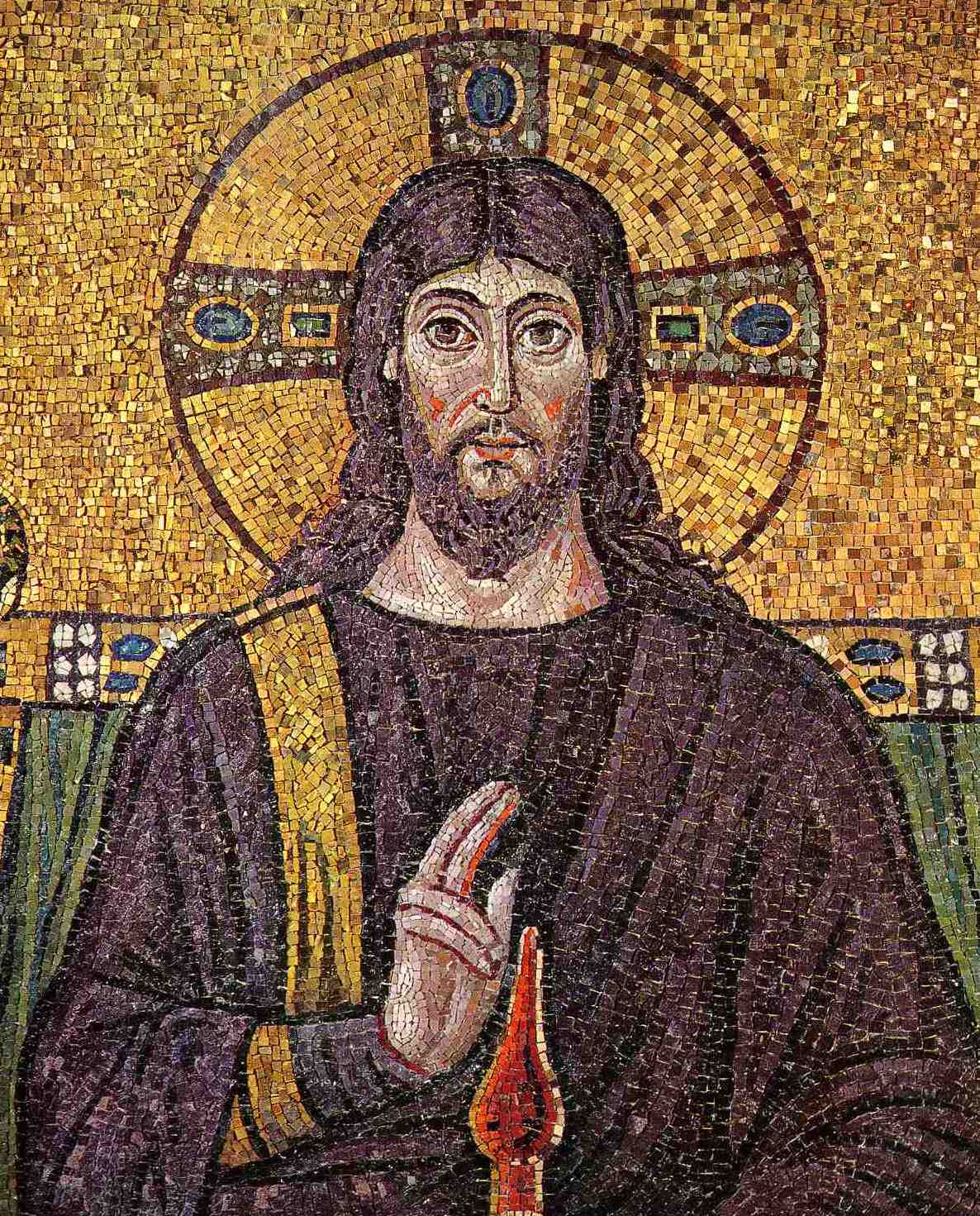
 The purple dye was so expensive that it was a subject of sumptuary laws, and mostly restricted for the imperial or royal families. It was produced from Murex sea snail, and tens of thousands were needed to dye one piece of garment. Color purple took the name from the dye, wasn't the description of color itself. The price of dye was equal of weight in gold.  The main center of the craft of dyeing in purple was Tyre, in Phoenicia. The name Purple of Tyre comes from it. This purple wasn't the hue we perceive today as such: it was more reddish brownish, a very muted but intense color. The emperors robe on the mosaic above looks more blueish than in person. The robe of Jesus looks more brownish, but it is difficult to take very accurate pictures of mosaics in the interior, where every detail will be of exact color. And the purple of Tyre doesn't get reproduced very well on the computer screens either. But you get the idea.
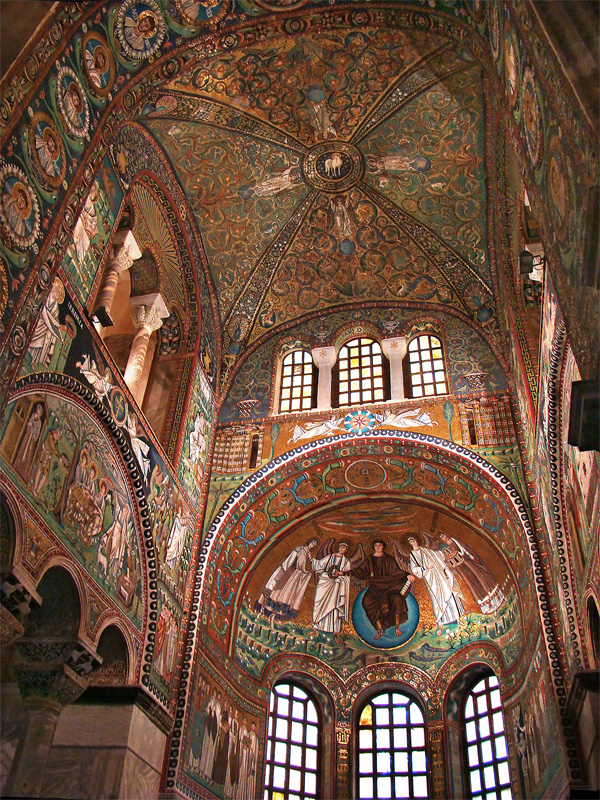
Mosaics at San Vitale church, Ravenna, Italy, via wiki commons, thanks to Tango


Not only rulers were depicted in purple, but also Jesus and Virgin Mary. Byzantine art showed them as rulers, full of dignity and somehow stern looking, as does the Christ dressed in purple on Byzantine mosaic from the church St Apolinare Nouvo, Ravenna, Italy (via wiki commons) The style is Early Byzantine.


And here is shroud of Charlemagne, early IXc. manufactured in Constantinople, today in Paris, Musée National du Moyen Âge. (via wiki commons). Purple on silk created wonderful effects that enchanted the eye: depending on light looked more blueish or reddish, had luster fro which was prized too. Not many fabric are left from Byzantine times, mostly fragments, and like this one found in the graves of the rulers of the time.

Shroud of emperor Charlemagne, purple dyed silk
 The purple was known already in Antiquity, and was mythologically credited to be discovered by the dog of Hercules. Plato mentioned this color in his Symposium as the greatest hue of all. It was used in Egypt, and became the color of Roman emperors. Sometimes the law was not harsh and women were allowed to wear purple, but other times anyone else than emperor wearing a purple robe would be killed. The first church in Europe was founded because of religious devotion and courtesy of a woman, Lydia, who was a business woman, a merchant in purple dyed fabrics. She must have only rich clients.

One of the Roman emperors forbid his wife to buy additional purples robes, as he considered too expensive.

Today, to all my knowledge there is only one pigment manufacturer mill, Kremmer Pigmente from Germany, which sells  this kind of  purple for art conservation purposes. One ounce would be 153,120 $, of course on the website for the art conservators this dye is sold in fractions of  1gram (1 once has 30 grams, to remind you), so , it is sold sold here in fractions of grams
According to Kremmer Pigmente, it takes 10,000 snails to make 1 gram of purple, which would be 300, 000 to make one ounce.

Later instead of purple silks were dyed with kermes, which was red dye made of the bodies of dried insects. I am for sure glad we use different process in fabric dyeing today, not involving killing masses of mollusc, or insects. (But still,  today fashion industry is terribly unfriendly toward the environment, one of the main polluters). Lucky for me, a fine artist, I can pick and chose which pigments I want. Honestly, I couldn't bear to buy paints or dyes containing colors made out of living creatures. I don't wear silk either for this reason.

This red coronation mantle of Roger II, silk and gold thread, pearls and precious jewels was done in royal workshops  from Palermo, Sicily. Now in Vienna treasury.We see the new fashion coming, replacing purple with red, which resulted in pictures of royals, nobles and Virgin Mary dressed in red mantles.

Roger's II coronation mantle, via wiki commons, by Gryfindor