Showing posts with label religious tolerance. Show all posts

Friday, July 5, 2013

The supposed "heresy" of "All men are born equal" part 1


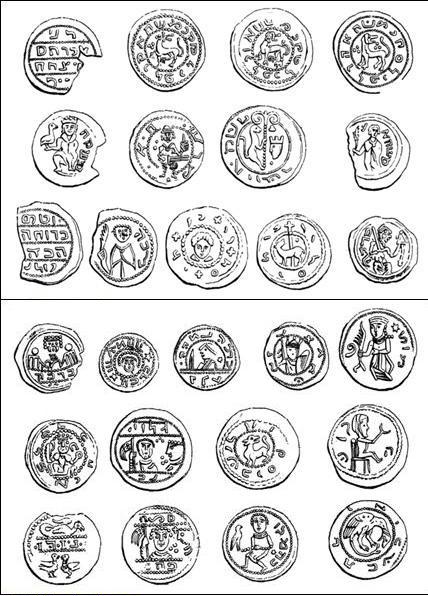
Polish Medieval coins with inscriptions in Hebrew
Yesterday was 4th of July celebrations in US. This time I am moving away from my chronological plan, and move in the next entry about this subject into 16th and 17th century Poland,  some "heretics" there dared to declare that "all men are born free." This included women too. Those people ideas influenced thinking in Europe, and then found it bloom in American Constitution. Do you know that Newton, Locke, Founding Fathers and other influential thinkers had their writings  in their libraries, or knew some of the thinkers in person?

The story of Socinians, Arians, or Polish Brethren as they were called, is the history of religious tolerance becoming persecuted fro freedom of conscience and pacifism. About them in the second part. Before I will write about them specifically, I need to explain a little bit more why I am doing it, about roots, and liberties  protected and abused.

This Summer I will write more about Poland, as there are interesting subjects you normally will not encounter easily. I hope I will not appear like Gus from My Big Fat Greek Wedding who promotes Greece such way that whatever is good it must be Greek. I will be writing about Poland, good and bad, also about roots of ideas, not only about Polish  Brethren who influenced Enlightenment in Europe and American Constitution, but also about Bogomils who influenced Cathars, Czech Brethren who were before Luther, and Arabs who influenced science and courtly love.

Poland once was a very unique country in Europe; had religious freedom guarantied by law.  There is a reason that there are Polish legends which talk about people escaping from other countries and finding safe haven in Poland. It was once called "a country without burning stakes." This is only partially true. And also the story of Polish Brethren, quite unique about whose ideas I was thinking yesterday in relation to American Constitution. Their story is story of intolerance in a country which was supposed to be tolerant,as declared to be so. Freedom can be very fragile, and needs to be protected. I will one time write more about burning stakes in Poland, but Polish Brethren were expelled form Poland. It was a tragedy because tolerance was guarantied by law.

Other people were not as fortunate to be "only" banished. Just some idea about it: Jews came to Poland because there were prosecuted in other countries. Many came from Spain. In Poland it was a unique situation Chapter of Jewish Liberties, known as Statute of Kalisz. It created a Jewish nation inside Polish nation. Please, take time to read this document, it is from 13th century, as it is very interesting, on English wikipedia are only some points out of original 36 , but still interesting.

Sounds good, right? For example the chapter forbade accusations of blood libel. Once world world's largest Jewish population lived in Poland, because they came there, escaped, looking for protection. Yet one Jew in Krakow was accused of desecration of the host, and he was burned on the stake. In Silesia 50 Jews were burned on the stake because they were accused of blood libel. Were such accusations forbidden by law?  Their freedom was supposed to be guaranteed by law, and I don't buy the argument " that it was unusually few casualties in comparison to the rest of Europe."  No, such comparison simply doesn't make it better, less tragic.  No need to ignore the problem, because the victims deserve better.  Even this one person in Krakow who was burned because he was accused of desecration, this is one human life too many.

There was also hysteria during epidemics, riots etc. No person should have been even harassed because of differences in creed, ethnicity etc. Those people came to Poland because they wanted protection. It is no need to be lured by numbers and compare it to other countries in Europe which were much worse. Comparing to even worse isn't ethically sound at all. In relation to  human lives and dignity. Even one victim is one too many, period. 

Wojciech Gerson, Reception of Jews by Casimir the Great, painting from 1874

History of Jews in Poland article can tell you more details, about riots, blaming Jews for black death and so on. It was not only freedom of religion and freedom profession on equal level with Christians. There were also abuses of freedom and human rights.

How strange is the contrast of Statutes of Kalisz in comparison to WWII. Non-Jewish victims in Poland were 3 millions, which was 20% of Polish population killed. Three million Polish Jews killed counted for 90% of Jewish population in Poland. We humans were we not supposed to be  "more civilized" during XX c?  After the era of Enlightenment people less enlightened than during Medieval times?  Antisemitism was than sponsored by the communist regime. Freedom need to be protected, always.

In comparison to those XXc. prosecutors, the king on the picture above was more enligthened. He not only reconfirmed the favorable laws of his predecessor who lived century earlier, but added additional protections. Freedom need to be protected, always.

Sunday, April 22, 2012

Templar Legends in Poland, part 1

 
   The Knights Templars' history can induce flights of imagination, and no wonder: given the rise to power, their wealth and tragic dismiss of this chivalric order in France. From the legends someone can have an impression that not many Templars stayed alive after the imprisonment, torture, and killing of some of the knights in France.

 Templar chant Salve Regina

However, Templars were present in other countries of Europe, and when the order got dissolved; they joined the ranks of the other chivalric orders, as for ex. Johannites, or the Teutonic Knights. After the land ownership was transferred to others, some Templars still were allowed to stay. French king's power didn't reach to other parts of Europe. But the power of the Pope who was pressed by the king did. The puppet pope decided to dissolve the order, and told Templars to change alliances. His word was taken seriously. However, the Vinci Code-style Templar pogroms across all Europe just didn't happen.

When we look closer at some Polish legends, we find a story where a Templar commander was killed by the burghers of a specific town.  There is a stone cross on the place of the alleged murder. I didn’t see the cross, if it is stone it may be so called “penitent cross” put often on a place of crime. Why the people killed the Templar? Most likely abusive conduct of the Templar in question, nothing to do with the events in France. The Knight Templars were crusaders after all, and similar to other crusaders in Poland they not always were treating the locals gently.

 Description in Polish language of someone who is nasty and arrogant as  "haughty like a Templar" may point to not-so-mysterious and holly direction. The knights are the stuff of legends and mystery, but also they took parts in rides against the pagan population. The massacres of civilian populations were seen by the crusaders of any kind as normal behavior towards the non-Christians. Teutonic Knights, the other crusaders in situ, also complained that the pagans in the region were very rebellious and rotten: they didn't want to submit to "proper" power. There were of course uprisings by pagan populations and by the Christians alike. And Templars, like any other crusading orders, got also great latifundia donated to them by the Polish dukes, with local population included.

One legend, written down nicely by Mr. Gralinski, relates to Templars’ memory when they are seen as murderous crusaders. Not painting a pretty picture of the knights. This legend is alive in the village Dankow. Centuries ago Dankow was a city on its own right, but  fires reduced it to today’s simple village with two  beautiful lakes, ruins of the castle fortification,  and decaying remnants of a manor house. Archeologist are conducting digs right now, trying to find what is left from one of the most powerful castle in the Brandenburg March. Also archeologists are diving, looking for ev. remnants of the Medieval pagan fort (Slavic Wends?)  whom the legends also includes. So far there seem to be some parts of armors and weapons on the bottom of the lake.
The legend talks about a great battle between the Knights Templars and the pagans. The pagan warriors lost the battle and were all killed, no prisoners were taken. Only the women and children remained. In addition some material goods and cattle were in the fort, as spoils of war. The pope’s legate was there, among the victorious knights, and the Templar commander Friedrich von Alvensleben (commander in years 1302-1305). Von Alvensleben was initially proposing that the population which was still alive was to be treated relatively gently, in order not to cause hatred toward Christianity, which could lead to future additional uprisings.

 All invaders went to the fortress, and the daughter of the slain chief was now the ruler there. She met the victors, and a group of beautiful young women stood behind her, all festively dressed. The female new chief tried to negotiate with the invaders addressing Friedrich von Alvensleben: "Please, let after the times of tears be times of joy and peace, let be here a better future. As an act of forgiveness, and as a peace offering, let the music play, and come ye knights, and dance with those women." This peace offering was very upsetting to the papal legate. He slurred some nasty insults toward the women accusing them of pagan seduction tricks, and gave a hand signal toward the Templars, ordering them to kill off all women and children. The massacre started, and amidst the horrible screams of the victims the daughter of the pagan chieftain cursed the knights and the legate, and high water rose from the lake and swallowed all which was left from the fort, and all the women and children, and all cattle. Since then every year during the evening of the Summer Solstice  from the lake appears a group of young and beautiful women, dressed festively, and they sing  trying to lure any young men do dance.