Showing posts with label Cistersian architecture. Show all posts

Sunday, June 30, 2013

Forgoten Patron-Abbot Suger

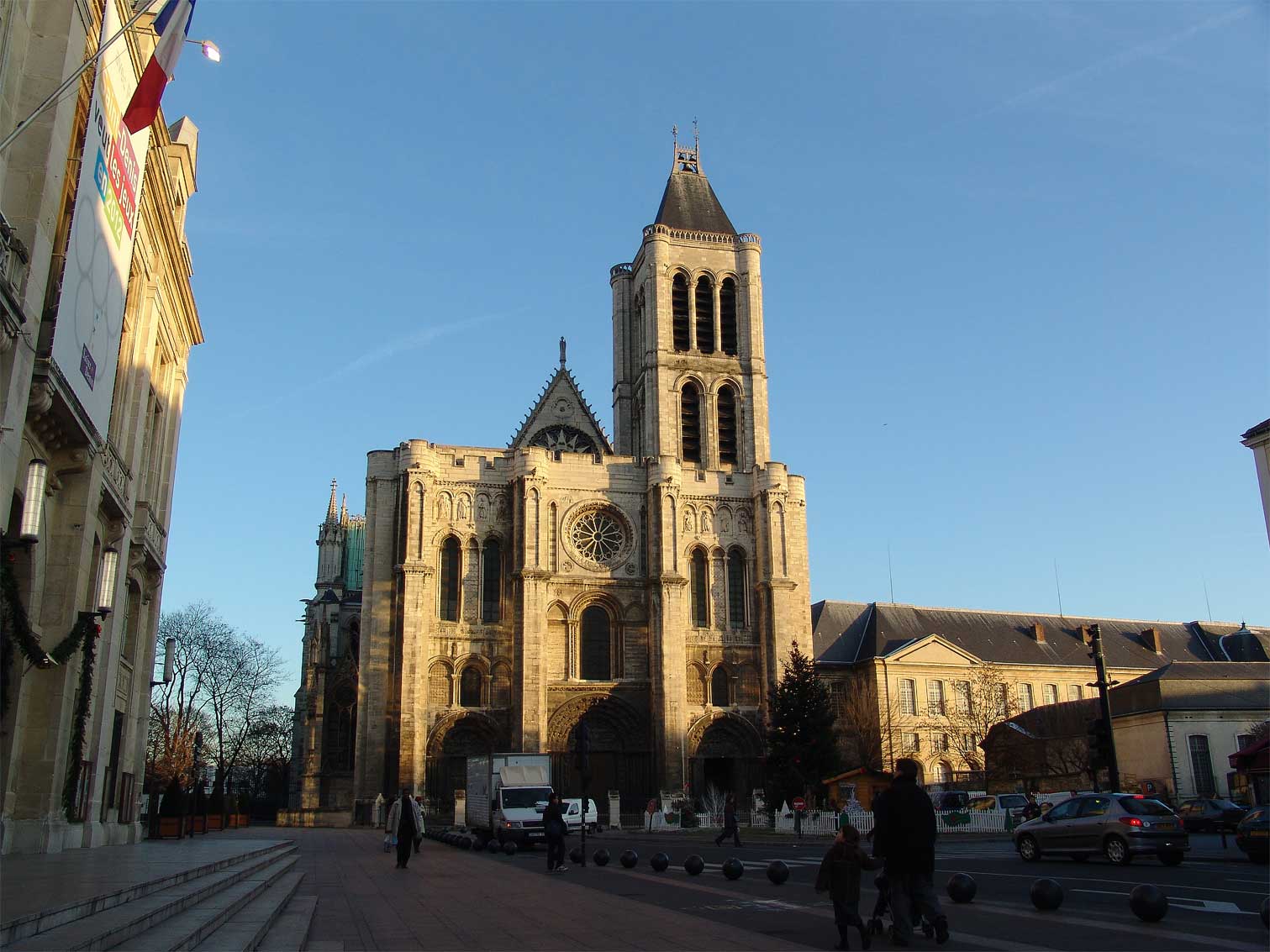
If you are interested in art history, specially if you are interested in Medieval art, sooner or later you will run in your conversation, or books people recommend to you, into stories about Templars, how they introduced and built Gothic cathedrals, and so on. One name is never mentioned in such conversations,  or books: Abbot Suger's. It seems he disappeared from popular culture as contributor to Gothic art, or maybe he was never accepted. Pity, as he did as much for the development of Gothic architecture as the Medici's family did for the Renaissance. Of course, he is known to people who are serious about art history, but doesn't he deserve his place in the pantheon of movers and shakers and patrons who fueled new forms?

Chapel of the Virgin, St Denis basilica, via wiki commons by Myrabella
Abbot Suger was a man of many talents: he was a politician, statesman who served as regent of France when king was on crusade, he was a historian, art theorist, theologian and of course manager of a big and influential Abbey of Saint Denis. Not to idealise him: as many people of his times, he was sometimes opposing crusades, but sometimes he was in favor of them. Basilica of St Denis on wikipedia article

He was friend and confidant of the kings, and patron of artists and builders who had new ideas but were not given proper chance to bloom.

Sometimes, however, another situation happens: Abbot Suger is talked about as a single inventor of a Gothic style. This is not completely true: he wrote about aesthetics, wanted the walls to be higher, lighter, windows big and colorful, designed himself, introduced new features, loved things ornate and precious. But he collaborated with people who wanted to do things in a different way.Redesigning of St Denis wasn't his and only his project. He was very engaged, but didn't handle projects and firmly said: "build exactly what I drew." He was giving ideas, he accepted ideas, he was the project manager. Through him was possible to introduce large windows with pointed arches, ribbed vaults, clusters of columns, flying buttress, ambulatory with chapels radiating form it, and lots of light.

As you see on the picture above some features are still Carolingian, like for example columns, they still look like those from Antiquity. But arches are pointed already, vault is more complex, and windows are big.

Gothic style was a natural development of Romanesque style: what happens the newer style tended to make the building more spread in smaller part, branching out, more differentiated in forms, less compact, in comparison to the solid mass of Romanesque churches. The style was adopted fast, specially in royal domain of Ille de France, but still a lot of experimentation was going on. It happened that not all architectural ideas worked perfectly, talking about Europe now in general, not only France. There were instances when parts of cathedrals collapsed, or bad accidents happened. But with time building science was catching up with new aesthetics of creating higher and higher churches with bigger and bigger windows.

Rosette window in St Denis, North side,via wiki commons by Amirwiki
About Zodiac, see my blog entry about Charters and Zodiac
A lot of enthusiasm was involved in such projects, specially in France. France was the cradle of Gothic style and from here the style radiated to other countries. More stones were moved in France during the era of building Gothic cathedrals than in old Egypt in construction of pyramids, and cathedral builders were properly compensated. People who helped were volunteers, no slave work involved.

Volunteers were amazing enthusiasts.They were religious, of course, those people were products of their times like we often are products of our times. Haimon, abbot of Saint Pierre sur Dives wrote in his letter from 1145 about the wave of building enthusiasm among people in France. He wrote about building of Chartres cathedral. According to him even princes and nobility together with those of humble origin were pulling carts full of olive, wood, crops, stones, and anything which was needed for fulfilling the needs of the people working on the construction, or for the building of the church. Often a thousand or more people were pulling a cart full of stones, in great silence, in spirit of forgiveness of each other imperfections and in spirit of universal brotherhood and sisterhood. If you could hear anything at all , those were only prayers, or confessions of wrong doings and words of forgiveness among them. It was like a contemplative movement of peace among people for whom at such times differences among humans were not important, they worked in the spirit of brotherly and sisterly love. So wrote Haimon.
 Suger's ideas of the new style spread fast, but it doesn't mean that they were widely accepted without criticism: some churchmen said that ornate and rich style shouldn't be part of church buildings, church interiors, or church services. Cystersians were proponents of such ideas of humbleness and actually during Medieval times there was ongoing controversy about humbleness versus showing things divine through color, gold, light   and all things which could inspire awe. A little about Cystersian aesthetics in my other entry. I am not saying one approach was better than the other,but  they were competing.

 Abbot Suger not only broke frames of Carolingian building, (the abbey was built in this style) when he commissioned the rebuilding, but also asserted that awe is important part of religious experience.

Cystersian were more for soft quiet focus and contemplation, were against appeal to senses in churches. Colors, sumptuous decorations, music, incense, this was not important, they viewed it as distracting form the experience of closeness to God. Suger said the divine manifests in beauty, light an d color. He wasn't alone: this idea was well and alive because of monastery in Cluny. Founder of the Cystersian order, St. Bernard of Clairveaux simply opposed Cluniac theories. But Suger was on the side of Cluny: to him the stained glass windows were like a vision,  gold reminded of divine wisdom, soaring heights of church ceilings were leading thoughts to heaven. For sure churches were sanctuaries of beauty and space in European, not only French cities, which were dirty, conditions were crowded, as for example width of a room was the width of a bed, etc. But people could just step in a church building  and were transported into another, more beautiful world.

Saturday, March 24, 2012

History of Color # 3 Not Colorful Enough, or?

Medieval fresco with traces of paint,  monastery in Baden Baden, Germany.
 
 Dramatic scene. Expressive image, emotions shown in movement, clarity of composition. Fine work, but 600 or 700 years ago it would be considered just not colorful enough. Brown  was perceived as  a very ugly color, just way  too humble. Those contours were the first step in painting, preparatory drawing before filling in color. But we can appreciate it very  much. Similar situation of differences in perception of beauty through ages is the case of the sculptures and architecture of Antiquity, from Greece and Rome.White, unpainted marble  delighted and delights modern sensibilities, but for the Greeks and Romans was just way too plain.
So, lots of paint was put on it, often in garish colors. But the Medieval colors were not really garish, as I mentioned before,  they were jewel-like, as imitating colors of precious stones was so important then.

This is the stone vault of the bell tower of Freiburg Cathedral. This beautiful Gothic construction detail of the tower of the tower is beautiful for us today, but centuries ago  would be just much too grey. When it was newer, it was fresher, much lighter, but still  it was just a technical detail. Even though, it is touching to see the clover leaf adornment chiseled out of stone with such love for detail.


The tower itself is one tenth of the mile high. When I was there, I first visited the framer market at front of the cathedral. After all during the  medieval times markets were common at front of such visited sacred houses. I truly enjoyed this market with buckets of freshly cut flowers, organic food, fragrant hand made soaps, it was very sensual, music, colors, fragrances.  Than I entered the cathedral, looked around, contemplated the art, so typical for a visit on a trip. It was more elevated experience, meditative, sublime.

But this place also offered one  interesting option in addition: to climb the bell tower tower, to be able to see the bells and to admire the view of the old town. Of course I needed to do it. One tenth of the mile high climb: narrow, rather steep stairs, spiraling, twilight.  The climb seemed have no end to me. And than at the top this unusual feeling when you face all those bells which are tons heavy, this stone vault beyond which is the spire of lacy stone carving, becoming less and less material, the essence of Gothic architecture, sublimation of the material world into the heavenly one.  And the view of the blue sky. It was a very strange juxtaposition: stones and the sky.

We, the viewers of today, we like patina. Old artifacts are allowed to have patina, their market value can even diminish if the patina is removed. But for people of Middle Ages, this vault would have been too dirty.
Yes, there is accumulated dirt on the vault, but we don't mind it as much as people would do hundreds of  years ago. They disliked brown, grey, as those colors don't have enough chromatic intensity. Poor peoples' clothes were in neutral colors of raw fabric, made of flax, wool. Wool was often beige, or brown. The richer ones wore colors.

Those stones from the Reichenau Monastery, which was once of the greatest centers of learning, hosting a very large library, and busting with life, are charming to most of us, modern viewers.


But than, a thousand years ago when scribes of Reichenau produced delicately illustrated books, this combination of brown floor tiles and gray stones would be plain ugly. Medieval mind loved color. Bright, luminous color.  Neutral colors were not of much of use in art.

There were of course exceptions, like frescoes in Umbria, Italy, painted with lots of browns. But this is unusual. Other exception are Cistercian monasteries, with simple, unadorned interiors.Cistercian church is beautiful to us, in its simplicity, and probably was considered as such by the monastic community which valued the life of poverty. But the general idea of the times was that a church is supposed to represent to some degree a paradise on earth, or the heavenly Jerusalem, and needs to be adorned with pure colors.

From my experience when discussing Medieval tastes for things colorful, pure, shiny and glossy, sooner or later comes a comment: "but they were so terribly dirty!" (This comment comes when discussing Rococo also, understandable). However, the idea of Middle Ages as filthy ages is disputed by historians. Some lean toward  idea that indeed, dirt was common, and there is truth in it, but others point otherwise, and there is also truth in it. For example Byzantine Empire had system of waste removal, water flushed toilets, and high level of hygiene. Latin Middle Ages had the system of public baths, which were more like spas: hangouts were it was possible to take a bath, eat while soaking in the communal  bathtub, and  listen to life music, to gossip, and play games. Bathing was a social occasion, and baths were frequented, making the members of the bather gilt rich. Banya in Russia, sauna in Scandinavia, hot springs through Germany and Switzerland, and numerous public baths everywhere point to rather cleaner people than we are willing give them credit for.

 For example in Poland bathing was so common that even the beggars were entitled by law to get free bath every two weeks. Or some in Europe monasteries might have as a rule not to bathe, but others required cleanliness rule to follow. Even some of the old monasteries were build close to hot springs, and bathing was a symbolic action of washing away sins, after confession. Above mentioned monastery of Baden Baden was close to hot springs. The Church didn't oppose hygiene, and was advocating cleanliness for health reasons, but was against a habit of too much bathing, as it seemed to be addictive to some: every day several hours in bathing house. I know, i know,  I digress, but so many people have imprinted in their minds that Medieval times were ages of filth and darkness. I felt compelled to give additional information,as we talk about colors, splendor and light in Medieval art..

For more detailed information about Medieval hygiene, read this very interesting article.