Monday, August 20, 2012

Yellow: Triumph and Fall, history of color #11

Yellow is unusual in art history regarding the attitudes people had toward this hue: it was held in high esteem until did fall low.

First during medieval times yellow was replacing gold when it was too expensive for the project, like for example usage for the background in frescoes, large surfaces. Sometimes of course, gold was used on frescoes also, it depended on how much a community could spend. Yellow was a much cheaper alternative and still represented divine light. In an earlier post I wrote about symbolism of gold as representing divine light, as the color symbolism is theological). But yellow wasn't used symbolically only, also when needed to give some beautfil robe to a saint, for composition purposes, the color was used freely.

Chromatically yellow is also the lightest color from all chromatic ones. (White is non chromatic). Also it was used in illuminated manuscripts, as we see in this masterwork of medieval art: the book of Kells, from Iona, dating from the times when Irish monks spread their culture and knowledge in Europe. Columba was visiting Reichenau, as I told you before. This folio showing Christ enthroned makes use of yellow, which is fine of a color to even line the cross and painted as color of Jesus' hair. The birds are peacocks, about symbolism of this bird in this this article. The circles at the feet, surprise, surprise! Those are angels, called Thrones, often depicted as wheels, sometimes as wheels with eyes and wing, specially in medieval Byzantine art. Wanted to mention it, as they are not uncommon, and people wonder about what is it. But also can mean the heads of the nails of the cross. The book Christ is holding represents the divine law.


Christus Enthroned, Book of Kells, Ireland, library of Trinity College, Dublin, via wiki commons


 The figures are angels, one angel is a seraf as the posture of his wings indicates (lower corner on the right, will write more about angels another time). This part of a wonderful lecture later describes the peacocks too: as incorruptibility of Christ's flesh, with chalices and hosts.

Closer to Renaissance the elevation of yellow to color of light started to diminish, when art started to be more realistic, the golden backgrounds fell out of fashion. Now yellow started to be viewed as color of falshood and treason. It was used to brand those who were considered socially less acceptable: prostitutes, Jews, heretics. Jews were ordered by law to wear yellow badge. About yellow as color of prostitution I wrote already when I wrote about Mary Magdalene.

And as we see in this fresco by Giotto, yellow was assigned to bad people.Jesus has a loving peaceful face, he is dressed in red and blue, Judas in all-yellow garment.
Giotto, Kiss of Judas, Scrovegni Chapel, Padua, Italy, via wiki commons

Cathars after Albigensian Crusade were forced to wear yellow cross, as badge of shame. Of course they couldn't be Cathars by choice, they needed to provide prof of marriage and repent, than their live were saved. Repentant heretic was important, as too many heroic personalities burned on stake wasn't good advertisement for ideological side of religion. Some of  information about Cathar religion we know from writing of a Cathar convert to Catholicism. Those crosses called las debanadoras were to be worn always outside the house. It depended on the depth of involvement in Catharism judged by the Inquisition in a trial of , if a person needed to wear one cross or two (front and back). Those crosses were usually six inches wide and had height of eight inches. Unless one was of aristocratic birth, the badge of shame was to be worn for the rest of someones life. Many simply didn't comply, or were unrepentant. It was not a simple badge of shame:Cathars didn't like the cross as a symbol, this refusal of the symbol was written in their religious philosophy. It was much more cruel punishement than a known more widely and younger scarlet letter for adultery. Following link will bring you the wikipedia articles about Cathars and yellow cross http://en.wikipedia.org/wiki/Cathar_yellow_cross 

As for heresies: they were not considered a religious offenders only, but in Western Europe heresies were viewed also as treason against the state, and considered anarchy. This was also one of the  reasons why it was relatively easy to prosecute those who didn't conform. Rulers were offended by heresies, specially because almost every heresy also criticized materialism of the status quo, preached poverty or renunciation of material world, Catharism did it to.



Wednesday, August 15, 2012

Purple, the Imperial Color, History of Color #10

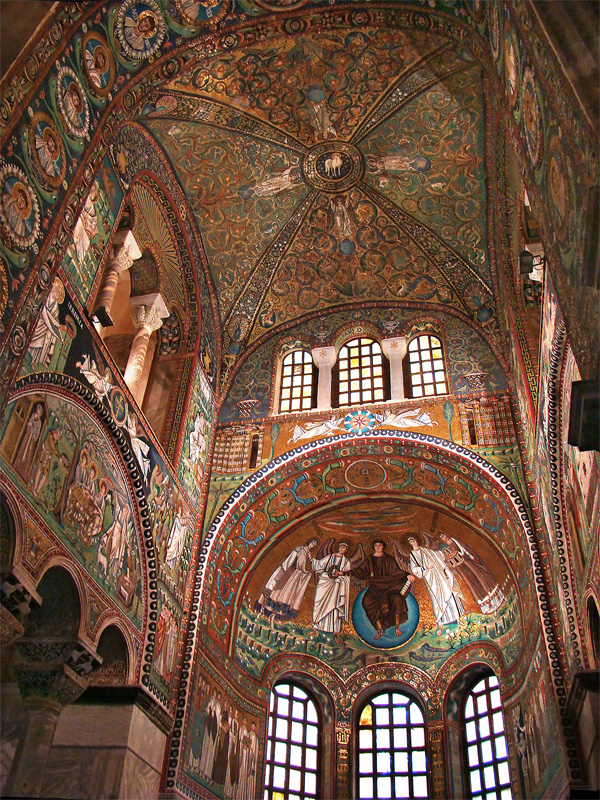
Byzantine Emperor Justinian, mosaic in St Vitale church, Ravenna, Italy

I wrote about red and blue as colors of power in my recent entry. But the ultimate color of power was purple, before red and blue rose to higher prominence. It was before the sack of Constantinople during the Fourth Crusade in 1204, which I mentioned in the entry about the holy blood relic in Reichenau and Bruges. Constantinople never recovered enough to produce purple dyed clothes again. This fact might give you some insight how expensive purple dye was.

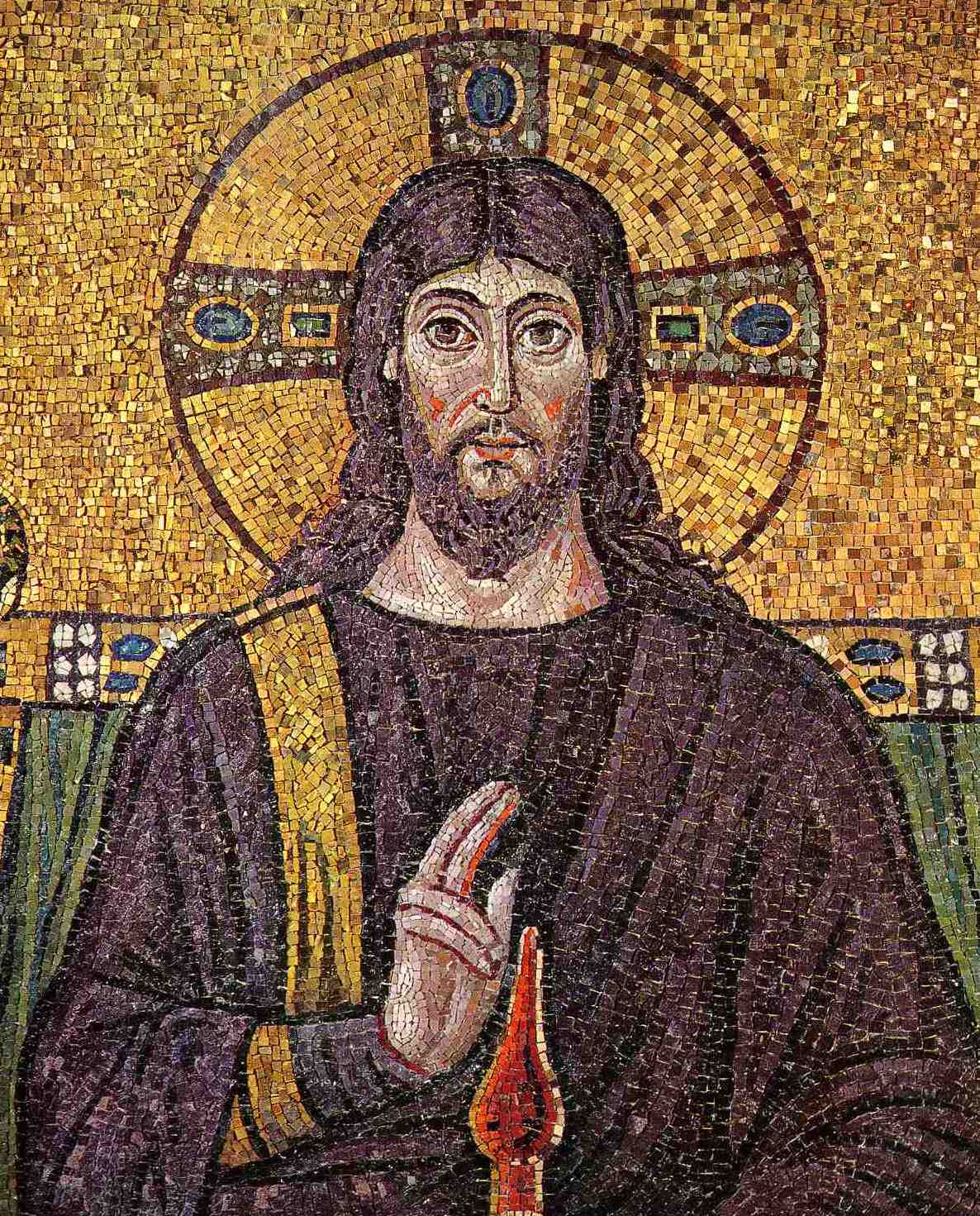
 The purple dye was so expensive that it was a subject of sumptuary laws, and mostly restricted for the imperial or royal families. It was produced from Murex sea snail, and tens of thousands were needed to dye one piece of garment. Color purple took the name from the dye, wasn't the description of color itself. The price of dye was equal of weight in gold.  The main center of the craft of dyeing in purple was Tyre, in Phoenicia. The name Purple of Tyre comes from it. This purple wasn't the hue we perceive today as such: it was more reddish brownish, a very muted but intense color. The emperors robe on the mosaic above looks more blueish than in person. The robe of Jesus looks more brownish, but it is difficult to take very accurate pictures of mosaics in the interior, where every detail will be of exact color. And the purple of Tyre doesn't get reproduced very well on the computer screens either. But you get the idea.
Mosaics at San Vitale church, Ravenna, Italy, via wiki commons, thanks to Tango


Not only rulers were depicted in purple, but also Jesus and Virgin Mary. Byzantine art showed them as rulers, full of dignity and somehow stern looking, as does the Christ dressed in purple on Byzantine mosaic from the church St Apolinare Nouvo, Ravenna, Italy (via wiki commons) The style is Early Byzantine.


And here is shroud of Charlemagne, early IXc. manufactured in Constantinople, today in Paris, Musée National du Moyen Âge. (via wiki commons). Purple on silk created wonderful effects that enchanted the eye: depending on light looked more blueish or reddish, had luster fro which was prized too. Not many fabric are left from Byzantine times, mostly fragments, and like this one found in the graves of the rulers of the time.

Shroud of emperor Charlemagne, purple dyed silk
 The purple was known already in Antiquity, and was mythologically credited to be discovered by the dog of Hercules. Plato mentioned this color in his Symposium as the greatest hue of all. It was used in Egypt, and became the color of Roman emperors. Sometimes the law was not harsh and women were allowed to wear purple, but other times anyone else than emperor wearing a purple robe would be killed. The first church in Europe was founded because of religious devotion and courtesy of a woman, Lydia, who was a business woman, a merchant in purple dyed fabrics. She must have only rich clients.

One of the Roman emperors forbid his wife to buy additional purples robes, as he considered too expensive.

Today, to all my knowledge there is only one pigment manufacturer mill, Kremmer Pigmente from Germany, which sells  this kind of  purple for art conservation purposes. One ounce would be 153,120 $, of course on the website for the art conservators this dye is sold in fractions of  1gram (1 once has 30 grams, to remind you), so , it is sold sold here in fractions of grams
According to Kremmer Pigmente, it takes 10,000 snails to make 1 gram of purple, which would be 300, 000 to make one ounce.

Later instead of purple silks were dyed with kermes, which was red dye made of the bodies of dried insects. I am for sure glad we use different process in fabric dyeing today, not involving killing masses of mollusc, or insects. (But still,  today fashion industry is terribly unfriendly toward the environment, one of the main polluters). Lucky for me, a fine artist, I can pick and chose which pigments I want. Honestly, I couldn't bear to buy paints or dyes containing colors made out of living creatures. I don't wear silk either for this reason.

This red coronation mantle of Roger II, silk and gold thread, pearls and precious jewels was done in royal workshops  from Palermo, Sicily. Now in Vienna treasury.We see the new fashion coming, replacing purple with red, which resulted in pictures of royals, nobles and Virgin Mary dressed in red mantles.

Roger's II coronation mantle, via wiki commons, by Gryfindor

Sunday, August 12, 2012

Colors of Power: red and blue- History of Color in Middle Ages # 9


Red and blue, most prominent color duo of the Middle Ages. People just loved them so much, that even when writing about rainbow  they wrote often only blue and red! Also the existence of separated guilds of dyesrs dedicated for each color may be a testimony for high esteem and priceses of those particular colors.

 We see here in the video the colorful splendor of the Middle Ages, about illuminated manuscripts about British royals. Lots of color, but most prominently the duo of red and blue. Fresh colors, most of the time.Video window may not come up in an instant.
Interesting movie by BBC about royal illuminated manuscripts.

Here Charlemagne is  being crowned.

Emperor's Charlemagne Coronation, Illuminated mansucript, via wiki commons

Red and blue were colors of power in the secular world, why?  Red and blue dyes were expensive, not common, and people loved those hues, of course. Red was used after the purple of Tyre, very expensive and reserved only for the rulers, became less and less available. Red in a more dark, dignified edition was replacing purple,which had a brownish tinge, not what we commonly classify as purple today, until appeared in its pure form, lighter and brighter. As we see bellow, on the Annunciation picture.The same with blue, it was considered a very noble color, and as the blue dye became to symbolize affluence and also royals were using it. (Royal blue).


Announciation by Petrus Christus, via wiki commons


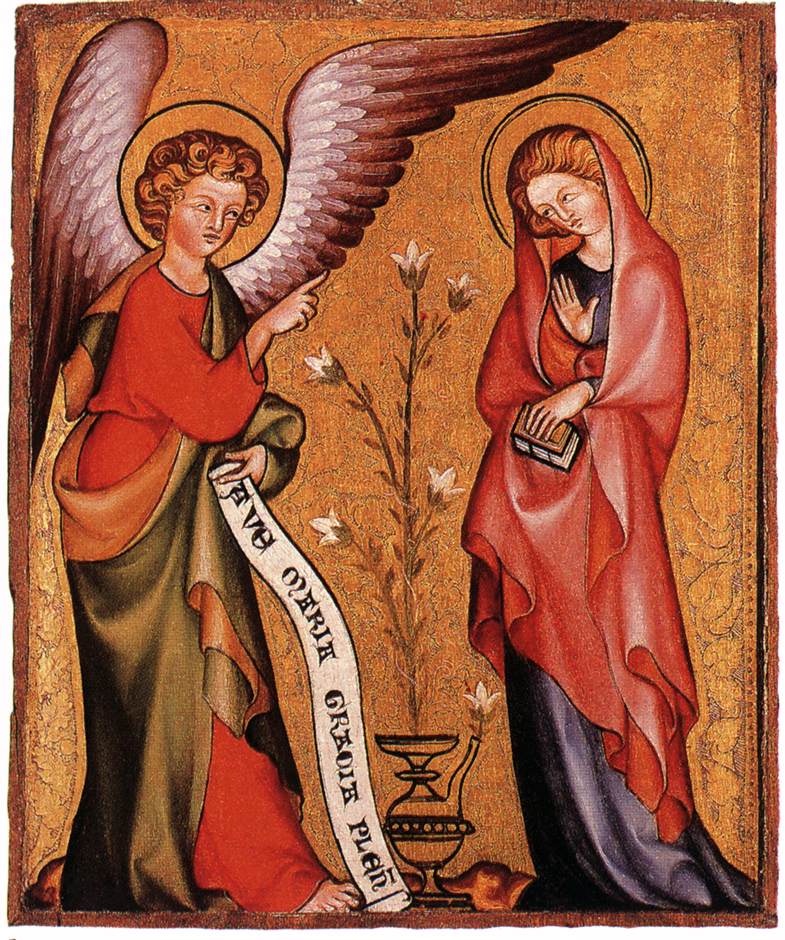
Here on this Anounciation by Petrus Christus we see Virgin Mary dresses in a red mantle. We see the typical elements of Announciation, as the lilies signifying Mary's purity, the vase a pure vesel, open book also is traditional. Always opened on the same page on all paintings, Isaiah 7:14, or psalter pages in earlier book. Other written words is the passage from Announciation of the New Testament, the words spoken by the archangel ("Ave Maria,  gracia, plena"etc) was directly written in the picture. Mary is here depicted as a fine lady, dresses in a rich garment, expensive mantle.  Click here to read more about Announciation symbolism.
This painting is considered early Northern Renaissance, but still has elements of Gothic art. For example the folds of the robes of the angels are still very hard and geometric, the angel's posture is typical for Medieval art, also his wings, strong color, not white. But we see already linear perspective on the tiles of the floor, increased realism of depiction in painting, eye for detail.


Court scene from November,  Book of Hours of the Duke de Berry, Via Wiki commons


What a rich blue wears this duke! Probably he is the Duc de Berry himself, it is a miniature by Limbourg brothers, form the Tres Riches Heurs di Duc de Berry, form the magnificent manuscripts collection of the Musee Condee.
                                              
Announciation, unknown German Master, via wiki commons


The Announcaition again, this time we see all elements traditionally depicted in announciations, but this time the book is  not opened, but text is written on the banner held by the archangel.("Hail Mary, full of grace"). this banner as a speech bubble appears often.Wallraf Richttarzt Museum Cologne. Mary with a book again, it has significance, depends if closed or open, etc. Soon about Mary and book symbolism, an elaboration on this  important element of  iconography.

Altdorfer, Virgin Mary with Child, XIV.c via wiki commoms
Virgin Mary as queen, with infant Jesus in her arms, by Altdorfer, (German), museum in Budapest.Infant Jesus has a necklace symbolzsing his future Passion and death on the cross (coral ) which in secular symbolism and superstition of the days: it  was supposed to avert evil. The apple is relating to original sin, held by Jesus is a symbol of redemption, eradication of sin.
Death of the Virgin, by Konrad von Soest, Mary on her death bed attended by humans of saintly and common stature, and by angels themselves. We see richly embroidered blue mantle and blue angels, as the symbols of heavenly realm.Also prominent is red/blue color duo, gold background. Closed books also present, symbol of the Virgin. What is written on the open scroll, which is read by bearded man dressed in red, with his head covered as sign of respect and humility? The paleographers would tell. The saint whose hand holding quill  is almost touching Virgin's hand is, has "Saint John the Apostle" written on his hallo.

Death of Mary by Konrad von Soest, via wiki coomons


Saturday, August 11, 2012

The Holy Blood Relic of Reichenau: lost glory also?

 Relics, kind of strange to many of us, but they have important place in medieval history. And history of art too, as reliquaries have elaborate and artistic forms. Just a visit to the treasury of Constance cathedral, also located at the Lake of Constance, where is a collection of relics, not far from Reichenau, show abundance of gold, silver, glass and jewels and human creativity. A very good lesson about medieval mind.

 In Germany there are three holy blood relics, believed to be blood of Christ himself. The most famous one is in Weingarten, one in Rothenburg-ob-der Tauber, one in Reichenau. There are others also, but connected with host. On my art historical journey I visited those places,but  the relics were not my main purpose of visit, but history of art. Specially Rothenburg  and Reichenau are very special and feast for the eyes, not that Weingarten isn't impressive and beautiful. I write this because I know there are blood relic fans, and Reichenau isn't even mentioned on wikipedia. (Bruges, Mantua,Wiengarten are, but not all places).

 The Reichenau relic was very known and revered in the past. No legend is associated with it. It is the oldest surviving holy blood relic, recorded in history, without legends, rediscovery and claims. The name of the previous owner who belonged  to Byzantine nobility is included on reverse of the little golden cross holding the relic itself, it is part of inscription in Greek.We know his name and his family records. Seems like rather clear provenance. Claim is that the blood was collected by Joseph of Arimathea. Other blood relics claim that the blood was collected by Longinus (Wiengarten relic, brought from Mantua) and Mary Magdalene (Weissenau relic, brought from France).

The blood  relic is hosted in St Mary and Marcus church, on picture bellow. The church was important for keeping the relic of St Mark the Evangelist, still kept in the treasury of the church.

St Mary and Marcus church, Reichenau, Lake of Constance, Germany

The relic of Reichenau was presented by Schwanhilde, November 7th 925. Before she had the relic, it belonged to the emperor Charlemagne, this precious object was a gift  to the emperor by Arab Hassan. The story of the relic  was recorded by an  anonymous monk in Reichenau.  The relic contains soil said to be drenched with the blood of Christ, also part of fabric with blood and part of the cross.The relic parts are contained in a small golden cross with Greek writing on reverse. Interesting, for those of you who like blood relics, that the other place which  has blood relic, Weingarten- not too far from Reichenau, received it from Judith of Flanders, on May 31 1090. She was a relative, the step daughter of Baldwin V, Count of Flanders whose descendant, (grand grand-son) Thierry of Alsace, according to the legend, brought another blood relic to Bruges from the Second Crusade to the  Holly Land during XII c. Bruges relic is blood-stained piece of fabric.

Bruges is a popular tourist destination for a reason, and the procession during the day on which the relic is presented is an  impressive pagentry. Reichenau is just more mysterious, more off the beaten path. It is not as popular tourist destination, as the other places, specially for the sake of the relics. Streets of Bruges and Rotherburg are filled with joyful tourists, specially  during the Summer, as there is so much too see on every corner. In Reichenau, where walls and art is older than in Rotheburg and Bruges (the abbey was founded in VIII c.) were some tourists when I visited, and I am happy about it, but I also has time for peaceful contemplation, alone. And strolls on the island of vineyards, orchards and gardens, shore overgrown with reeds is an additional bonus.

 But going back to Bruges: recent historical research shows that most likely the Bruges relic was brought from the Fourth Crusade by Baldwin IX, Count of Flanders,  in which he and his army devotely  participated. It was most likely the loot taken when Constantinople was sacked during the Fourth Crusade, 1204, not earlier, from the the Second Crusade as the legend claims. The Fourth Crusade (1202-1204) was unusual in this sense that was directed toward Christians, not against Muslems as in previous crusades,  or pagans as in Northern Crusades.  Only five years later, 1209,  another  crusade against Christians in Europe-in today's Southern Franc followed. This was the second Albigenesian Crusade against the Cathars. The crusaders had lots to do: Constantinople, Southern France, for the sake of forgiveness of sins and for the sake of loot.

 Constantinople, than was the richest, most learned and most beautiful city of Europe from which culture flew and influenced others, where the tradition of Antiquity, philosophy and scholarship didn't dim was sacked by fellow Christians. Without Byzantium and its capital  Italian Renaissance wouldn't be complete. This splendid city influenced Ottonian renaissance, (and other medieval Renaissances), under which Reichenau flourished, St. Gallen, Chartres, Reims, and Glastonbury, from which Theophanu, the Byzantine princess, wife of the emperor Otto came. During three days of killing, looting, desacrating churches and burning the famous Library of Constantinople was burned. This library, similar to the Library ff Alexandria, was enormous, and continued traditions of Antiquity, preserving wisdom of ancient Greeks and Romans for almost one millenium. More about the famous library here. The Bruges relic was most likely stolen during those three horror filled days.


Interior of St Mary and Marcus church , Island Reichenau, on the Lake of Constance, Germany


And gift of relic of Reichenau is more more historically documented, not as legendary. I have to admit for my own comfort I prefer the story of a woman donor, learned and peaceful, than some crude crusader, most likely robbing some church of a very culturally advanced city. Was killing, destroying and  robing Constantinople erased from collective memory in Belgium? The legend mentions crusade to Jerusalem, as the counts of Flanders were participants. Sometimes is amazing how easy the collective memory erases important facts. Like How easy was for Belgium to erase the memory of atrocities committed in their colony in Africa, which is not too ancient history after all.(Will spare you the gory details). Those things need to be said, as Europe had not only burning the heretics and witches but also had crusades. I come from one of the countries, which like Occitania during the Albigenesian Crusade suffered the presence of crusading armies. I mentioned this in another post.

 The memory of crusades are often white washed  and idealized, all good and mysterious Templars, etc. Keep in mind the the surge in Templars popularity came also during XIX c. when many families were proud to have crusaders among their grand grand grands, and bragging about it was a fashion. We still probably feel the shadow of this fashion still.

 Behind the iron gate at the chapel in Gothic style, there is reddish Baroque altar, you see the cross on the top, visible above the gate. This is altar of holy blood relic.  Usually the places which held blood relics were famous on its own right, by the fact of keeping the relic. How telling that wikipedia doesn't even list it among the sites, even though the fact who gave the relics is better documented than in the case of Bruges, famous place with a legend of crusaders. If UNESCO wouldn't list Reichenau among world heritage sites, Reichenau would be even more obscure, the memory of its vibrant culture and its previous fame would be preserved only among some scholars and serious history and art history buffs.

 St Mary's and Marcus church pictures by Heidi Fuchs.

Friday, August 10, 2012

Reichenau: the Lost Glory and the Holy Blood Relic

Once Richenau was a monastic island, one big and famous monastery with over twenty chapels and churches, monks dormitories, gardens and scriptoria. Not much is left form its former glory, but still worth a trip. During my visit at the Lake of Constance several years ago in June, Reichenau Island was warm and full of nature's riches. Sweet cherries sold at the roads close to farms were sweet and warm form the sun, and gardens were greening with salads and other vegetarian delights. My photos don't do justice. The farms are small, island itself is small, and everything seems simply charmingly rustic. In the reeds I could hear birds. I went to what is  today UNESCO heritage site, Sankt Georg church, Oberzell, to see what is left from the former glory of Reichenau Abbbey. The monastic island once had 20 monasteries, 25 churches and chapels, and seven hundred monks were dedicated to cultural work. Today only three churches are left.

Columban (or Colomba in Latin)  the famous monk of Ireland came to the area in 610, but was not successufl in converting the Allemain pagans to new religion, went back to the Island Iona, today Scotland.Iona was a monastic island, well known today for the Book of Kells. Hundred years later, Pirin with whom is bound the simmilar legend like with St Patrick- expulsion of all snakes for the island-was the founder of the abbey  in 720,  just shortly after St Gallen was founded.

 Reichenau once was a monastic island, like Iona, had Benedictine Abbey, big and influential.It had the biggest library in the West. In its scriptorium many illuminated books were created, during the X and XI century it was a largest and most influential center of manuscripts creation, possessing huge library, very famous than, and school of painting. Renowned scholars of the day (among them Strabo) and men of great talent worked and lived there. The style of the manuscripts written and illuminated in the abbey is called Reichenau style. It is characterized by simplicity of design and soft, pastel-like colors.

 Click on the link to see an example of illuminated manuscript from Reichenau.
And another example, this time full codex, you can see every single page, in the collection of Walters Art Museum, Reichenau Gospel

And here is the splendid crozier from Reichenau, today at Victoria and Albert Museum in London.The first crown of German emperor was also made here.

And here is Sankt Georg church.  Often is seen on pictures surrounded by field of salad or sunflowers, I didn't have such luck.

Reichenau Abbey, Sankt Georg church,  Oberzell, Reichenau Island, Germany

Reichenau, Oberzell, St Georg basilica, Ottonian murals


The name Riechenau means in old German Rich Island, and it was really fitting. In addition precious relics were donated, important thing during those days, among them a crucifix containing blood of Christ, as was there, also the pitcher form wedding of Cana. Any blood relics were  very important. Still today in the treasury of St Mary and Marcus church,  there are some objects which are preserved, not as much of them as in the times of glory. Pitcher of Can is there, blood relic is in a preserved in the church of Mary, and it is presented in procession Monday after  Trinity Sunday ( don't know the day).


Reichenau, Sankt Georg church, interior with Ottonian murals, by Heidi Fuchs


Sankt Georg church, murals dating from the times of the Ottonian Renaissance. I apologize for the quality, but the light conditions are not favorable for photography. Could't use flash, by principle, and hate when people do, not good for the ancient paintings.


  Carolingian Renaissance was time of great learning, development of scholarship and arts. One of the renaissances predating Italian Renaissance, more famous and influential. What happened to this once famous abbey, center of learning spreading its culture wide? Bishops of Constance mismanaged it when he was in charge of it, starting during XVI c. also the fame of competing St Gallen not too far from the area was a downfall, in addition the forced secularization (XVIII c. finished beginning XIX c.) was a final blow: monks needed to leave, the library of precious manuscripts was send to museums. Over twenty churches and chapels were demolished with dynamite. And act of iconoclasm for sure, this time the secular one.

Here are some grave stones from the  St Georg church.


The glory of Reichenau abbey is lost, but what we have left is beautiful anyway!

 And in the garden of St Mary and Mrcus church is the plate which honors poet and scholar Walahfrid Strabo, (lived during the first half of the IX c.) mentioning that he wrote the first book about gardening in Germany describing 440 plants for healing and for cooking

And what about Ottonian renaissance? It was fueled by closer contact with Byzantium, where the traditions of Antiquity were still alive.And the schism between the Orthodox Christianity and the Latin one was not there, the church was still united. This came because emperor Otto had a Byzantine wife, Theophanu, learned and literate. (He himself was illiterate). Theophanu was an intelligent ruler who brought progressive Byzantine ideas, used diplomatic skills and learned in Byzantium strategies to make her place in history. There were also other learned and influential women of those days, princess Theophanu was the first one. From the family of the emperor there were also women who greatly supported art and learning.

Click here to go to UNESCO's description of Reichenau as the world heritage Site

There is another side in Reichenau: holy blood relic. About it tomorrow.


Thursday, August 9, 2012

Templar Treasure Legends in Poland, Templars-part 3

The believers of  the legends about the knights Templars escaping to Poland have one valid point: Poland was one of very few regions in Europe which practiced religious tolerance. Relatively, for those days. Later in the history several hundred different believers or atheists were killed. Poland wasn't "the country without burning stakes," as sometimes was called. This is a myth. However, the level of religious tolerance was higher than in other European countries, even later in comparison to for ex. tolerant Netherlands. For long no single religion dominated. However, the popular religious movements in Europe were also rebellions of the peasant and those of  urban poor as they spoke against the excesses of the religious leaders and aristocracy. Such rebellions were gladly helped by the feudal lords, who saw those as not only rebellions against religion, but also against their "God given" privileges. The Templars were of the privileged class.

One of the Templars forum member in Poland wrote once jokingly in his post that he will reveal where the Templar treasure is located, and this revelation will cause obsessions, mental illness etc. for those who will search for it. Poland, sadly, has its own brand of treasure hunters, who illegally dig and damage historical sites which could be properly excavated by archaeologists, and properly secured by them in order to prevent further damage. There is something of a touch of madness in such enterprises too by individuals armed with metal detectors, shovels, flash lights and night visors. Directed by greed and in search for becoming another Indiana Jones.Some inhabitants of the places associated with treasures fear them, (damage not only historical sites), and chase them away. In Rennes le Chateau associated with story about Templar treasure illegal digs was also a huge problem.

There are legends associated with Templar treasure in Poland, and in an old German folk song, telling about the Templars, their castle and their treasure in Poland. In Poland the  treasure legends are relatively numerous in comparison to the legend of the location of the Holly Grail, which is bound with one location only.

 I mentioned the legend of Templar fleet which was sailing from Marseilles to the Baltic Sea down the river Vistula already. It was supposed to carry Templar treasure from France, away from the greedy hands of the king Phillipe the Bel.

Some legends mention him by name, and there are other names of people involved, their kinship, if applicable, nationality, etc.One particular legend, which according to another oral tradition, resulted in treasure hunt by the Swedish, who during the Deluge (war with Sweden) were taking apart the walls of the castle of the local lord whose predecessor allegedly took the treasure for himself. This legend is strangely detailed, with the names of all people  involved, all details mentioned above, rank in the  Templar order, events such as hunting,  injuries on parts of their bodies, emotional and family relations etc.Long and very detailed story. With lots of details, which can of course make someones head spin. This is the story how a Polish local lord together with his relatives attempted robbery, knowing about the treasure, when the plan of the robbery didn't bring any desired results-as robbery happened,but  treasure wasn't there- they spied on the treasurer who hid it. (He was form Western Europe). Than they stole the treasure, and were in fight with the treasurer, with swords, when one of the robbers killed the treasurer with an arrow shot form the distance, a very un-knightly behaviour in addition to the robbery.

 I am omitting here the details of the story, which is long, and out of respect for the past troubles which this story excited. I was born and lived not too far from one of the locations of alleged Templar treasures, I respect oral traditions, but I found out that not everyone shares similar respect. Mentioned the treasure hunters already. Not like you and me, for  some people this stuff  simply creates confusion, oral tradition is only as interesting as can allegedly point to the location of the treasure. Sad but true.

The other legends about the Templar treasures are of course bound with the locations of former Templar commanderies, of villages owned by them with sometimes telling names as Templewo. Quite often they are very similar to the legends which were  teaching social mores, and were against the vice of greed. They are very similar to the legends about the treasure connected to the Summer Solstice hoard, just the treasure was Templars' and the access there was only during the Winter Solstice, during the Midnight mass, when the guardian spirits or the devils leaved the place leaving the doors open. The versions tell about one man who found the place, and was courageous enough not to be sacred of the spirits. Each year took some of the treasure, but one year he took too big of the sack, and busy to fill it with riches was captured there forever as the doors closed again when the mass was over. He was changed into one of the guarding spirits.

What about the legends which are not fantastic at all, like the legend above, which mentions just the events, without any supernatural involved? May they be true? Maybe yes, maybe not. People were gossiping during the Middle Ages and later, and were even paid for their gossip, when they told interesting story, as today. Their story might have been a sort of bestseller when they were journeying from village tot village, and from castle to castle, story telling was a profession. As today. Those stories than took life on their own when were retold. But sometimes the stories in oral traditions give pointers to the truth which is than confirmed by archaeologists, as the tale about Johannites, one of the military orders with which the Templars merged. The legend said that those knights were growing unloyal toward the Polish king, and also were minting counterfeit coins. The angry king took over their castle. Today's excavations in the castle lead by archaeologists unearthed minting presses and fake coins of various origins, among them fake coins of the Teutonic Knights, the other crusaders present in the country .

Sometimes I wish the rumors of the treasure will be combined with the treasure found in Poland, extremely valuable, hidden during XIV.c. found during the second half of the XX c. now is possession of museums.Why not to say this was the lost Templar treasure, and stop digging for it? Among the treasure's precious objects was also this beautiful royal crown. It is difficult to appraisals of  treasures, but this one was is worth today from 50 million to 100 million dollars. Fitting rich organization, like Templars.

Via Wikipedia Commons 
 And here is a rather creepy edited video with some castles in Poland, some of them associated with Templar treasure. I dislike the soundtrack, very much to be honest.


 Ruins of the Castle Ogrodzieniec is one of the alleged sites of the Templar treasure location. There is the well, recognized by the cross bars, from which according to another tale appears a huge black hound, very terrifying beast appears from time to time.  This  is the ghost of the one's of the owners who rebuilt the castle, and he was an immensely rich man. The castle itself was very rich. Actually competed in splendor with the royal castle in Cracow. But its owner was also a sadist, very protective of his treasures, and as the legend say, he was punished for his cruelties by becoming a hunting spirit in the the form of this huge black dog.
Treasure were always stuff of the legends, and excited human emotions as lotteries and Las Vegas slot machines are. Treasure stories are also archetypical belong to the quest category.

Monday, August 6, 2012

Mary Magdalene: Blue Color of Her Robes and Art Historians

 Here we have Lamentation by Petrus Christus from Royal Museum of Art in Brussels. Can you recognize who is who among both Marys? Both have blue robes. Mary, the mother of Jesus is depicted as fainting, her body lifted up by two people. Common depiction, Mary fainting at the lamentation scenes. Is one of the people attending her the Mary Magdalene because she has red dress? Well... no. Color symbolism was common, but not set in stone, there was nothing very dogmatic about it. Please, click on "Mary Magdalene robes"  among the labels/links at the bottom of this post, you can read posts about the other colors.

Lamentation by Petrus Christus, via Wiki commons, click on the picture to view it larger


 But where is Mary Magdalene in this painting? You can recognize her by one of her attributes: the skull. She is the one turned toward the cross and the skull. Ointment jar is another attribute, not in this painting, the cup behind her is the cup for throwing dice, as dice are one of the symbols of Christ's passion. Both Marys are in blue, which was for sure costly, ultramarine was the most expensive of pigments. Both are made clear who they are, made recognizable: one by the pose, another one by her attribute. The viewers of those days knew how both were depicted, today those things are more confusing, as people have less familiarity with iconography.

This example of using so much blue is rather unusual for Petrus Christus himself. He most often used red for Virgin Mary's robes, as was common in the Northern painting. Blue was more common in France. This is of course rough division, the geography, but this is a  more factual explanation to clarify this red and blue vision, than color coding Virgin Mary and Magdalene rigidly.


Rather dogmatic is thinking in red and blue, which sometimes happens today, as art historians and art history buffs say. This means the idiosyncratic idea that Mary the mother of Jesus was depicted only in blue robes, and Mary Magdalene was depicted only in red robes. Luckily the Old Masters where not as limited, or as color blind.But some art historians complain that it is difficult for some people to understand this fact, and even those people will rather aggressively defend their pet idea, in spite the fact that their knowledge is limited.Why is it, and why some people are so fiercely attached to this specific color combination, is a mystery for me. As one art historian said, the subject of the robes of those two venerated quickly reveals how much someone knows, or rather how much someone doesn't knows about art history.

Art historians are not as ignorant as they often gladly represented as: most important, they see a lot of art; when I took history of art on the exam we had c. 600 slides,which were part of the test in the introductory course only, later things were more complicated. Art history classes were compulsory for my degree. I had strong interest in art history quite early, started when I was 13 year sold, so I didn't struggle, but for those people in general who learn art history as elective, mostly it it not an easy A class. It depends on university and who teaches the class, but in general challenges are there, if you want an A, better work hard, as it is not hobby level art history.  

Art historians are very involved in general: they travel if needed, study artists' historical contracts by the patrons and artists, write books, keep current with current research. So, why this need to tell art historians they are so wrong, and specially by people whose knowledge belongs to the limitations of a hobby? Mystery, mystery...