Showing posts with label Gothic architecture. Show all posts

Sunday, June 30, 2013

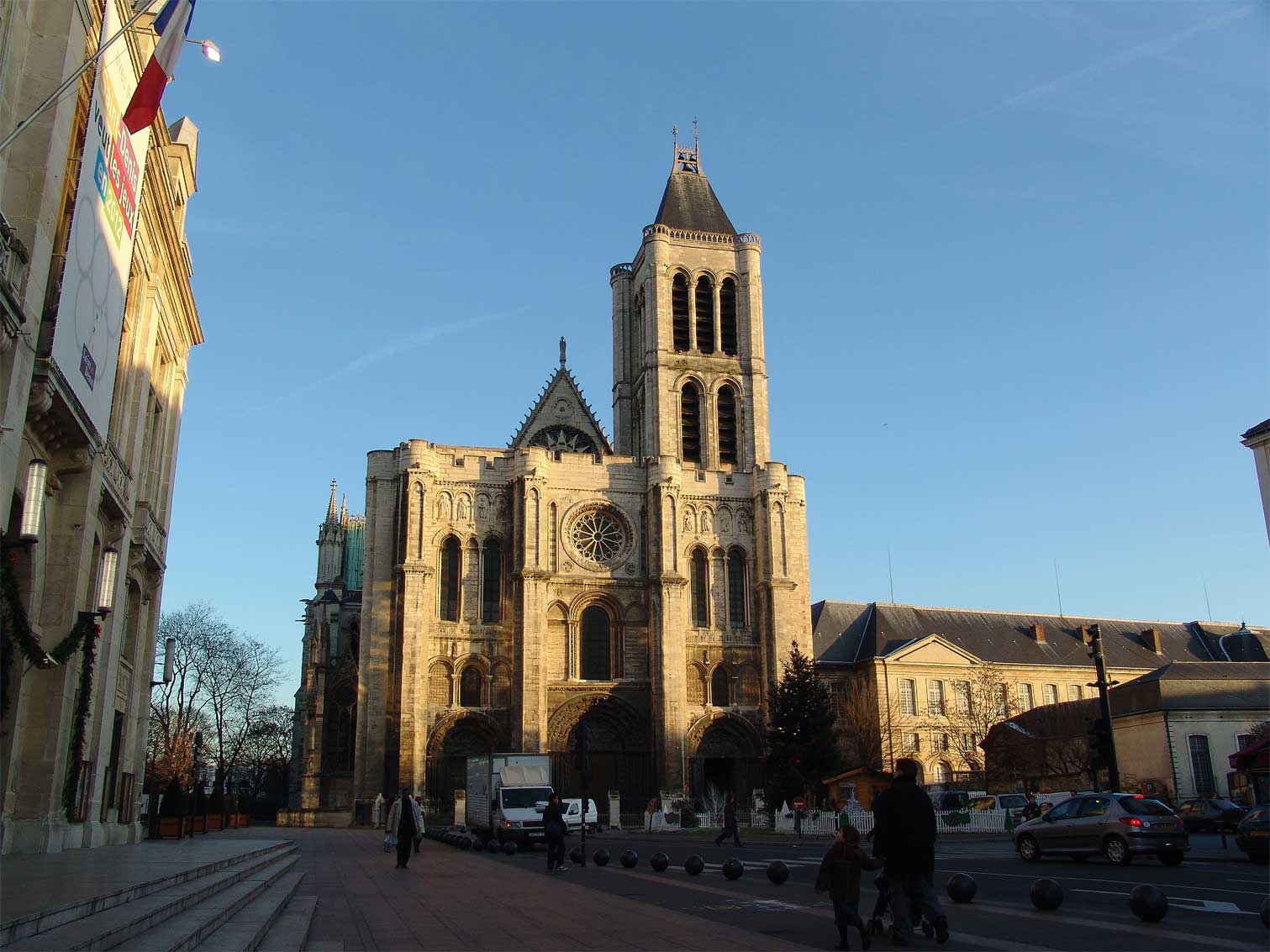
Forgoten Patron-Abbot Suger

If you are interested in art history, specially if you are interested in Medieval art, sooner or later you will run in your conversation, or books people recommend to you, into stories about Templars, how they introduced and built Gothic cathedrals, and so on. One name is never mentioned in such conversations,  or books: Abbot Suger's. It seems he disappeared from popular culture as contributor to Gothic art, or maybe he was never accepted. Pity, as he did as much for the development of Gothic architecture as the Medici's family did for the Renaissance. Of course, he is known to people who are serious about art history, but doesn't he deserve his place in the pantheon of movers and shakers and patrons who fueled new forms?

Chapel of the Virgin, St Denis basilica, via wiki commons by Myrabella
Abbot Suger was a man of many talents: he was a politician, statesman who served as regent of France when king was on crusade, he was a historian, art theorist, theologian and of course manager of a big and influential Abbey of Saint Denis. Not to idealise him: as many people of his times, he was sometimes opposing crusades, but sometimes he was in favor of them. Basilica of St Denis on wikipedia article

He was friend and confidant of the kings, and patron of artists and builders who had new ideas but were not given proper chance to bloom.

Sometimes, however, another situation happens: Abbot Suger is talked about as a single inventor of a Gothic style. This is not completely true: he wrote about aesthetics, wanted the walls to be higher, lighter, windows big and colorful, designed himself, introduced new features, loved things ornate and precious. But he collaborated with people who wanted to do things in a different way.Redesigning of St Denis wasn't his and only his project. He was very engaged, but didn't handle projects and firmly said: "build exactly what I drew." He was giving ideas, he accepted ideas, he was the project manager. Through him was possible to introduce large windows with pointed arches, ribbed vaults, clusters of columns, flying buttress, ambulatory with chapels radiating form it, and lots of light.

As you see on the picture above some features are still Carolingian, like for example columns, they still look like those from Antiquity. But arches are pointed already, vault is more complex, and windows are big.

Gothic style was a natural development of Romanesque style: what happens the newer style tended to make the building more spread in smaller part, branching out, more differentiated in forms, less compact, in comparison to the solid mass of Romanesque churches. The style was adopted fast, specially in royal domain of Ille de France, but still a lot of experimentation was going on. It happened that not all architectural ideas worked perfectly, talking about Europe now in general, not only France. There were instances when parts of cathedrals collapsed, or bad accidents happened. But with time building science was catching up with new aesthetics of creating higher and higher churches with bigger and bigger windows.

Rosette window in St Denis, North side,via wiki commons by Amirwiki
About Zodiac, see my blog entry about Charters and Zodiac
A lot of enthusiasm was involved in such projects, specially in France. France was the cradle of Gothic style and from here the style radiated to other countries. More stones were moved in France during the era of building Gothic cathedrals than in old Egypt in construction of pyramids, and cathedral builders were properly compensated. People who helped were volunteers, no slave work involved.

Volunteers were amazing enthusiasts.They were religious, of course, those people were products of their times like we often are products of our times. Haimon, abbot of Saint Pierre sur Dives wrote in his letter from 1145 about the wave of building enthusiasm among people in France. He wrote about building of Chartres cathedral. According to him even princes and nobility together with those of humble origin were pulling carts full of olive, wood, crops, stones, and anything which was needed for fulfilling the needs of the people working on the construction, or for the building of the church. Often a thousand or more people were pulling a cart full of stones, in great silence, in spirit of forgiveness of each other imperfections and in spirit of universal brotherhood and sisterhood. If you could hear anything at all , those were only prayers, or confessions of wrong doings and words of forgiveness among them. It was like a contemplative movement of peace among people for whom at such times differences among humans were not important, they worked in the spirit of brotherly and sisterly love. So wrote Haimon.
 Suger's ideas of the new style spread fast, but it doesn't mean that they were widely accepted without criticism: some churchmen said that ornate and rich style shouldn't be part of church buildings, church interiors, or church services. Cystersians were proponents of such ideas of humbleness and actually during Medieval times there was ongoing controversy about humbleness versus showing things divine through color, gold, light   and all things which could inspire awe. A little about Cystersian aesthetics in my other entry. I am not saying one approach was better than the other,but  they were competing.

 Abbot Suger not only broke frames of Carolingian building, (the abbey was built in this style) when he commissioned the rebuilding, but also asserted that awe is important part of religious experience.

Cystersian were more for soft quiet focus and contemplation, were against appeal to senses in churches. Colors, sumptuous decorations, music, incense, this was not important, they viewed it as distracting form the experience of closeness to God. Suger said the divine manifests in beauty, light an d color. He wasn't alone: this idea was well and alive because of monastery in Cluny. Founder of the Cystersian order, St. Bernard of Clairveaux simply opposed Cluniac theories. But Suger was on the side of Cluny: to him the stained glass windows were like a vision,  gold reminded of divine wisdom, soaring heights of church ceilings were leading thoughts to heaven. For sure churches were sanctuaries of beauty and space in European, not only French cities, which were dirty, conditions were crowded, as for example width of a room was the width of a bed, etc. But people could just step in a church building  and were transported into another, more beautiful world.

Tuesday, June 25, 2013

Perished Mary Magdalene's old collegiate church


Virgin Mary and Mary Magdalene are two women who are the most represented  in the history of Catholic church. Mary Magdalene is the second most shown woman, so we can safely say that as a saint she is the most represented after Virgin Mary. Both Marys are also shown in the type of images called assumption into heaven. Both were honored, and Mary Magdalene wasn't  marginalized as a saint, wasn't pushed into fringes of Catholic faith because the tradition was that she was a reformed prostitute. The marginalization theory is often repeated, and I think I understand where it comes from. Catholic church is most often pointed out as the main villain here, because she was labeled as former prostitute, but the fact gets overlooked that she was exceptionally honored also by the Catholics. I will give you an example of many, the collegiate church built in her honor.

This  was a collegiate church in Poznan, huge as a cathedral, which had a Mary Magdalene school adjacent to it. It was a high school, founded in 1303, the oldest secular school in Poland. The school must have been quite liberal for its days, as sometimes there were fights among the Catholics and the "heretics," when the students started to use fists in order to win arguments. Short tempers aside, but the fact that under the same roof were studying people who often represented very opposing views is nothing so common in old days. The picture above, by Alberti ( thank you Radomil) shows how big the building was even as  a ruin, in late XVIII c. It was built in the Middle Ages, once was one of the biggest Gothic churches in Poland, and the symbol of the city of Poznan. It was as big as St. Mary Basilica in Cracow, than the capital of Poland, but St. Mary Magdalene Collegiate church had even taller tower: 20 m (c.67') higher. The church was destroyed, the school survived until  today. Some trivia: among famous guests Chopin visited and gave concerts there, also the  school was awarded prestigious Order of Polonia Restituta Knights' Cross.

From Civitates ORbis Terrarum ( XVII c.) printed in Cologne
Why I am writing about a church which doesn't exist anymore? Specially because so many St. Mary Magdalene churches exists, or existed all over Europe. Fair point. But this one  has intersting history, which is very representative regarding two Marys, also how medieval art or architecture was treated during XIX c.

According to medieval chronicles, the  collegiate church was founded  in the middle of XIII  century. It had to do with urban planing: the city of Poznan was supposed to be moved to the other side of the Warta river, and people had idea to built a huge collegiate church.  One side had already St. Mary's Cathedral, so, it was decided that the new patroness should be St.Mary Magdalene. Very typical: Virgin Mary as the main super star, Mary Magdalen close to her in fame. Here Mary Magdalene with her church became something of a founding mother of the new city. Nice hommage. Also the church  was under patronage of the dukes of Greater Poland. Another trivia: those were the dukes who took Arthurian legends seriously, even styled themselves according the legends, also had crest of Lancelot. Maybe the dukes were the founders themselves, it is not clear. Other patronage later, when the ducal  lineage died out was taken by the king of Poland, from rather remote capital of Cracow.

The collegiate church of St. Mary Magdalene was different from a cathedral only in some aspects: it didn't have bishop's throne in it, ( the cathedrals have it), was not the sit of a bishop in the administrative sense, but it had body of clergy, canons,  member of a chapter in a similar manner to cathedral.Those members of clergy  who also have special honorary privileges were allowed to elect bishops. So, it was quite a prominent church. This church is one of the artistic examples of Mary Magdalene's prominence in the Catholic fait.

It took long to finish the construction work, very typical for those days too. Today what is left on this location  is only a plazza, one sculpture in a museum, the heart of a bell,  and an archeological dig.

 Once this church had 52 altars, 27 chapels, the tower was 114.8 m tall (376' ) high enough to be listed among tallest church towers. The tower was slightly shorter than the tower of Chartres Cathedral (115 m). The width of St. Mary Magdalene church was 42 m, had three naves  (Chartres has 32 m to 46 m width). St. Mary Magdalene's church was was 70 m long "only" as compared to Chartres, imposing 130 m length. In feet 233, and 433. This is addressed  to those who are familiar with Chartres. However, 70 m length of a church isn't little either, actually it is a lot. In comparison to the cathedral in Poznan (St. Mary's Cathedral) this church was only 2 m shorter in length, but wider 6 m (20') than 36 m wide St. Mary's Cathedral. If devotion can be measure in meters and feet, not bad at all for a saint who was considered a former prostitute. Mary Magdalene got a church which was actually bigger in square meters or square feet measurements, with a  taller tower than the local cathedral. Mary Magdalene wasn't much on the margins.

This model of the church is nice (thank you Poznaniak). I don't know how accurate it is, if during medieval times the roof tiles were so big in proportion to the rest of the church? But I am not an architecture historian. Today the size of the roof tiles would indicate average building in Europe, which this church was of course not. So, squint you eyes to get maybe better feel for the real proportions. This is artist talking in me.

The church suffered the last of devastating fires at the end of XVIII c. People tried to rebuild it, but lightning caused  the wall to fall , and in 1802 the consensus was that the church will not be rebuilt. Those were the times when medieval heritage wasn't as much appreciated as it is today. For example Prussian administration  (Poznan was occupied by Prussia at this time) ordered to destroy the medieval city walls. I didn't know if the people gave up, or the Prussians administration didn't give permission, as often happened, the church is lost forever. But not blaming the Prussian here: destroying parts of Medieval heritage wasn't so uncommon. Krakow, then under Austrian occupation, lost its medieval walls too. For example Paris doesn't have the Old Town anymore because it was destroyed in order to make way for modernisation of the city. Cloisters Museum in New York exist because the old monasteries were considered worthless in France, were in a state of ruin. An appreciative American bought it and shipped to US, cloisters were lovingly re-assembled. Good for us and future generations.

Some churches were demolished by purpose, explosives were used. Chartres again: it was planed to destroy the cathedral, as some were destroyed already, explosives were set, just someone, lucky for us today and the future generations, decided that the explosion will create too much of  unnecessary dust clouds. French Revolution: some churches, if survived the destructive zeal directed  at Medieval and religious art,  were supposed to be converted to the so called "temples of Reason." Sigh...

Today the archaeologists excavate what is left from the St. Mary Magdalene church. They found interesting objects, also conduct genetic research of the human remains found the collegiate church, as it was also the resting place of many prominent figures in local history. Archeology is very interdisciplinary today: DNA testing allows to know quite a lot about public health in earlier days, genetic illnesses shared by members of similar population, or families, etc. In  earlier days  big help for archaeologists was carbon dating, today they have also DNA testing to their disposal, scanning of the grounds or objects, aerial photography, impressive inventions. What comes next, I am curious.

Alberti ,Ruins of the church of St. Mary Magdalen in Poznan, via Radomil


Monday, April 2, 2012

History of Science at Chartres Cathedral, and Zodiac

In the previous post there was Zodiac window form Chartres, today is the astronomical clock. Strange setting for such symbols?

No way. Zodiac then was nothing unusual in churches. So, why all the mystery so many tourists talk about? Actually there is nothing mysterious about it. Explanation follows.
Chartres Cathedral Choir, Astronomical Clock, via Wikimedia Commons, thanks to Harmonia Amanda
First, the clock comes form XVI c. but its ideological roots are medieval, and proto-scientific, not really esoteric. Astronomy, astrology, the synthesizing medieval minds didn't see the difference.

 It is a common misconception that the Middle Ages were not interested in science, only in religion, or there was no reading of Classical texts before the Renaissance. Actually the classics were read, not as widely as  during the Renaissance, of course, but were not unknown, rather kept in high esteem. Many Classical and Arabic texts of science were translated into Latin. Arabic texts about astronomy, mathematics, anatomy and chemistry, and medicine contributed a lot in development of Western medical sciences, we often forget about it. Or simply don't want to know. And there was no agreement about if the Sun was the center of Universe or moved around the Earth. The official decision   in favor of the Earth as the center of the Universe came later. Science was fine as long it didn't oppose any dogma. For example the theological idea of dignity of the human body was applied to the medical field, and this particular idea didn't allow dissecting human corpses for anatomical research. Dead animals were dissected instead, specially pigs. Sometimes, rarely, human bodies were dissected also.

Chartres itself had a cathedral school, as often was the case with such buildings: there were also centers of learning, not only part of religious live of communities as today. Chartres was one of such centers, and was among the famous ones. Neo-Platonism was flourishing there, sciences were treated as separated from theology. A number of so called than natural philosophers (philosophers interested in science) came from Chartres. School of Chartres became less influential when universities started to compete with cathedral schools, but this was a case with all cathedral schools.

So, if the clerics of Chartres were so scientifically minded, why such thing as Zodiac in the cathedral?

 Here we need to understand the mind of people who lived before us, and don't project our XXI c. world view on them. The clerics form Chartres were still products of their times, and during their times astrology was science, before the Catholic Church opposed it, and before it was mocked  by the scientists of the Enlightenment era as superstition, not a scinece. Medicine was part of curriculum at Chartres school, and astrology was officially part of medicine also. Here is the illumination dealing with the human body as related to Zodiac.

Anatomical Zodiac Man, Limburg Brothers, Book of Hours of Duke de Berry, illuminated manuscript tempera on vellum, public domain, via Wikimedia Commons, thanks to Petrus Berbygere


In addition to proto-scientific reasons, Zodiac was a very popular motive in depictions of passing time. One  was very common:  the labors of the months. Frequently months and Zodiac signs were tied together, and this is often found in medieval churches and religious  manuscripts. Labors of the months showed secular world. Zodiac window at Chartres belongs to this popular category. Here is incomplete list of  zodiacs and labours of months in churches.

 Another example, most famous of this type is the series of illuminations from the mentioned  Book of Hours of Duke de Berry, (the same book from which the illumination above comes from). It is not the only example of this kind, but among the most beautiful ones, if not the most skilfully rendered, so far. Here it is, via Wikipedia article and picture gallery.

The Book of Hours of Duke de Berry is  of the most beautiful examples of book illumination in International Gothic style, and contains a very good example of Gothic blue, specially loved and used in France.

 Art history itself is an interdisciplinary endeavor, and understanding history of science or cultural history can enhance knowledge of art. Art doesn't exist in historical vacuum. It is connected to the world around, it exists in historical contexts. Striping old art form its historical context can give us only partial insight, and lead to some  misunderstanding too, some of them can be quite funny.