Monday, July 1, 2013

Saints who once were crooks, criminals and bad people in general

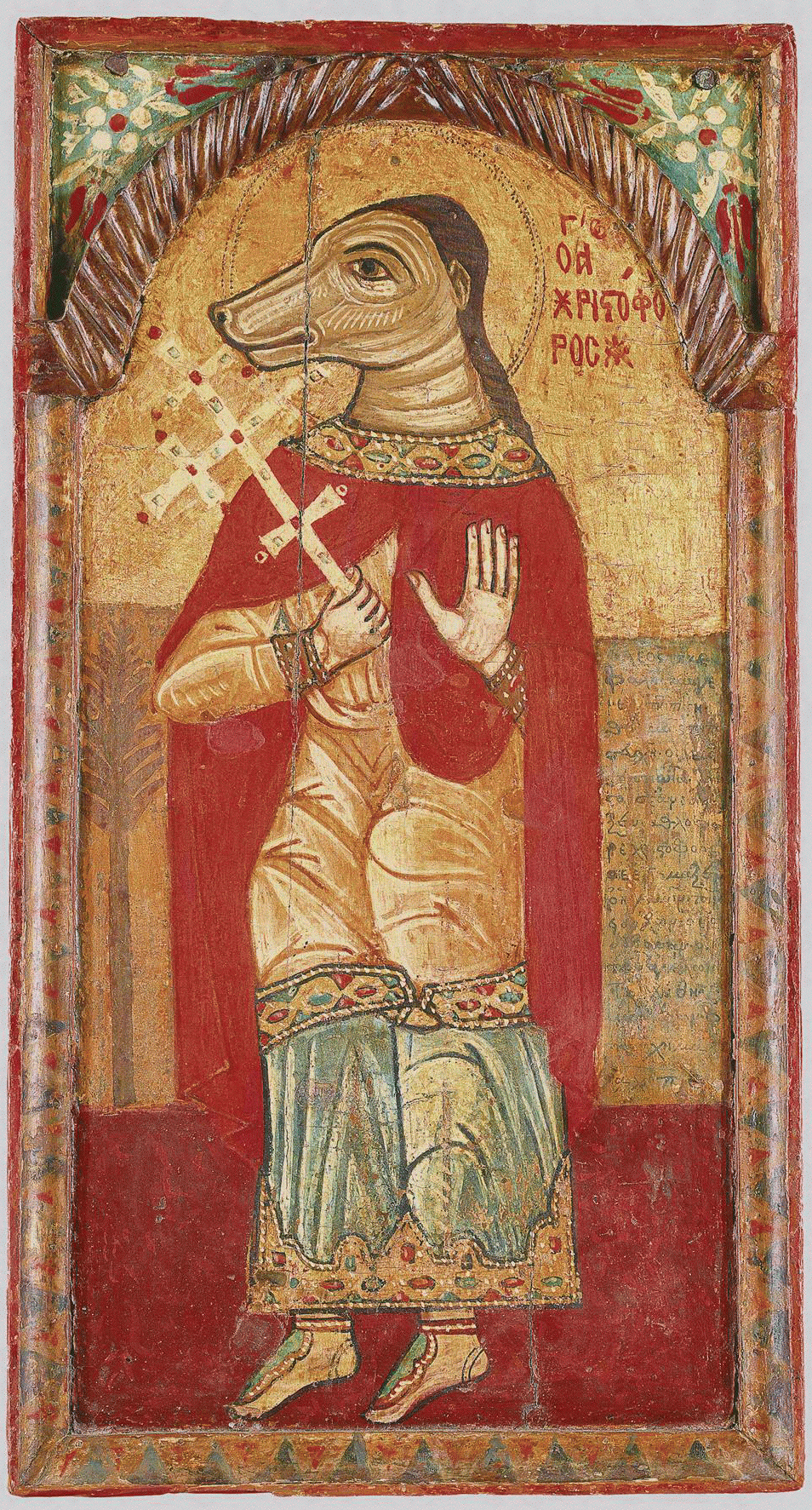
St Christopher, dog-headed saint,  icon
This entry will be not a light read partially, for it is about bad people who changed their ways and became saints, were reformed individuals.

 I was writing about Mary Magdalene and I see from my statistics that entries about her are quite popular. She was also an extremely popular saint, also in Catholicism which described her as a reformed prostitute for over a millennium.There is a disbelief, in general, regarding her alleged former profession and her super star status. It seems that branding someone as a prostitute would be a social death, and it was, normally. And here the logic of old days and logic of today clash: we talk today about erasing Mary Magdalene through smear campaign, all very upsetting. Logical point, not much to dispute from today's view point. After all we live in a society  in which  we can for example discredit a politician for marital infidelity. But she was a saint and she was worshiped by a society different than ours. She wasn't an average person: she was a saint.

We can't always apply our today logic to societies of days gone. Mary Magdalene was described as a  former prostitute, but also was called no less than Apostle to the Apostles. She was also the second most depicted saint: Virgin Mary was first. I know that modern day people struggle deeply with this paradox. Which is logical, of course. But keep in mind that societies of old were in some regards very, very different than ours, their beliefs, social mores, social system, in general their culture was different.

This maybe come as a surprise, but Mary Magdalene was not the only saint who "was a great sinner," as those saints were described relating to the phases in their lives before changing their ways. In her alleged status as a former sinner she wasn't even the worst one. There is over thirty saints who were very ungodly before they changed and after some time achieved saintly characters. (There were saints who had human lives on their conscience, for example). Hard to grasp? Maybe. If we don't know the cultural attitude toward transformation in earlier days, yes, those issues become incompatible, and it is surely  understandable that they are incompatible.

 Yet people during Medieval times,  Renaissance, and Baroque had different views. Actually as late as until Victorian times people were not shy about retelling the sins of the saints. Not at all. They told that St Olga had lots of blood on her hands, as she decided that revenge against murderers of her husband should be bloody and no ones life should be spared. St Paul, the one who authored parts of New Testament was forgiven prosecutor of Christians.  St Mary the Egyptian was a street prostitute. Margaret of Cortona was a sex addict. The first saint of all was the Good Thief:  he was one of the two criminals crucified with Jesus. St. Callixtus of Rome was convicted twice for felony, in addition embezzlement wasn't something he shied away from. St Moses the Egyptian was  boss of a violent gang, those men were killing people. St Camillus de Lellis was a con man, a mercenary, and card player for profit.And so on,this  list is not complete, and I don't see the reason to make it complete in this blog. You see the point anyway.

St Mary of Egypt, Russian icon, XVII c.
But Christianity isn't the only religion which has converted criminals as saints: Tibetan Buddhism has one such a person: Milarepa. He killed 35 people before he repented and became an example of goodness. Role of religious changes which emerged during  Axial Age was to tranform human ethics deeply on individual level.

So, not every saint was a paragon of virtue from early on. Some were examples of evil who later changed in the process of true alchemy of the soul. One of the last examples, from XX c. is a man who killed a policeman, and was the last person guillotined for his crime in France. He experienced conversion in prison and become unusually good and a shining example to others, his name was   Jaques Fesch. And here is the controversy for and against Jaques Fesch's case for sainthood as seen by the Catholics themselves.

Oscar Wild once said: "Evey saint has a past, every sinner has a future." For sure not every saint had "a past"  in sense of bad past, as there were some individuals who very immaculate from the beginning. But for sure path to sainthood wasn't excluding anyone. Mary Magdalene in her alleged profession was not paragon of virtue, but she was quite innocent in comparison to the others. So was another beloved saint,  Francis of Assisi, who according to  hagiography  was a bad boy who matured gradually to sainthood.Early on he wasn't a pacifist as he lived as a soldier, lead decadent life of revelry financed by his wealthy father. It was later when he changed his ways, and also married  "Lady Poverty." Word marriage symbolized his commitment to life in poverty.

Dog-Headed Cannibals, woodcut from Cartha Marina,  1530
What about the icon above, the saint with the head of a dog, adorning this post in a way so strange for us, the modern people? It is St Christopher, who was believed to belong to a cruel kind of people who were born with dog heads, and were extremely violent. In fact cannibals were depicted as dog-headed. Cane was Latin name for dog. St Christopher was such terrible man who after he met Jesus became a very good person, and one day he became saintly.

 Sainthood was and still is considered to be the life as most human and humane as it possibly can be. It was believed that every person without exception can become a saint, and the true miracles of transformation of a soul are possible. Miracle of changing water into wine was a miracle of transformation, and such transformation was considered possible for human soul with divine intervention and openness combined with willingness from the side of the sinner.

Today those things may appear difficult to grasp, but were quite simple for people of earlier days:  those saints were illustrations of great workings of divine grace. They were miracles in action and  embodiments of  hope given to every person, however imperfect a human being was, for sure there was hope. The hope was the promise that perfect transformation was possible because perfect forgiveness was possible, that God's love was all inclusive. If one abandoned for good the path of evil, the person could even become sanctified if the transformation was complete. The person was forgiven, and you didn't question divine forgiveness. To do so it would be to dwell on peoples' sins who were forgiven already, washed totally clean, no-existing. People went to confession and believed that their sins were forgiven also, that they were cleansed also.Accepting that this happened to others as well wasn't a big deal for them.It was the world in which confession and repentance was a sacrament of reconciliation, of giving freedom from sin.

Forgiveness as a concept and mystical experience is very prominent in Christianity. It makes transformation possible. Transformation into what? Into purity, life in sanctified grace.Mary Magdalene was considered completely transformed, and as someone who was pure she was also depicted as ascending to heaven. Those things need to be understood in relation to saints, specially those of them who had difficult past, who were not from the beginning like Mother Theresa. They had bad past but grew so far beyond it,that  they were not soiled by it anymore. Bad past was the memory of a  battle won, not something which was supposed to be held against them, as it showed the severe spiritual obstacles they overcame. You couldn't slander a saint, as the sins forgiven were considered erased forever, sins of any person, and not an object of discussion or doubt after they were removed.

 Holding their past against them would be like not accepting God's verdict of forgiveness, to be unforgiving against God's will, and people were warned that those who are unforgiving can't expect much forgiveness themselves. It was much deeper matter than we think about it today from our perspective, "oh, this saint had bad past, therefore was discredited." They couldn't be discredited, as their sins were considered forgiven, what was forgiven wasn't existing anymore.
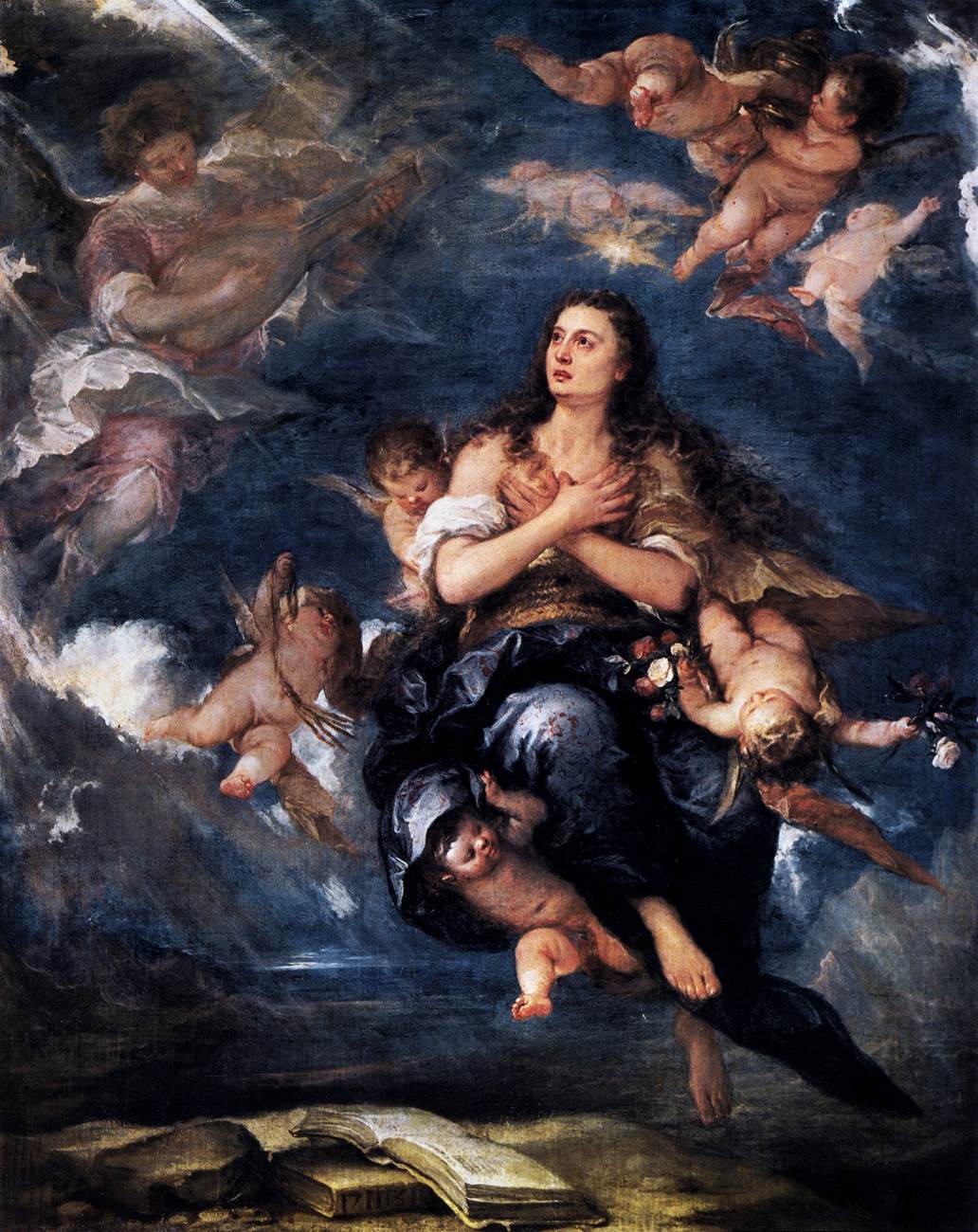
Assumption of Mary Magdalene by Jose Claudio Vicente Antolinez, XVII c.
Mary Magdalene has black hair here, not red. This is Spanish painting. Spanish artists depicted her with black hair, not as  a redhead.

As you see Mary Magdalene wasn't the only saint in Catholicism who had bad past, and who was sanctified in spite of it. Yes, early Christianity tried to figure out what to do with women, if they were allowed to be for example priests or not, etc. Misogyny was there. According to comparative religion scholar Karen Armstrong as long as Christianity was a secret and forbidden religion, when Christians met in catacombs or private homes, women were prominent. When Christianity became state religion, power was regarded as right  of men. And I say, no wonder, Mediterranean cultures were very misogynistic those days. People are very surprised when they read for example about position of women in Greece of Antiquity. And gender was not considered polarized, as we believe today. It was a different, kind of evolutionary concept which dealt with the belief what every thing was developing in nature. In this system which was linear and not polarized as today, man was the highest sentient being in the  hierarchy of life, woman was below him.She was the link between humans and animals. Yes, it was "really so bad." Religions as systems often adopt a lot of surrounding culture. Early Christianity maybe was socially very different at the beginning, but than normative  cultural prescriptions started to settle in. And for that no conspiracy was needed. People are not only products of their religions, but also of their cultures, and their times.




Sunday, June 30, 2013

Forgoten Patron-Abbot Suger

If you are interested in art history, specially if you are interested in Medieval art, sooner or later you will run in your conversation, or books people recommend to you, into stories about Templars, how they introduced and built Gothic cathedrals, and so on. One name is never mentioned in such conversations,  or books: Abbot Suger's. It seems he disappeared from popular culture as contributor to Gothic art, or maybe he was never accepted. Pity, as he did as much for the development of Gothic architecture as the Medici's family did for the Renaissance. Of course, he is known to people who are serious about art history, but doesn't he deserve his place in the pantheon of movers and shakers and patrons who fueled new forms?

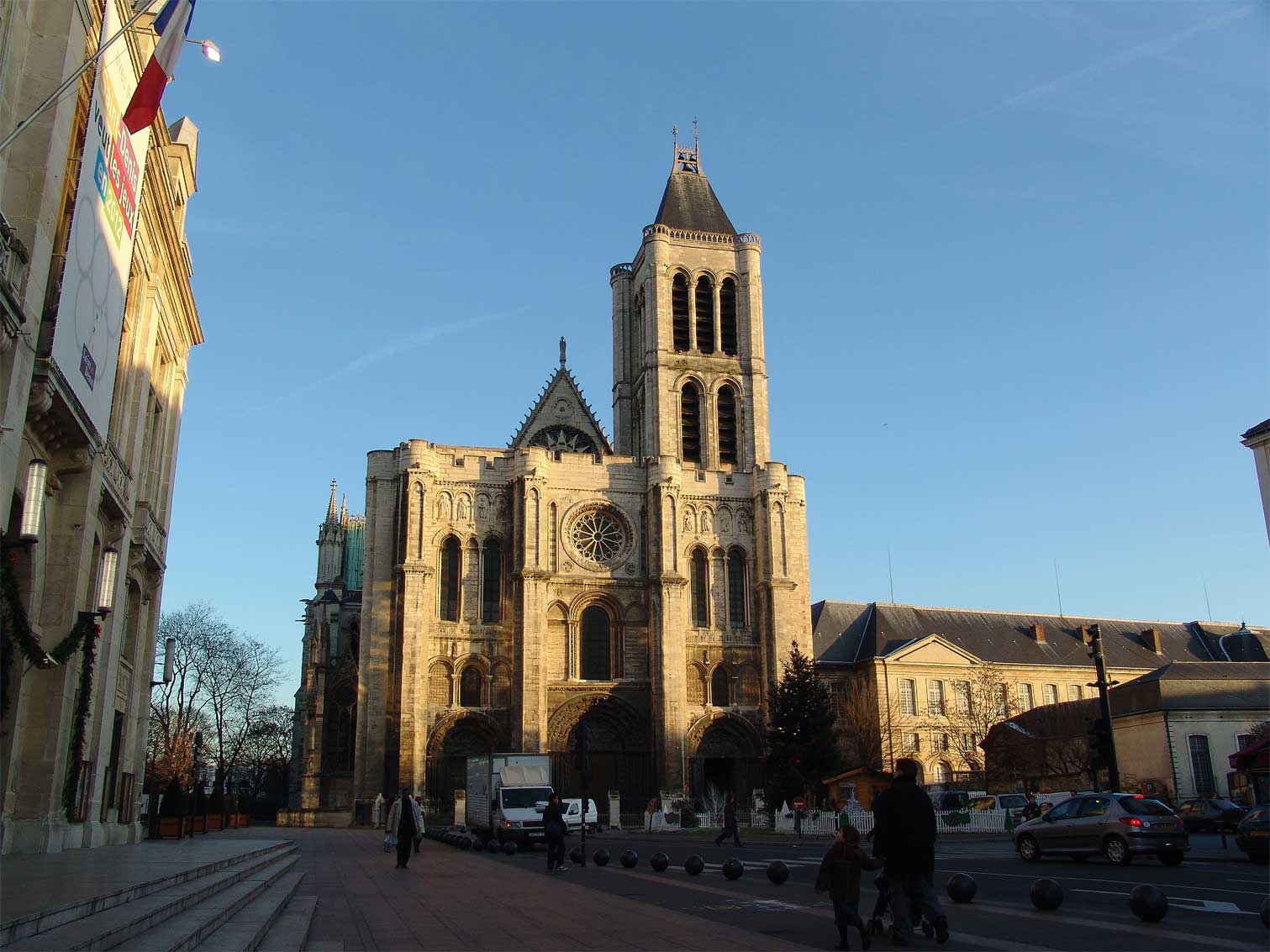
Chapel of the Virgin, St Denis basilica, via wiki commons by Myrabella
Abbot Suger was a man of many talents: he was a politician, statesman who served as regent of France when king was on crusade, he was a historian, art theorist, theologian and of course manager of a big and influential Abbey of Saint Denis. Not to idealise him: as many people of his times, he was sometimes opposing crusades, but sometimes he was in favor of them. Basilica of St Denis on wikipedia article

He was friend and confidant of the kings, and patron of artists and builders who had new ideas but were not given proper chance to bloom.

Sometimes, however, another situation happens: Abbot Suger is talked about as a single inventor of a Gothic style. This is not completely true: he wrote about aesthetics, wanted the walls to be higher, lighter, windows big and colorful, designed himself, introduced new features, loved things ornate and precious. But he collaborated with people who wanted to do things in a different way.Redesigning of St Denis wasn't his and only his project. He was very engaged, but didn't handle projects and firmly said: "build exactly what I drew." He was giving ideas, he accepted ideas, he was the project manager. Through him was possible to introduce large windows with pointed arches, ribbed vaults, clusters of columns, flying buttress, ambulatory with chapels radiating form it, and lots of light.

As you see on the picture above some features are still Carolingian, like for example columns, they still look like those from Antiquity. But arches are pointed already, vault is more complex, and windows are big.

Gothic style was a natural development of Romanesque style: what happens the newer style tended to make the building more spread in smaller part, branching out, more differentiated in forms, less compact, in comparison to the solid mass of Romanesque churches. The style was adopted fast, specially in royal domain of Ille de France, but still a lot of experimentation was going on. It happened that not all architectural ideas worked perfectly, talking about Europe now in general, not only France. There were instances when parts of cathedrals collapsed, or bad accidents happened. But with time building science was catching up with new aesthetics of creating higher and higher churches with bigger and bigger windows.

Rosette window in St Denis, North side,via wiki commons by Amirwiki
About Zodiac, see my blog entry about Charters and Zodiac
A lot of enthusiasm was involved in such projects, specially in France. France was the cradle of Gothic style and from here the style radiated to other countries. More stones were moved in France during the era of building Gothic cathedrals than in old Egypt in construction of pyramids, and cathedral builders were properly compensated. People who helped were volunteers, no slave work involved.

Volunteers were amazing enthusiasts.They were religious, of course, those people were products of their times like we often are products of our times. Haimon, abbot of Saint Pierre sur Dives wrote in his letter from 1145 about the wave of building enthusiasm among people in France. He wrote about building of Chartres cathedral. According to him even princes and nobility together with those of humble origin were pulling carts full of olive, wood, crops, stones, and anything which was needed for fulfilling the needs of the people working on the construction, or for the building of the church. Often a thousand or more people were pulling a cart full of stones, in great silence, in spirit of forgiveness of each other imperfections and in spirit of universal brotherhood and sisterhood. If you could hear anything at all , those were only prayers, or confessions of wrong doings and words of forgiveness among them. It was like a contemplative movement of peace among people for whom at such times differences among humans were not important, they worked in the spirit of brotherly and sisterly love. So wrote Haimon.

 Suger's ideas of the new style spread fast, but it doesn't mean that they were widely accepted without criticism: some churchmen said that ornate and rich style shouldn't be part of church buildings, church interiors, or church services. Cystersians were proponents of such ideas of humbleness and actually during Medieval times there was ongoing controversy about humbleness versus showing things divine through color, gold, light   and all things which could inspire awe. A little about Cystersian aesthetics in my other entry. I am not saying one approach was better than the other,but  they were competing.

 Abbot Suger not only broke frames of Carolingian building, (the abbey was built in this style) when he commissioned the rebuilding, but also asserted that awe is important part of religious experience.

Cystersian were more for soft quiet focus and contemplation, were against appeal to senses in churches. Colors, sumptuous decorations, music, incense, this was not important, they viewed it as distracting form the experience of closeness to God. Suger said the divine manifests in beauty, light an d color. He wasn't alone: this idea was well and alive because of monastery in Cluny. Founder of the Cystersian order, St. Bernard of Clairveaux simply opposed Cluniac theories. But Suger was on the side of Cluny: to him the stained glass windows were like a vision,  gold reminded of divine wisdom, soaring heights of church ceilings were leading thoughts to heaven. For sure churches were sanctuaries of beauty and space in European, not only French cities, which were dirty, conditions were crowded, as for example width of a room was the width of a bed, etc. But people could just step in a church building  and were transported into another, more beautiful world.

Tuesday, June 25, 2013

Perished Mary Magdalene's old collegiate church


Virgin Mary and Mary Magdalene are two women who are the most represented  in the history of Catholic church. Mary Magdalene is the second most shown woman, so we can safely say that as a saint she is the most represented after Virgin Mary. Both Marys are also shown in the type of images called assumption into heaven. Both were honored, and Mary Magdalene wasn't  marginalized as a saint, wasn't pushed into fringes of Catholic faith because the tradition was that she was a reformed prostitute. The marginalization theory is often repeated, and I think I understand where it comes from. Catholic church is most often pointed out as the main villain here, because she was labeled as former prostitute, but the fact gets overlooked that she was exceptionally honored also by the Catholics. I will give you an example of many, the collegiate church built in her honor.

This  was a collegiate church in Poznan, huge as a cathedral, which had a Mary Magdalene school adjacent to it. It was a high school, founded in 1303, the oldest secular school in Poland. The school must have been quite liberal for its days, as sometimes there were fights among the Catholics and the "heretics," when the students started to use fists in order to win arguments. Short tempers aside, but the fact that under the same roof were studying people who often represented very opposing views is nothing so common in old days. The picture above, by Alberti ( thank you Radomil) shows how big the building was even as  a ruin, in late XVIII c. It was built in the Middle Ages, once was one of the biggest Gothic churches in Poland, and the symbol of the city of Poznan. It was as big as St. Mary Basilica in Cracow, than the capital of Poland, but St. Mary Magdalene Collegiate church had even taller tower: 20 m (c.67') higher. The church was destroyed, the school survived until  today. Some trivia: among famous guests Chopin visited and gave concerts there, also the  school was awarded prestigious Order of Polonia Restituta Knights' Cross.

From Civitates ORbis Terrarum ( XVII c.) printed in Cologne
Why I am writing about a church which doesn't exist anymore? Specially because so many St. Mary Magdalene churches exists, or existed all over Europe. Fair point. But this one  has intersting history, which is very representative regarding two Marys, also how medieval art or architecture was treated during XIX c.

According to medieval chronicles, the  collegiate church was founded  in the middle of XIII  century. It had to do with urban planing: the city of Poznan was supposed to be moved to the other side of the Warta river, and people had idea to built a huge collegiate church.  One side had already St. Mary's Cathedral, so, it was decided that the new patroness should be St.Mary Magdalene. Very typical: Virgin Mary as the main super star, Mary Magdalen close to her in fame. Here Mary Magdalene with her church became something of a founding mother of the new city. Nice hommage. Also the church  was under patronage of the dukes of Greater Poland. Another trivia: those were the dukes who took Arthurian legends seriously, even styled themselves according the legends, also had crest of Lancelot. Maybe the dukes were the founders themselves, it is not clear. Other patronage later, when the ducal  lineage died out was taken by the king of Poland, from rather remote capital of Cracow.

The collegiate church of St. Mary Magdalene was different from a cathedral only in some aspects: it didn't have bishop's throne in it, ( the cathedrals have it), was not the sit of a bishop in the administrative sense, but it had body of clergy, canons,  member of a chapter in a similar manner to cathedral.Those members of clergy  who also have special honorary privileges were allowed to elect bishops. So, it was quite a prominent church. This church is one of the artistic examples of Mary Magdalene's prominence in the Catholic fait.

It took long to finish the construction work, very typical for those days too. Today what is left on this location  is only a plazza, one sculpture in a museum, the heart of a bell,  and an archeological dig.

 Once this church had 52 altars, 27 chapels, the tower was 114.8 m tall (376' ) high enough to be listed among tallest church towers. The tower was slightly shorter than the tower of Chartres Cathedral (115 m). The width of St. Mary Magdalene church was 42 m, had three naves  (Chartres has 32 m to 46 m width). St. Mary Magdalene's church was was 70 m long "only" as compared to Chartres, imposing 130 m length. In feet 233, and 433. This is addressed  to those who are familiar with Chartres. However, 70 m length of a church isn't little either, actually it is a lot. In comparison to the cathedral in Poznan (St. Mary's Cathedral) this church was only 2 m shorter in length, but wider 6 m (20') than 36 m wide St. Mary's Cathedral. If devotion can be measure in meters and feet, not bad at all for a saint who was considered a former prostitute. Mary Magdalene got a church which was actually bigger in square meters or square feet measurements, with a  taller tower than the local cathedral. Mary Magdalene wasn't much on the margins.

This model of the church is nice (thank you Poznaniak). I don't know how accurate it is, if during medieval times the roof tiles were so big in proportion to the rest of the church? But I am not an architecture historian. Today the size of the roof tiles would indicate average building in Europe, which this church was of course not. So, squint you eyes to get maybe better feel for the real proportions. This is artist talking in me.

The church suffered the last of devastating fires at the end of XVIII c. People tried to rebuild it, but lightning caused  the wall to fall , and in 1802 the consensus was that the church will not be rebuilt. Those were the times when medieval heritage wasn't as much appreciated as it is today. For example Prussian administration  (Poznan was occupied by Prussia at this time) ordered to destroy the medieval city walls. I didn't know if the people gave up, or the Prussians administration didn't give permission, as often happened, the church is lost forever. But not blaming the Prussian here: destroying parts of Medieval heritage wasn't so uncommon. Krakow, then under Austrian occupation, lost its medieval walls too. For example Paris doesn't have the Old Town anymore because it was destroyed in order to make way for modernisation of the city. Cloisters Museum in New York exist because the old monasteries were considered worthless in France, were in a state of ruin. An appreciative American bought it and shipped to US, cloisters were lovingly re-assembled. Good for us and future generations.

Some churches were demolished by purpose, explosives were used. Chartres again: it was planed to destroy the cathedral, as some were destroyed already, explosives were set, just someone, lucky for us today and the future generations, decided that the explosion will create too much of  unnecessary dust clouds. French Revolution: some churches, if survived the destructive zeal directed  at Medieval and religious art,  were supposed to be converted to the so called "temples of Reason." Sigh...

Today the archaeologists excavate what is left from the St. Mary Magdalene church. They found interesting objects, also conduct genetic research of the human remains found the collegiate church, as it was also the resting place of many prominent figures in local history. Archeology is very interdisciplinary today: DNA testing allows to know quite a lot about public health in earlier days, genetic illnesses shared by members of similar population, or families, etc. In  earlier days  big help for archaeologists was carbon dating, today they have also DNA testing to their disposal, scanning of the grounds or objects, aerial photography, impressive inventions. What comes next, I am curious.

Alberti ,Ruins of the church of St. Mary Magdalen in Poznan, via Radomil


Sunday, June 23, 2013

Holy Grail in Bezlawki, part 1, Escape after Hastings


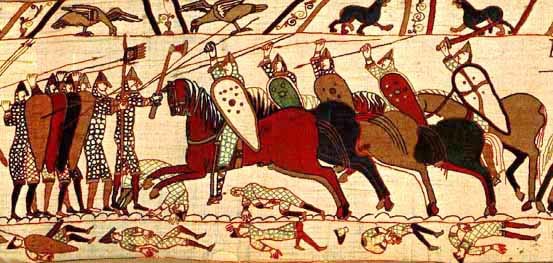
Bayeux tapestry, battle of Hastings. Via wiki commons, by Maxim

This blog has been neglected for long time. I planed and promised to write about the legend of the Holy Grail in Bezlawki, today's Poland. I mentioned before that it seems that Arthurian legends were very well received in Poland. But the legend of holy Grail in Bezalwki has some not very semi-historical events in it, and had people who are historical too. However, I am not saying here we need to believe the legend because of its historicity: it is just a legend based on real facts.

This is a story about a battle, escape, two chalices, two fighting brothers, the crusaders and a tower.
The battle in question was the battle of Hastings, when the last Anglo-Saxon king, the Harold II of England Harold II of England was killed. His children escaped to Denmark, as they were not safe anymore when  William the Conqueror became a new ruler. Short reminder: the mystical object of Medieval times, Holy Grail, was believed to be several things, one version was that it was the cup, or a chalice, into which Joseph of Arimathea collected blood of Jesus during the crucifixion. It became the ultimate  blood relic, which was brought by Joseph of Arimathea to the British Island. One version say that is connected to the Glastonbury Abbey.

 The tradition  also say that it was taken by escaping members of fallen dynasty more East, in order to save their lives, three people. They found refuge at the court of Danish king, their relative. They didn't escape empty handed, as you guess the story goes, they took  what they wanted, or rather what they thought was so precious they couldn't bear to leave behind. Among precious objects they considered worthy not to fall into the hands of William the Conqueror were two chalices, (from Britain and Greece). Finally  the grail was installed in this church, in Bezlawki, on the picture bellow. It stayed there for several centuries, still during the twenties of XX c. one travel book writer, Orlowicz, claimed he still saw one of the chalices in the church.

Church in Bezlawki today, empty, wiki commons, courtesy of Severus


Who were those three expatriate children of Harold II of England as real historical people? One of them was Gytha of Wessex Gytha of Wessex, who later became the wife of  Vladimir II Monomakh, the  ruler of  Byzantium influenced Kievan Rus. He is also known under name of Waldemar. Gytha's and Vladimir's son is mentioned in Norse sagas, there he is called Harald  his Slavic name was Mstislav. One of the brothers, Godwin, became the ruler of one of Lithuanian principalities, a duke. How it was possible? This was XI c. but Lithuania still was very similar to VI c. Britain: like at the court of king Arthur the knights took decisions during an assembly. Upward mobility was possible, still, during those days for a warrior who was considered worth of rule.

 Back to  Bezlawki: it was far away, actually when the chalices, (or chalice? ) first were installed there, the building which is the church today was not a church at all, but the fortified  tower of the crusaders. Not the Knights Templars, often they are associated in modern versions of the story with holy grail, but in this story we have Teutonic Knights, the worshipers of the Virgin Mary, with black crosses instead of red ones. They were  Order of Brothers of the German House of Saint Mary in Jerusalem. Knights form Europe joined them, not only from Germany. They were invited by pious Polish princes, Prussian Crusade was part of their military enterprise.


Church in Bezlawki, another view, wiki commons, courtesy of Jerzy Strzelecki

The Teutonic Knights came into the posession of the chalices later,but  it wasn't a war loot . It was a gift. From a rather pious ally.

Teutonic Knights, as a military order on a mission they  pressed East, however,  not South but  North, and who like those knights who went to the Holy Land got the blessing of  pope, they fought the  non-Christians, in this case the pagans, of today's Poland and Baltic states. They build a fortress which at the timescut the most east into the territories of the pagan Prussians, the Baltic people.  One  thing :  the English  version of article about Bezlawki mentions that the the fortress was a hunting lodge build by the Teutonic Knights. Not true, it was a fortified tower, a Wildhaus, as the knight called it, a house, a post in the wilderness. The forest was dense there, and I am sure there were hunters too, who hunted the wild  (it means game in German, also wilderness). However Jagd is hunting, hunting lodge is Jagdhaus. This was a fortress in which knights were stationed, not the hunters.

Two brothers, Lithuanian  dukes were in a bitter conflict. Jogaila, the older one,  who later became the king of Poland, was against the Teutonic Knights. His ascend to Polish throne happened after the Teutonic Knights were subdued and after Jogaila got baptized, it was the Christianisation of Lithuania. His younger brother,  Svitrigaila, sided with the Teutonic Knights, he also brought for them two mentioned chalices which were installed in the tower. Not too unusual, as the relics in the Medieval times were believed to help in difficult situations, and an outpost so far East probably was considered worth of help. Svitrigaila was invited to live in the tower together with his garrison. So, he didn't really give it away,  he moved with it. Svitrigaila still during XX c. was considered direct descendant of Harold II of England by Polish historians. Teutonic Knights promised him the crown of Lithuania.

More information follows soon.One Polish Medieval chronicle is somehow unusual,  it shows that Arthurian legend was taken seriously.Also two Lithuanian Grand Dukes were married to women who became divine: one was considered a goddess (she was a pagan), the other became a saint. Both were worshiped. Also the Nazis had it base very close: 30 buildings, 50 bunkers. It is today a tourist attraction, called Wolf's Lair.

As for the story, yes, it is kind of difficult to believe, it is a legend after all, we don't need to believe it. (I don't). Is it difficult to believe that such legend exists in Poland? Why? legends of escapes are not uncommon in Poland, it was a country to which refugees often went. And you can find this legend retold in polish on the net. Here are links to a website of a licenced tour guide (site in English) where the lady talks about  the legend, another is website of the town near Bezlawki. Not the only articles on net about this legend. This i part of tradition, really.

Blog entry by the tourist guide, she describes it well

Article in Polish, sorry, gmina Ketrzyn site, lots of hsitorical inforamtion


Friday, June 21, 2013

Kupala Night during the Summer Solsitce: Festival of Fire and Water


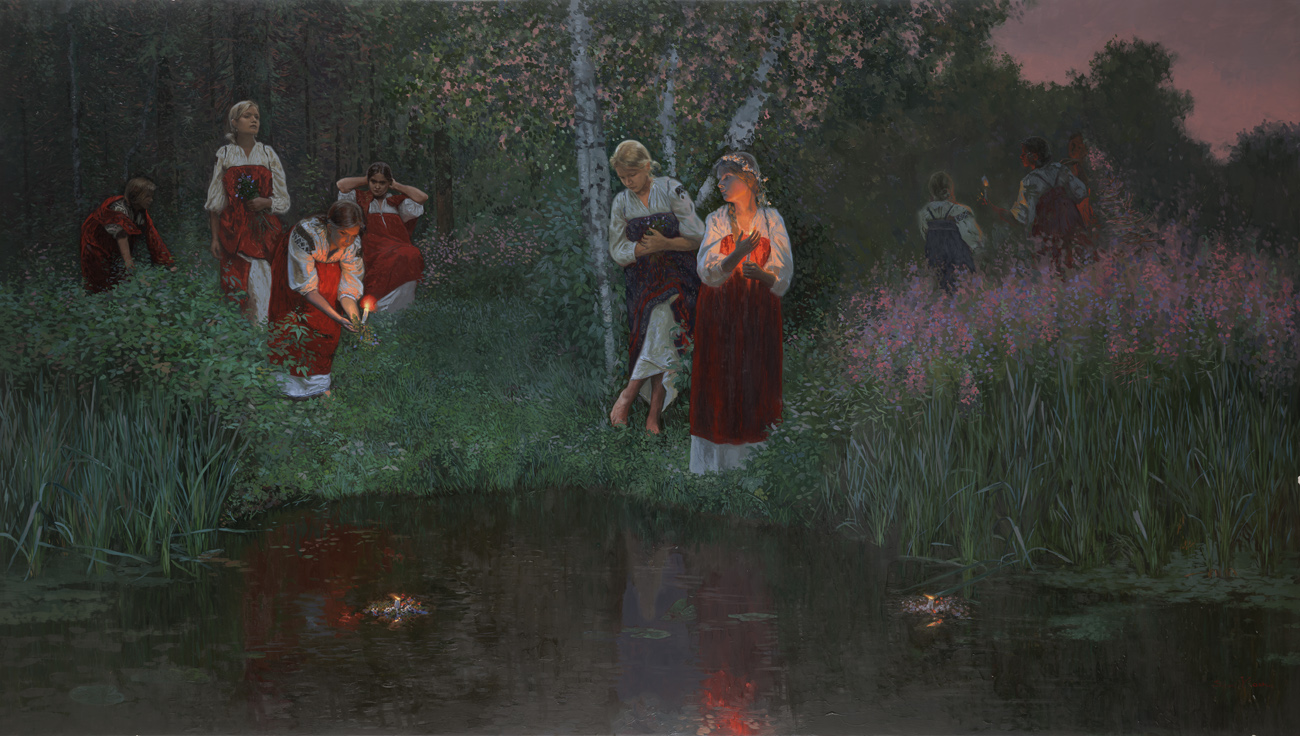
Kupala Night by Siomon Kozhin

Summer Solstice festival as we know it: it is linked to paganism and bonfires, and dances. It was celebrated once all over Europe in very similar forms. Slavs, Celts and Germanic people treated it as a sacred time where fire and water meets. Some remnants of the festival I still remember from my childhood and teenage years, but it was more a social event with flower wreaths floating,candle  light, bonfire, and and wild jumping over fire, this was was left from the days of old,  then after all, who doesn't like a good bonfire?  Summer Solstice was renamed as Night of the John the Baptist, as the ritual of bathing in the lake of rivers was so important, in Slavic countries, Greece and Balkans this was very important rite.Name  Kupala was supposed to be derived form old Slavic word for bathing, bu tit might be even come from Proto-Slavic word kup, which meant comming together. I am not so familiar how it was on British Isles and other countries, if this was a more solar and less lunar festival, more bonfires, or immersion in natural waters was also important.


The movie is kind of nicely done, romanticized, in reality this festival of fire, water, purification, love and fertility was wouldn't be so acceptable by today's standards: animal sacrifice was practiced,  etc. The church was trying to eradicate it, as a pagan festival, also certain behavior was considered indecent, people kindled big fonefires also in the cities, etc. and during for ex. XIIIc among Polish peasantry the importance of this festival was diminishing, even as it was practiced. But than during the Renaissance, when the idea that close relation with nature is important, combined with Renaissance in Poland ideas about the  myth of Arcadia, also gave more persmision to this pagan festival, solar in nature. All fire in all houses was put out, people congregated close to water, and ritualistically rekindled a new fire. They also bathed in the lake, or river, it was believed that the water had healing powers.

 Before that day bathing was allowed only during the night. It was a day of purification, all negativity was  believed to be cleansed by bathing, or by jumping over fire. As it was also a festival of love and fertility, a couple who jumped over fire was considered married in old pagan law. Young unmarried women also made wreaths of flowers and were wearing them on their heads, to put them on a piece of wood with  candle in the middle, floated them over the  waters of lakes, or rivers. And young men were bringing them back, if they caught one dancing with the owner of a garland they caught. It was like today's carnival, and crazy things happen during carnivals. In general this was not only one day, an end of day of celebrations.

Magic was in the air, as this was believed to be a special time, so many ideas about what was supposed to be magic or healing, I could bore you if I would list it. Did you hear about the magic flower? It was supposed to be flowering fern,(which never blooms, by the way), one a year this day, only for short time, but the flower was beautiful, radiating light, and the person who picked it was able to find a hidden treasure. Finding the flower wasn't easy, as it was hidden in the depths of the dark forest,(solar mythology again)  but there was a lot of scary forest spirits and dangerous entities who could frighten the candidates for wealth. The problem was not with real danger, but with human capacity to get terribly scarred. Those who had stiff upper lip were more likely to find it, as the legend goes.


Here is  a clip about celebrations in Russia, people were trying to recreate more of old flavor, but don't worry, no animals harmed or even present, some kisses and shows of male prowess (wrestling, in my country was jumping over fire), and lots of fun.

On Monday, finally the story about holy Grail in  Bezlawki. Brother of Lithuanian ruler according to the legend got it from those who escaped Britain after the battle of Hasting, among them were children of Harold Godwinson. It is just a legend, but the fact is that Gytha of Wessex, together with her brothers escaped to Denmark, and she later married the Vladimoir Monomakh
Who was not a Lithuanian Duke, but close. Stay tuned.

Thursday, February 28, 2013

Things get repeated

My blog got neglected. In this week I hope to have enough time to post about the tradition about Holy Grail in the church of Bezlawki. Now simply my reflection about how things get repeated over and over again.

I watched for short moments the live broadcast by BBC  today, it was about pope retiring. One of the journalists said about the uniforms of the Swiss Guard that those were designed by Michelangleo. No, there were designed during the beginning of the XXc. Did Dan Brown was talking about it? Yes, he did. Pop cultural version of historical facts.

Form Wiki commons,  part of  treatise about opitcs by Bacon

 There are more opinions repeated as facts.For example that people during medieval times believed that Earth was flat. No, already ancient Greeks knew about spherical Earth and would be difficult to find any scholar who believed in flat Earth.Or that all believed that the Earth was center of the Universe. Or that medicine was based on prayers and superstition. ( Medieval medicine if wasn't folk medicine was exactly the same as in Antiquity). Or that in medicine there was no dissection of corpses at all. Or that there was no interest in chemistry. (It was, thanks to Arab writings which were  read by monks). There is quite a number of strange beliefs about history of the Middle Ages and the Renaissance, which don't get corrected by the pop culture.Why? Because those beliefs help to create those periods in some kind of monolitic icons which than have more popular appeal.

 After all it is more interesting to say and believe that the Swiss Guards uniforms were designed by such a giant as Michelangelo himself, instead of giving credit to some obscure commandant of XXc. People often say that history was written by victors ( not exactly correct, it was actually written by others than victors too). Not only victors shape views of history, also common biases and what are common preferences, what people gladly believe, and what they dismiss as uninteresting, even if the uninteresting facts are closer to historical truth than interesting historical pieces of gossip.

Sunday, September 9, 2012

Rock-hewn churches, cave monasteries, and stones: longing for travel

I come from a country with mostly flat terrain, some hills and mountains, but not much, lots of lakes and forests, and as you probably guess not many stone buildings. There are some, but most old buildings are made of bricks. Yes, brick Gothic is there too. Even the huge crusaders' fortress, Malbork Castle, is made of 35 millions bricks. Brick Gothic has its own fascinating features, and Gothic bricks themselves can be fascinating, but as you probably also guess I like stone buildings too. Actually I am really fascinated by them: huge cathedral or tiny shepherd chalet, I am hooked.

 So, the church of Notre Dame in Vals, Ariege in France (Pyrenees area) I find extremely interesting, this video lets you in.   Take a look at the humble Virgin statue, 1: 34. All it is element Earth in is glory, and very humble and simple at the same time.Gothic cathedrals have their beauty, but this one has own character, very Zen.


The Notre Dame church is Vals is Romanesque, partially build on the rock, (semi-cave church to be exact), has also very interesting frescoes, humble looking and with quite strong Byzantine influences, unusual in France, in addition to the only depiction of archangel Pantasaron, and depiction of scene after birth of Jesus.  Byzantine in appearance, as this is more often  found in Byzantine art, and also has strong Catalan influences, which is not so surprising given this is a neighbouring area to this region. The site was surveyed by archaeologists, and the conclusion is that there was human presence for thousands of years, even it must have been a cult site, at which point of the location  cannot be exactly said now, but the presence of ceramics used for religious purposes was there. But the site was at its peak during early Middle Ages, during the Merovingian times. I should write about the frescoes on another occasion, as they deserve attention on their own.

Landscape at Cote d' Azure, France, by Heidi Fuchs

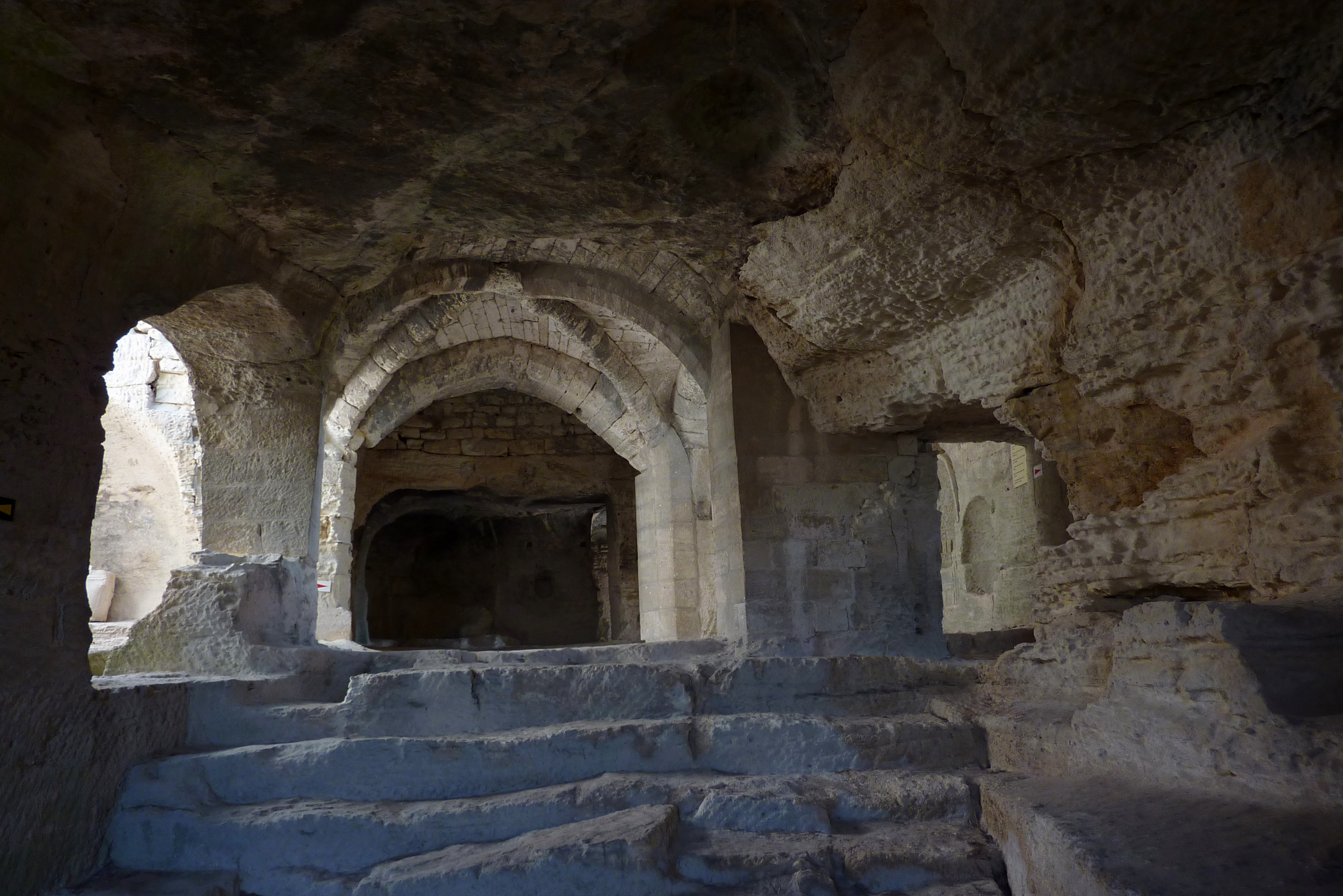
Those stone churches like the one in Vals, the rugged and humble ones are very much in harmony with the environment. Those rock formations, this time at Cote d'Azure area, in spite of being regular, are in perfect harmony with anything which surrounds them. I couldn't help myself to post this picture. They are simply a silent part of the environment, awe-inspiring. But when I was really young I couldn't warm up to this type of aesthetics, the vegetation was kind of too dried-up for me, I liked lush green seen in the North during the Summer. Now I am enthusiastic about it. But also take  a look at the cave monastery in France,  Beaucaire, abbey Saint-Roman, photo taken by G. Freihalter, (via wiki commons) you can zoom in very closely.


Cave churches or monasteries are rare, but there are still plenty for curious travelers.List of cave beauties on wikipedia

Quite a number of those is to be found in Bulgaria.And bellow is a picture from Bulgaria,  rock-hewn churches of Ivanovo, with Byzantine  frescoes.

Ivanovo rock-hewn monasteries, Bulgaria, by Denis Berthel, via wiki commons

And take a look at this photo of Todorka Mountain in Bulgaria. Makes me want to follow advice by my  Bulgarian expatriate friends and visit their home country. Sure, I would love to. Who can resist the lure of ancient art and architecture, and of such sundown  like this bellow on the magnificent mountain. But again, I need to postpone it again, even if at the momentI have what the Germans call Fernweh,  which means aching for the far away.
 The mountian bellow is Todorka Peak, in Bulgaria, by Evgeni Dinev, via. wiki common.
 Artlicle about this mountain mentions the legends too.

Todorka Peak, in Bulgaria, photo by Evgeni Dinev, via wiki commons

The author of the picture has more interesting photos of Bulgaria on Flickr, and his photo gallery there is great! Those pictures are my recent discovery on this media stream, and they make me think about maybe putting more links to Flickr albums by various photographers. Take a look at Evgeni Dinev's other awesome pictures.