Showing posts with label Teutonic Knights. Show all posts

Wednesday, July 10, 2013

Grail in Bezlawki part 2: Mary Magdalene patronage and pagans


The second part of the legend of grail in Bezlawki. How the grail was taken from Britain, by whom, in my previous entry about what happened after the battle of Hastings. 

This is a legend, we don't know how old it is, bu tit is very interesting as a story, and has historical events, as well people who lived in real life. A bit of historic  background of the story.

After Svidrigaila installed the grail and his army in today's Bezlawki, in a fortified tower which belonged to Teutonic Knights, military order crusading against the pagans of the East North, he lived like a prince. Historical records show food provided by Teutonic Knights, among them very costly morsels and spices imported from afar. Teutonic Knights promised him to become the grand duke of Lithuania, even though Svitrigaila didn't qualify, as Lithuania had the law of primogeniture, and he was the younger brother in line to the throne. His older brother, Jogailla was a pagan. They were also engaged in a bitter feud with their uncle, who also was keen of becoming the only ruler of Lithuania. It seemed that those three men had reasons to fear for their lives. The fortress in Bezlawki, in the middle of dense forest was a safe place for Svitrigaila.


 Here is video how Bezlawki tower was changing through centuries. For those of you who have trouble to watch the video's embedded in this blog, here is the to the youtube video.About  4 min on shows the change for Svidrigaila, making it more fit for princely residence.

One of the people who was on diplomatic missions dealing with Teutonic Knights, who were considered those days unstoppable, was young Polish queen Jadwiga. Or rather a young king who was a woman. Why? Because in Poland by law kings were ruling, so, if the sovereign wasn't male, she got the title of king, that meant she was a ruler on her own, not a queen consort.She was elected a king, and crowned as such at a tender age of 11, like some of the Merovingian child-king. But she was an extremely capable young genius.

Jadwiga of Poland was half Hungarian, half Bosnian, but from both parents she had genetic ties with native Polish Piast dynasty. She was also from Angevine dynasty, therefore the fleur-de-lys. Her mother, Elisabeth of Bosnia was ruling Poland, as the last king of Poland decided that his sons are no capable enough. Poland didn't have law of primogeniture. king or the nobles could decide who was the best candidate for the throne. But Elisabeth of Bosnia  wasn't  capable enough as a monarch to please the nobles and she  was replaced by her daughter, Jadwiga.

Jadwiga of Poland  by Antoni Piotrowski, at Jagiellonian University
Note the chalice on the right. Picture painted in 1901. 
Jadwiga of Poland grew up in Hungary in royal court of Buda, she was a polyglot speaking six languages, spent one year at royal court in Vienna, as it was common to send children of noble birth to be educated at other courts.She was supposed to be the future wife of William of Austria, one of the Habsburg dukes, was engaged to him as a little girl (sponsalia). The Habsburgs were expanding their influence by marrying heiresses, this engagement was an early attempt in such politics.

Jadwiga was a politician and patron of culture, in addition she was very religious: she revered four saints, specially Mary Magdalene and her sister Martha. Mary Magdalene was the patron saint of Angevin dynasty, after Charles II, Count of Provence and king of Naples discovered the body of Mary Magdalene in Provence, at  Saint-Maximin-la-Sainte-Baume.Mary Magdalene was immensely popular saint and enjoyed patronage of rulers, but the Angevins were the most important in spreading and strengthening her cult. Without them Saint Baume pilgrimage site wouldn't exist, her cult in France wouldn't be as strong.

Charles II discovered the body of Mary Magdalene in 1279, he was called Charles of Salerno at this time, he became Charles II later.  At this moment this popular saint became the dynastic patron, so, no wonder Jadwiga venerated dynastic saint who according to the legend converted pagans of Provence to Christianity A scholarly article to read about Angevins and Mary Magdalene as their patron saint, and Angevins role is spreading the cult of Mary Magdalene in Provence, Naples and so supporting also the legitimacy of their dynasty, of which they claimed, Mary Magdalene was a miraculous founder.
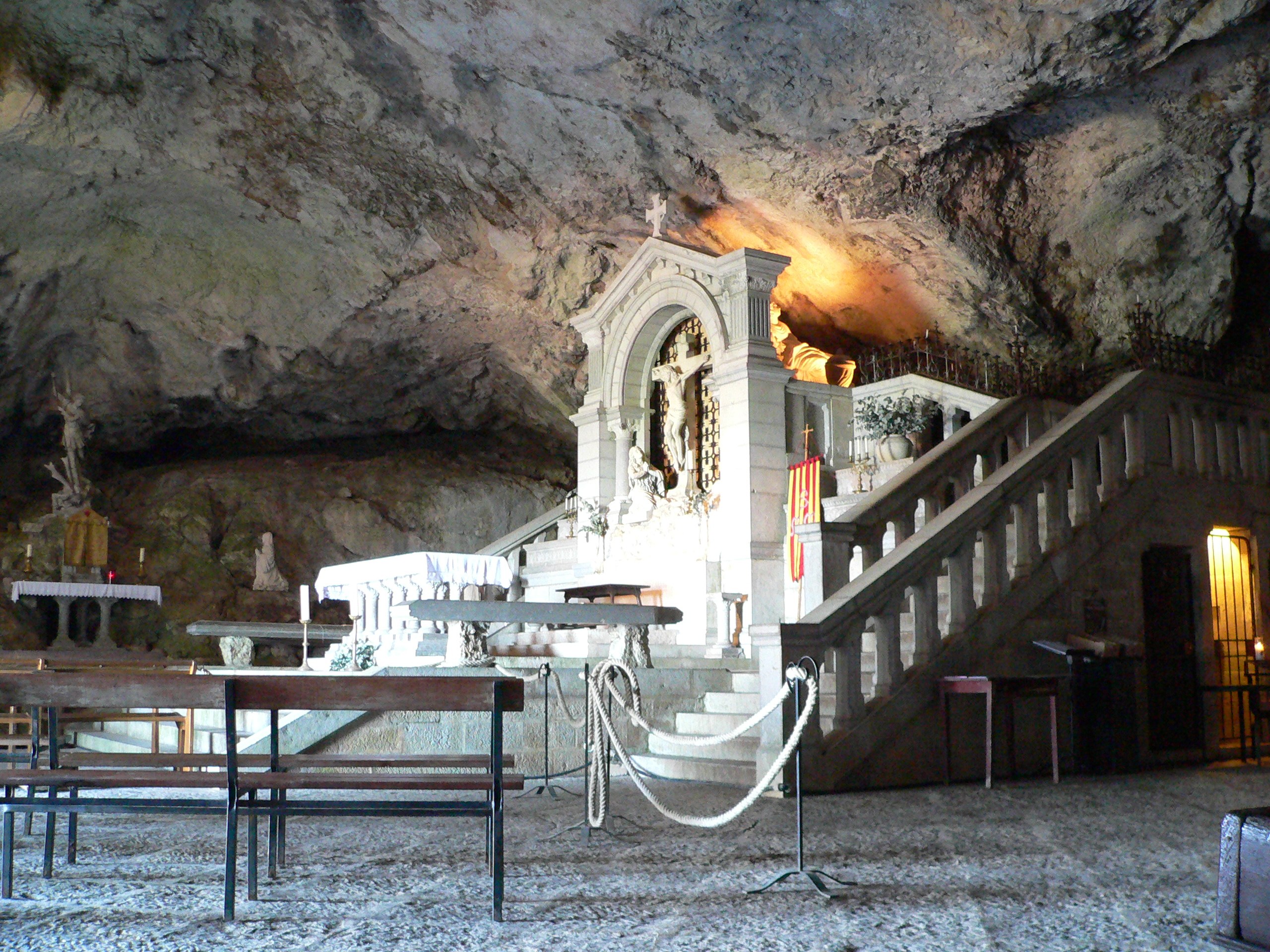
Grotto of Mary Magdalene in Sainte-Baume, by Disdero
http://www.escholarship.org/uc/item/7pz6w018
by Dr. Sarah Wilkins, professor of art history and design.

When Jadwiga was enthroned, however, several suitors appeared, hopeful for marriage and crown. William also appeared at the court in Krakow, as he was thinking now was the right time to got get married, after all Jadwiga was his fiancee. He was bitterly disappointed: the young sovereign declared the annulment of their contract, and the Habsburg duke went home.

Jadwiga got married three years later, she was 13 years old. Her king consort became duke Jogaila of Lithuania, who being a pagan needed to convert to Christianity. And through Jadwiga's influence the last pagan country of Europe was Christianized.She didn't need to preach to pagans: she just made the requirement that he husband to be needed to be Roman Catholic.

Svitrigaila  the owner of holy chalice (which one of two?)  lived with his hopes for Lithuanian throne in Bezlawki, in the area of crusader state of the Teutonic Knights, the military order which also targeted pagan Lithuania in their Northern Crusades. His alliance seemed easy, as the Teutonic Knights were believed to be invincible. Yet they were crushed, one day, and by no one else than his brother Jogaila with armies of allies.Life of Svidrigaila was marked by wars and dynastic struggles. He became grand duke of Lithuania for two years, noting more.

As Jogaila was baptised in Wawel Castle in Krakow, Christianization of Lithuania was official in 1386 The marriage couldn't happen without Jogaila's

 Svidrigialla also got baptized with his brother at the Wawel Castle. He converted from Greek Orthodox faith of his mother into Roman Catholicism.But in his case it was of no great political advantage. 

Because Jogaila became king of Poland, this didn't mean that Jadwiga was now a queen consort. She was the ruler, marriage didn't chip away her power, he was the king consort, but of course both were politically active. Jadwiga was known for her charity, good character and for her support of good causes. She was so much liked and revered by people that she was considered a saint, and legends of her miraculous powers spread. This was a queen of a true noble ideal of a virutous lady.She died young, only 26 years old, after complicated child birth. She and her daughter lived only one month. This was nothing unusual in those days, even among people who were very privileged, such deaths happened among ruling families too.
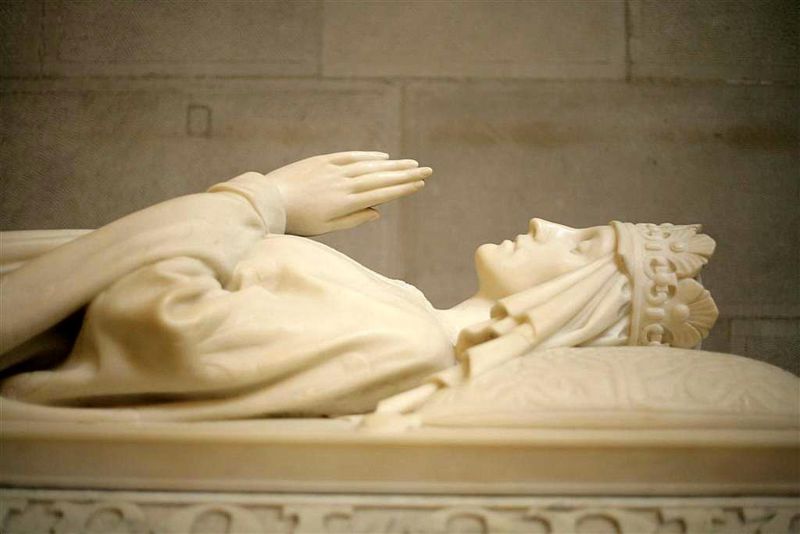
Sarcophagus of Jawdiga of Poland, Wawel Castle Cathedral
After Jadwiga died she was declared a saint by people, and her cult spread. Her relics are in the Wawel Cathedral under the crucifix at front of which she prayed. Even she was considered a saint and worshiped as such, her beatification happened as late as 1980, and she was officially declared a saint by Vatican in 1997, by the pope John Paul II as you may guess. He prayed at her sarcophagus. Pity I didn't take the picture, the sarcophagus sculpture includes a nice lap dog at Jadwiga's feet.Thank you Cezary Piwowarski for the picture. (Dog symbolized loyalty). Close to the sarcophagus her regal insignia are exhibited: the scepter and the globe. They are made of wood, painted gold. Maybe those were lighter for a child ruler to hold, but also she is remembered by her unusual generosity, she sold her jewels in order to support Krakow University (today Jagiellonian University) etc.

After Jadwiga's death it didn't mean that Jogaila as consort was now entitled to rule. There were several candidates, but he was considered the most suitable one, so, he became the king.

 As for pagans in Lithuania: they were left unmolested, their priests also. As officially Lithuania was a Christian country, crusades stopped after battle of Tannenberg in 1410.

Jadwiga's patronage of art and culture is continuation of  Angevin artistic patronage of the Neapolitan Angevin dynasty. She had good examples. In the article you will see also the image of funerary monument of Mary of Hungary, Queen of Naples, who was also patroness of arts, and like Jadwiga also connected to Hungarian Arpad dynasty. Mary's mother was a pagan of Cuman tribe who converted to Christianity in order to marry Stephen V, king of Hungary, and Dalmatia, Croatia, Rama, Bulgaria, Serbia, Galicia, Lodomeria and Cumania; Duke of Styria.

More about grail in Bezlawki, also historical background, soon, I hope, and I hope you enjoy it. Knowing the legend is one thing, but knowing the people in the legend can shed additional light, in my opinion. Again, we don't need to believe in the legend, that there are historical persons it doesn't make it automatically more credible. It is just a legend after all. Wasn't the legend  about Joseph of Arimathea who brought grail to Britain also a legend of Christianisation?


Wednesday, July 3, 2013

Beuatiful Madonnas style in International Gothic and topoi of courtly love

Today i want to show some Madonnas in style which was a branch of International Gothic. Those depictions of Virgin Mary are called in Beautiful Madonnas. This iconographic type emerged in Bohemia (Czech Republic today), and spread to neighbouring states: Holy Roman Empire including Silesia, Poland, Teutonic Knights Crusader State, Burgundy, Austria and France. Not surprising that in the Teutonic Knights' state,   the domain of militant order with their strong devotion to Virgin Mary this style spread rapidly.

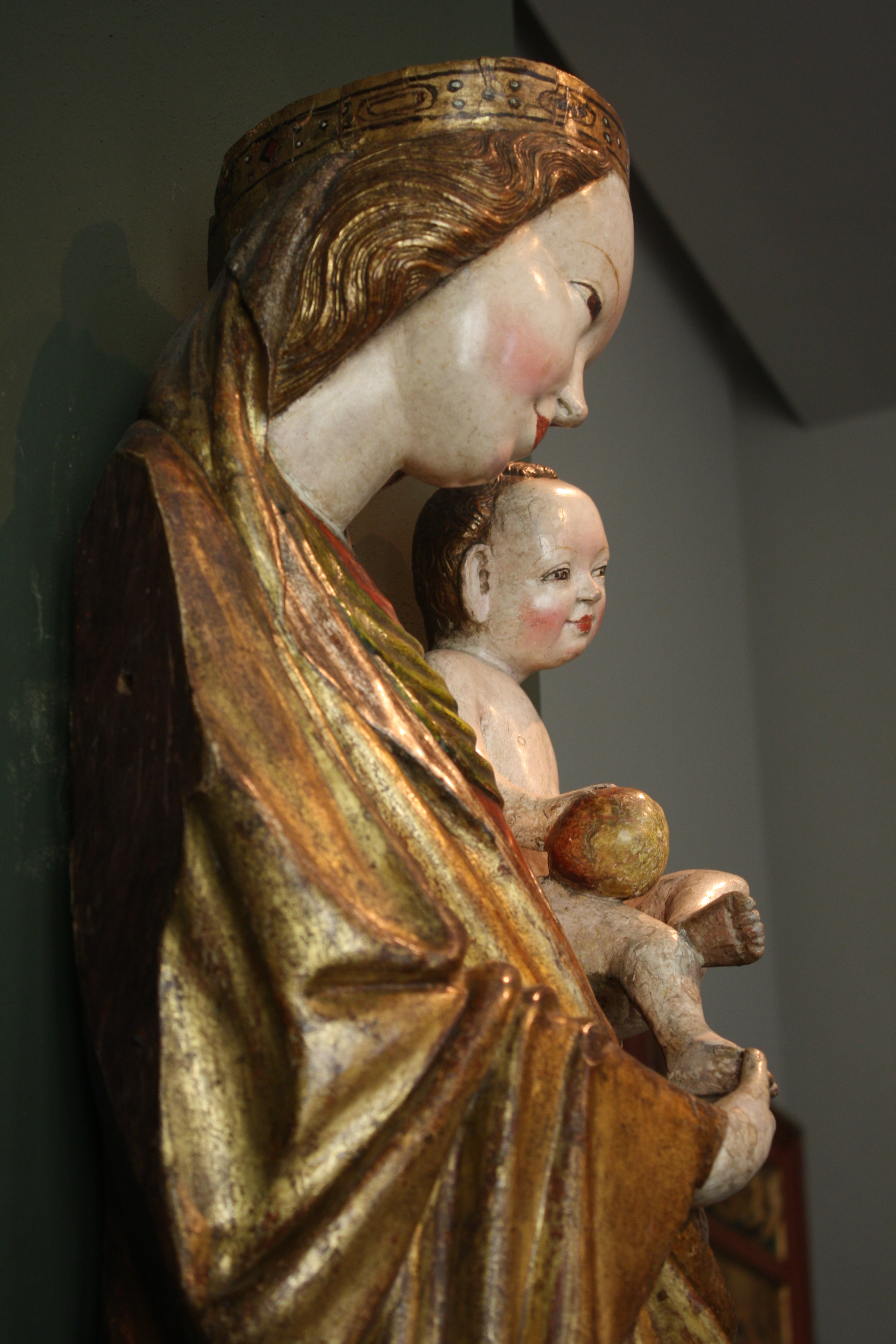
Madonna of Kruzlowa, by Ludwig Schneider/Wikimedia
Beautiful Madonnas were mostly stone sculptures, but sometimes were made wood, sometimes of terracotta fully three dimensional, no reliefs sculptures.

This type was a re-edition of images of Madonna with child, which started already in Byzantium, but this time Madonna was depicted as a very young woman, with delicate hands and small head, beautiful and lyrical. There is a lot of charm in Beautiful Madonnas, it is very sublime style with gentle gestures, cascades of fabrics, emotions showed realistically also the was strong attention to detail as the artists wanted to depict her very realistically, in a less stylized manner. It is all very refined in comparison to the previous styles of representation of her.

Characteristic pose of Madonnas is so called S pose, where the person stands slightly slouching, belly forward, the spine is bend, not straight. This was also a common pose in International Gothic, or High Gothic in general. It was considered very elegant those days.

The example on the left Madonna from Kruzlowa is obviously very young, she looks like an ideal lady of the court culture of her times. About an ideal of beauty in Gothic another time, in a separate entry. Yes, the baby looking as if he was going bald was one of the beauty ideals, also women had very high foreheads, which gave them balding looks. It was a fashion once.

Here the Madonna of Kruzlowa and her child are represented as New Adam and New Eve. This maybe confusing for today's audiences, but there was a lot of theological disputes in the Middle Ages about Mary's role in  redemption of humanity. Medieval allegories and symbols can be strange, but they also can be explained in a simple manner, I hope I can do it without making things complicated: Virgin Mary and her son are the new humanity, both were new people born without original sin. Adam and Eve were the people of old times, before the redemptive powers of the Messiah appeared in human form. Both Virgin and child are human, but also are divine, closer to perfection as born without original sin.  In Catholic doctrine Mary is the co-Savior, and Jesus is Savior of the world. Both take part in salvation of fallen  humanity. Here we see the apple in baby Jesus hand, it has double nature: it is an apple from Eden, but also an apple as globe, part of royal regalia, showing him as the ruler of humanity.

Beautiful Madonna of Wroclaw, Anonymous of Wroclaw or Prague, via wikicommons/ Burgher S

You can view a gallery of Beautiful Madonnas on wikipedia article (which i sin Polish only, but has quite nice visuals.) Those Madonnas represented ideal beauty, those ladies are equivalent of  models of today.  This type of representation was not a stylized Madonna anymore, but one that looked like a woman from real world, dressed like her, standing, gesturing like her, interacting with her child like a real mother from real world.

Also they would be cherished as court ladies, their about their virtues troubadours would sing. Just she wouldn't be so real, as the ladies who were the subject of courtly love were supposed to be extremely virtuous, extremely good.Knight would fall in love just by hearing of their virtues, before seeing them in person. Love of such lady was supposed to transform the lover who worshiped her.

 Even though in secular world the poetry of courtly love also included erotic elements, there was also an element of total sublimation, spread by the philosophy of Neo-platonism. Certain ideas overlapped, for example the idea of total devotion which echoes in mystical writings among others in those by Bernard of Clairveau who adored Virgin Mary, not a lady in earthly form. The lady is so adored, that she becomes unreal, she becomes totally divine. An ideal lady in secular world was of course a queen, and often the Virgin is wearing a royal crown.

Bust of a Virgin, terreacota, Bohemia, XIVc, wikimedia/ Mieow Mieow


The love of the Virgin is similar to courtly love, but of course is platonic, totally mystical, often has symbolic forms, like the Song of Songs was interpreted symbolically. Medieval mysticism, or Mariology in general, can be confusing. Social context and a little bit of social history is needed in order to make more sense of it.

Certain elements of devotion to Virgin Mary have common points in the idea of courtly love, it is strong selfless adoration of a chosen woman. With time an earthly court lady was replaced by Madonna, the Heavenly Lady. When the times of courtly love, fin'amor, (fine love), came to an end, and new era came:  XIII c was time of strong devotion to the Virgin Mary and mystical experience of sublimated love which broke any connections to sensuality.

For example Daude de Pradas who was also a troubadour, wrote that God was ultimate ":fine love and truth," and who loves God is loved back perfectly by him. He used the term fin'amor  referring to God, the term which was used usually in connection with courtly love. Lanfranc Cigala, another troubadour, also wrote about fine love in his religious poems. In his Gloriosa sainta Maria he wrote that he now is praising Virgin Mary as his lady in his songs, as the earthly love gave him only disappointment and pain.

Was this the search for ultimate virtue which gave new characteristics to Mariology? Probably. But also more troubadours than before were admonished not to sing sensual songs after the Albigensian Crusade. At once the culture of Southern France, home of prominent troubadours, became "worse than of the Saracens."  This  is a typical excuse of the colonisers, to talk with contempt about the culture they conquered. It happened later, in cases of XIX c. colonisation as well, putting down on India, Africa, Indochina, etc. But sometimes the conquerors adopted certain things for themselves, "to pity to destroy," as one of my art history teachers said. Troubadours were not only there, but Occitan culture was the culture of troubadours like for example Germany has culture of philosophy and good engineering.

But ardent songs of earthly love had topoi which were easily translated and adopted into mystical experience of platonic love. Song of Songs was symbolic also. Metaphors of religious love included love of parents for their children, love of spouses and also love of siblings. It seems that we humans need things earthly to express things the most abstract but very real at the same time. Mystical experiences belong to such realm of strong abstraction and reality.

The Madonnas included in this article here you can see  in order of appearance in two museums in Poland  Madonna of Kruzlowa is in Krakow,  Wroclaw Madonna is in Warsaw,  and in Bohemian Madonna in New York.Article about courtly love from wikipedia


Sunday, June 23, 2013

Holy Grail in Bezlawki, part 1, Escape after Hastings


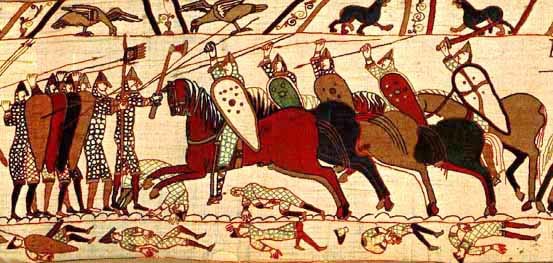
Bayeux tapestry, battle of Hastings. Via wiki commons, by Maxim

This blog has been neglected for long time. I planed and promised to write about the legend of the Holy Grail in Bezlawki, today's Poland. I mentioned before that it seems that Arthurian legends were very well received in Poland. But the legend of holy Grail in Bezalwki has some not very semi-historical events in it, and had people who are historical too. However, I am not saying here we need to believe the legend because of its historicity: it is just a legend based on real facts.

This is a story about a battle, escape, two chalices, two fighting brothers, the crusaders and a tower.
The battle in question was the battle of Hastings, when the last Anglo-Saxon king, the Harold II of England Harold II of England was killed. His children escaped to Denmark, as they were not safe anymore when  William the Conqueror became a new ruler. Short reminder: the mystical object of Medieval times, Holy Grail, was believed to be several things, one version was that it was the cup, or a chalice, into which Joseph of Arimathea collected blood of Jesus during the crucifixion. It became the ultimate  blood relic, which was brought by Joseph of Arimathea to the British Island. One version say that is connected to the Glastonbury Abbey.

 The tradition  also say that it was taken by escaping members of fallen dynasty more East, in order to save their lives, three people. They found refuge at the court of Danish king, their relative. They didn't escape empty handed, as you guess the story goes, they took  what they wanted, or rather what they thought was so precious they couldn't bear to leave behind. Among precious objects they considered worthy not to fall into the hands of William the Conqueror were two chalices, (from Britain and Greece). Finally  the grail was installed in this church, in Bezlawki, on the picture bellow. It stayed there for several centuries, still during the twenties of XX c. one travel book writer, Orlowicz, claimed he still saw one of the chalices in the church.

Church in Bezlawki today, empty, wiki commons, courtesy of Severus


Who were those three expatriate children of Harold II of England as real historical people? One of them was Gytha of Wessex Gytha of Wessex, who later became the wife of  Vladimir II Monomakh, the  ruler of  Byzantium influenced Kievan Rus. He is also known under name of Waldemar. Gytha's and Vladimir's son is mentioned in Norse sagas, there he is called Harald  his Slavic name was Mstislav. One of the brothers, Godwin, became the ruler of one of Lithuanian principalities, a duke. How it was possible? This was XI c. but Lithuania still was very similar to VI c. Britain: like at the court of king Arthur the knights took decisions during an assembly. Upward mobility was possible, still, during those days for a warrior who was considered worth of rule.

 Back to  Bezlawki: it was far away, actually when the chalices, (or chalice? ) first were installed there, the building which is the church today was not a church at all, but the fortified  tower of the crusaders. Not the Knights Templars, often they are associated in modern versions of the story with holy grail, but in this story we have Teutonic Knights, the worshipers of the Virgin Mary, with black crosses instead of red ones. They were  Order of Brothers of the German House of Saint Mary in Jerusalem. Knights form Europe joined them, not only from Germany. They were invited by pious Polish princes, Prussian Crusade was part of their military enterprise.


Church in Bezlawki, another view, wiki commons, courtesy of Jerzy Strzelecki

The Teutonic Knights came into the posession of the chalices later,but  it wasn't a war loot . It was a gift. From a rather pious ally.

Teutonic Knights, as a military order on a mission they  pressed East, however,  not South but  North, and who like those knights who went to the Holy Land got the blessing of  pope, they fought the  non-Christians, in this case the pagans, of today's Poland and Baltic states. They build a fortress which at the timescut the most east into the territories of the pagan Prussians, the Baltic people.  One  thing :  the English  version of article about Bezlawki mentions that the the fortress was a hunting lodge build by the Teutonic Knights. Not true, it was a fortified tower, a Wildhaus, as the knight called it, a house, a post in the wilderness. The forest was dense there, and I am sure there were hunters too, who hunted the wild  (it means game in German, also wilderness). However Jagd is hunting, hunting lodge is Jagdhaus. This was a fortress in which knights were stationed, not the hunters.

Two brothers, Lithuanian  dukes were in a bitter conflict. Jogaila, the older one,  who later became the king of Poland, was against the Teutonic Knights. His ascend to Polish throne happened after the Teutonic Knights were subdued and after Jogaila got baptized, it was the Christianisation of Lithuania. His younger brother,  Svitrigaila, sided with the Teutonic Knights, he also brought for them two mentioned chalices which were installed in the tower. Not too unusual, as the relics in the Medieval times were believed to help in difficult situations, and an outpost so far East probably was considered worth of help. Svitrigaila was invited to live in the tower together with his garrison. So, he didn't really give it away,  he moved with it. Svitrigaila still during XX c. was considered direct descendant of Harold II of England by Polish historians. Teutonic Knights promised him the crown of Lithuania.

More information follows soon.One Polish Medieval chronicle is somehow unusual,  it shows that Arthurian legend was taken seriously.Also two Lithuanian Grand Dukes were married to women who became divine: one was considered a goddess (she was a pagan), the other became a saint. Both were worshiped. Also the Nazis had it base very close: 30 buildings, 50 bunkers. It is today a tourist attraction, called Wolf's Lair.

As for the story, yes, it is kind of difficult to believe, it is a legend after all, we don't need to believe it. (I don't). Is it difficult to believe that such legend exists in Poland? Why? legends of escapes are not uncommon in Poland, it was a country to which refugees often went. And you can find this legend retold in polish on the net. Here are links to a website of a licenced tour guide (site in English) where the lady talks about  the legend, another is website of the town near Bezlawki. Not the only articles on net about this legend. This i part of tradition, really.

Blog entry by the tourist guide, she describes it well

Article in Polish, sorry, gmina Ketrzyn site, lots of hsitorical inforamtion