Showing posts with label France. Show all posts

Wednesday, July 3, 2013

Beuatiful Madonnas style in International Gothic and topoi of courtly love

Today i want to show some Madonnas in style which was a branch of International Gothic. Those depictions of Virgin Mary are called in Beautiful Madonnas. This iconographic type emerged in Bohemia (Czech Republic today), and spread to neighbouring states: Holy Roman Empire including Silesia, Poland, Teutonic Knights Crusader State, Burgundy, Austria and France. Not surprising that in the Teutonic Knights' state,   the domain of militant order with their strong devotion to Virgin Mary this style spread rapidly.

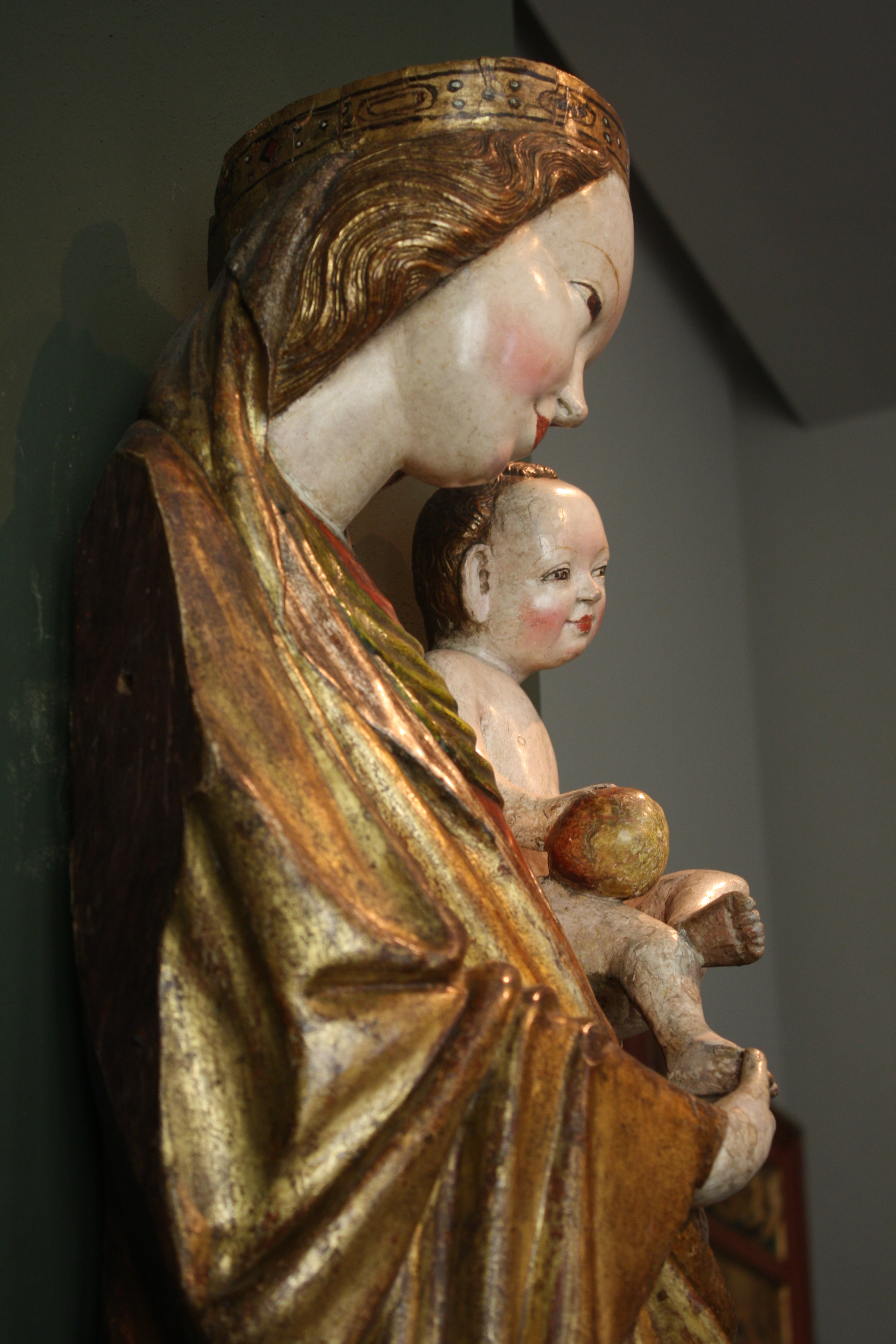
Madonna of Kruzlowa, by Ludwig Schneider/Wikimedia
Beautiful Madonnas were mostly stone sculptures, but sometimes were made wood, sometimes of terracotta fully three dimensional, no reliefs sculptures.

This type was a re-edition of images of Madonna with child, which started already in Byzantium, but this time Madonna was depicted as a very young woman, with delicate hands and small head, beautiful and lyrical. There is a lot of charm in Beautiful Madonnas, it is very sublime style with gentle gestures, cascades of fabrics, emotions showed realistically also the was strong attention to detail as the artists wanted to depict her very realistically, in a less stylized manner. It is all very refined in comparison to the previous styles of representation of her.

Characteristic pose of Madonnas is so called S pose, where the person stands slightly slouching, belly forward, the spine is bend, not straight. This was also a common pose in International Gothic, or High Gothic in general. It was considered very elegant those days.

The example on the left Madonna from Kruzlowa is obviously very young, she looks like an ideal lady of the court culture of her times. About an ideal of beauty in Gothic another time, in a separate entry. Yes, the baby looking as if he was going bald was one of the beauty ideals, also women had very high foreheads, which gave them balding looks. It was a fashion once.

Here the Madonna of Kruzlowa and her child are represented as New Adam and New Eve. This maybe confusing for today's audiences, but there was a lot of theological disputes in the Middle Ages about Mary's role in  redemption of humanity. Medieval allegories and symbols can be strange, but they also can be explained in a simple manner, I hope I can do it without making things complicated: Virgin Mary and her son are the new humanity, both were new people born without original sin. Adam and Eve were the people of old times, before the redemptive powers of the Messiah appeared in human form. Both Virgin and child are human, but also are divine, closer to perfection as born without original sin.  In Catholic doctrine Mary is the co-Savior, and Jesus is Savior of the world. Both take part in salvation of fallen  humanity. Here we see the apple in baby Jesus hand, it has double nature: it is an apple from Eden, but also an apple as globe, part of royal regalia, showing him as the ruler of humanity.

Beautiful Madonna of Wroclaw, Anonymous of Wroclaw or Prague, via wikicommons/ Burgher S

You can view a gallery of Beautiful Madonnas on wikipedia article (which i sin Polish only, but has quite nice visuals.) Those Madonnas represented ideal beauty, those ladies are equivalent of  models of today.  This type of representation was not a stylized Madonna anymore, but one that looked like a woman from real world, dressed like her, standing, gesturing like her, interacting with her child like a real mother from real world.

Also they would be cherished as court ladies, their about their virtues troubadours would sing. Just she wouldn't be so real, as the ladies who were the subject of courtly love were supposed to be extremely virtuous, extremely good.Knight would fall in love just by hearing of their virtues, before seeing them in person. Love of such lady was supposed to transform the lover who worshiped her.

 Even though in secular world the poetry of courtly love also included erotic elements, there was also an element of total sublimation, spread by the philosophy of Neo-platonism. Certain ideas overlapped, for example the idea of total devotion which echoes in mystical writings among others in those by Bernard of Clairveau who adored Virgin Mary, not a lady in earthly form. The lady is so adored, that she becomes unreal, she becomes totally divine. An ideal lady in secular world was of course a queen, and often the Virgin is wearing a royal crown.

Bust of a Virgin, terreacota, Bohemia, XIVc, wikimedia/ Mieow Mieow


The love of the Virgin is similar to courtly love, but of course is platonic, totally mystical, often has symbolic forms, like the Song of Songs was interpreted symbolically. Medieval mysticism, or Mariology in general, can be confusing. Social context and a little bit of social history is needed in order to make more sense of it.

Certain elements of devotion to Virgin Mary have common points in the idea of courtly love, it is strong selfless adoration of a chosen woman. With time an earthly court lady was replaced by Madonna, the Heavenly Lady. When the times of courtly love, fin'amor, (fine love), came to an end, and new era came:  XIII c was time of strong devotion to the Virgin Mary and mystical experience of sublimated love which broke any connections to sensuality.

For example Daude de Pradas who was also a troubadour, wrote that God was ultimate ":fine love and truth," and who loves God is loved back perfectly by him. He used the term fin'amor  referring to God, the term which was used usually in connection with courtly love. Lanfranc Cigala, another troubadour, also wrote about fine love in his religious poems. In his Gloriosa sainta Maria he wrote that he now is praising Virgin Mary as his lady in his songs, as the earthly love gave him only disappointment and pain.

Was this the search for ultimate virtue which gave new characteristics to Mariology? Probably. But also more troubadours than before were admonished not to sing sensual songs after the Albigensian Crusade. At once the culture of Southern France, home of prominent troubadours, became "worse than of the Saracens."  This  is a typical excuse of the colonisers, to talk with contempt about the culture they conquered. It happened later, in cases of XIX c. colonisation as well, putting down on India, Africa, Indochina, etc. But sometimes the conquerors adopted certain things for themselves, "to pity to destroy," as one of my art history teachers said. Troubadours were not only there, but Occitan culture was the culture of troubadours like for example Germany has culture of philosophy and good engineering.

But ardent songs of earthly love had topoi which were easily translated and adopted into mystical experience of platonic love. Song of Songs was symbolic also. Metaphors of religious love included love of parents for their children, love of spouses and also love of siblings. It seems that we humans need things earthly to express things the most abstract but very real at the same time. Mystical experiences belong to such realm of strong abstraction and reality.

The Madonnas included in this article here you can see  in order of appearance in two museums in Poland  Madonna of Kruzlowa is in Krakow,  Wroclaw Madonna is in Warsaw,  and in Bohemian Madonna in New York.Article about courtly love from wikipedia


Sunday, June 30, 2013

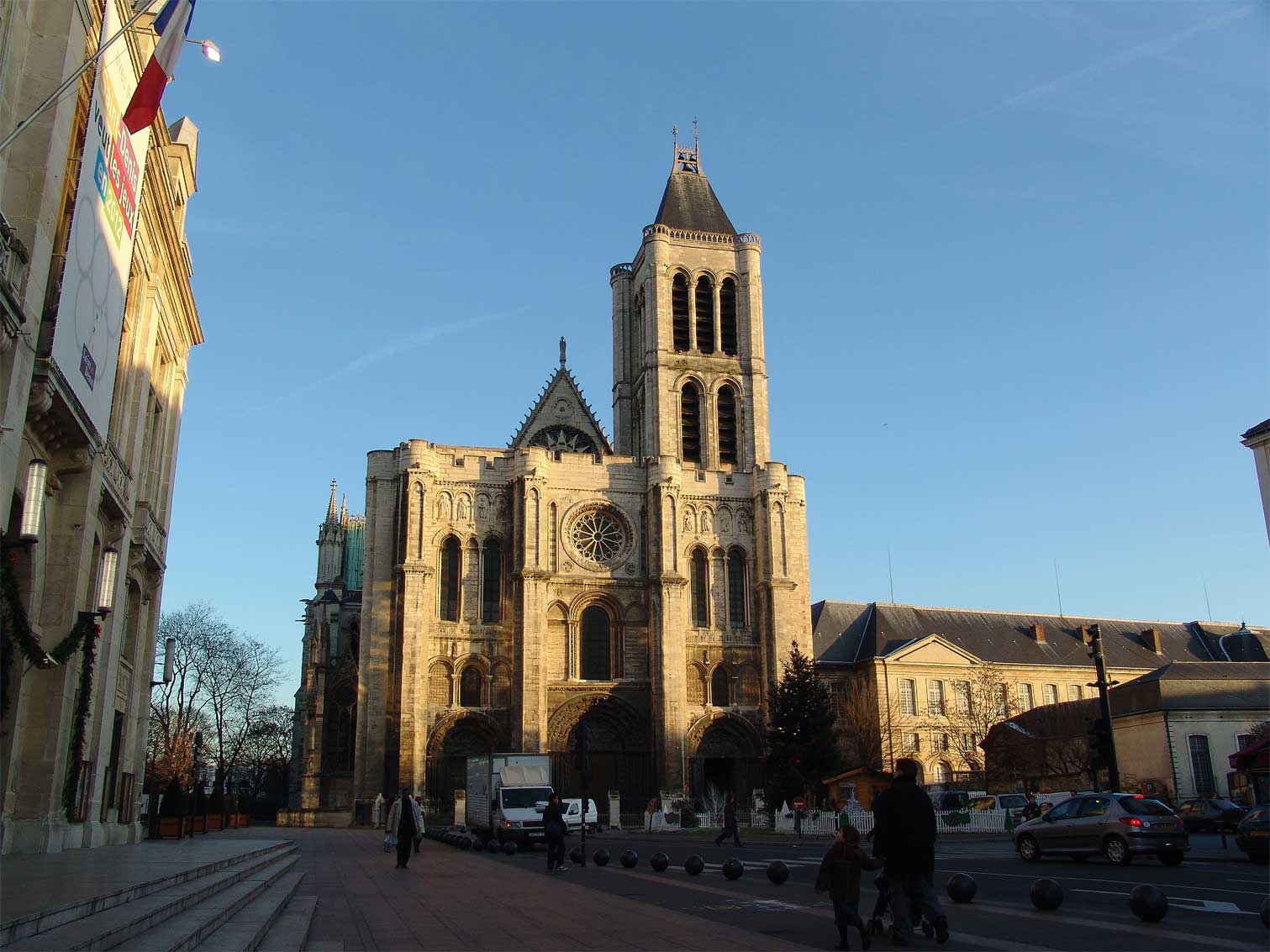
Forgoten Patron-Abbot Suger

If you are interested in art history, specially if you are interested in Medieval art, sooner or later you will run in your conversation, or books people recommend to you, into stories about Templars, how they introduced and built Gothic cathedrals, and so on. One name is never mentioned in such conversations,  or books: Abbot Suger's. It seems he disappeared from popular culture as contributor to Gothic art, or maybe he was never accepted. Pity, as he did as much for the development of Gothic architecture as the Medici's family did for the Renaissance. Of course, he is known to people who are serious about art history, but doesn't he deserve his place in the pantheon of movers and shakers and patrons who fueled new forms?

Chapel of the Virgin, St Denis basilica, via wiki commons by Myrabella
Abbot Suger was a man of many talents: he was a politician, statesman who served as regent of France when king was on crusade, he was a historian, art theorist, theologian and of course manager of a big and influential Abbey of Saint Denis. Not to idealise him: as many people of his times, he was sometimes opposing crusades, but sometimes he was in favor of them. Basilica of St Denis on wikipedia article

He was friend and confidant of the kings, and patron of artists and builders who had new ideas but were not given proper chance to bloom.

Sometimes, however, another situation happens: Abbot Suger is talked about as a single inventor of a Gothic style. This is not completely true: he wrote about aesthetics, wanted the walls to be higher, lighter, windows big and colorful, designed himself, introduced new features, loved things ornate and precious. But he collaborated with people who wanted to do things in a different way.Redesigning of St Denis wasn't his and only his project. He was very engaged, but didn't handle projects and firmly said: "build exactly what I drew." He was giving ideas, he accepted ideas, he was the project manager. Through him was possible to introduce large windows with pointed arches, ribbed vaults, clusters of columns, flying buttress, ambulatory with chapels radiating form it, and lots of light.

As you see on the picture above some features are still Carolingian, like for example columns, they still look like those from Antiquity. But arches are pointed already, vault is more complex, and windows are big.

Gothic style was a natural development of Romanesque style: what happens the newer style tended to make the building more spread in smaller part, branching out, more differentiated in forms, less compact, in comparison to the solid mass of Romanesque churches. The style was adopted fast, specially in royal domain of Ille de France, but still a lot of experimentation was going on. It happened that not all architectural ideas worked perfectly, talking about Europe now in general, not only France. There were instances when parts of cathedrals collapsed, or bad accidents happened. But with time building science was catching up with new aesthetics of creating higher and higher churches with bigger and bigger windows.

Rosette window in St Denis, North side,via wiki commons by Amirwiki
About Zodiac, see my blog entry about Charters and Zodiac
A lot of enthusiasm was involved in such projects, specially in France. France was the cradle of Gothic style and from here the style radiated to other countries. More stones were moved in France during the era of building Gothic cathedrals than in old Egypt in construction of pyramids, and cathedral builders were properly compensated. People who helped were volunteers, no slave work involved.

Volunteers were amazing enthusiasts.They were religious, of course, those people were products of their times like we often are products of our times. Haimon, abbot of Saint Pierre sur Dives wrote in his letter from 1145 about the wave of building enthusiasm among people in France. He wrote about building of Chartres cathedral. According to him even princes and nobility together with those of humble origin were pulling carts full of olive, wood, crops, stones, and anything which was needed for fulfilling the needs of the people working on the construction, or for the building of the church. Often a thousand or more people were pulling a cart full of stones, in great silence, in spirit of forgiveness of each other imperfections and in spirit of universal brotherhood and sisterhood. If you could hear anything at all , those were only prayers, or confessions of wrong doings and words of forgiveness among them. It was like a contemplative movement of peace among people for whom at such times differences among humans were not important, they worked in the spirit of brotherly and sisterly love. So wrote Haimon.

 Suger's ideas of the new style spread fast, but it doesn't mean that they were widely accepted without criticism: some churchmen said that ornate and rich style shouldn't be part of church buildings, church interiors, or church services. Cystersians were proponents of such ideas of humbleness and actually during Medieval times there was ongoing controversy about humbleness versus showing things divine through color, gold, light   and all things which could inspire awe. A little about Cystersian aesthetics in my other entry. I am not saying one approach was better than the other,but  they were competing.

 Abbot Suger not only broke frames of Carolingian building, (the abbey was built in this style) when he commissioned the rebuilding, but also asserted that awe is important part of religious experience.

Cystersian were more for soft quiet focus and contemplation, were against appeal to senses in churches. Colors, sumptuous decorations, music, incense, this was not important, they viewed it as distracting form the experience of closeness to God. Suger said the divine manifests in beauty, light an d color. He wasn't alone: this idea was well and alive because of monastery in Cluny. Founder of the Cystersian order, St. Bernard of Clairveaux simply opposed Cluniac theories. But Suger was on the side of Cluny: to him the stained glass windows were like a vision,  gold reminded of divine wisdom, soaring heights of church ceilings were leading thoughts to heaven. For sure churches were sanctuaries of beauty and space in European, not only French cities, which were dirty, conditions were crowded, as for example width of a room was the width of a bed, etc. But people could just step in a church building  and were transported into another, more beautiful world.

Sunday, September 9, 2012

Rock-hewn churches, cave monasteries, and stones: longing for travel

I come from a country with mostly flat terrain, some hills and mountains, but not much, lots of lakes and forests, and as you probably guess not many stone buildings. There are some, but most old buildings are made of bricks. Yes, brick Gothic is there too. Even the huge crusaders' fortress, Malbork Castle, is made of 35 millions bricks. Brick Gothic has its own fascinating features, and Gothic bricks themselves can be fascinating, but as you probably also guess I like stone buildings too. Actually I am really fascinated by them: huge cathedral or tiny shepherd chalet, I am hooked.

 So, the church of Notre Dame in Vals, Ariege in France (Pyrenees area) I find extremely interesting, this video lets you in.   Take a look at the humble Virgin statue, 1: 34. All it is element Earth in is glory, and very humble and simple at the same time.Gothic cathedrals have their beauty, but this one has own character, very Zen.


The Notre Dame church is Vals is Romanesque, partially build on the rock, (semi-cave church to be exact), has also very interesting frescoes, humble looking and with quite strong Byzantine influences, unusual in France, in addition to the only depiction of archangel Pantasaron, and depiction of scene after birth of Jesus.  Byzantine in appearance, as this is more often  found in Byzantine art, and also has strong Catalan influences, which is not so surprising given this is a neighbouring area to this region. The site was surveyed by archaeologists, and the conclusion is that there was human presence for thousands of years, even it must have been a cult site, at which point of the location  cannot be exactly said now, but the presence of ceramics used for religious purposes was there. But the site was at its peak during early Middle Ages, during the Merovingian times. I should write about the frescoes on another occasion, as they deserve attention on their own.

Landscape at Cote d' Azure, France, by Heidi Fuchs

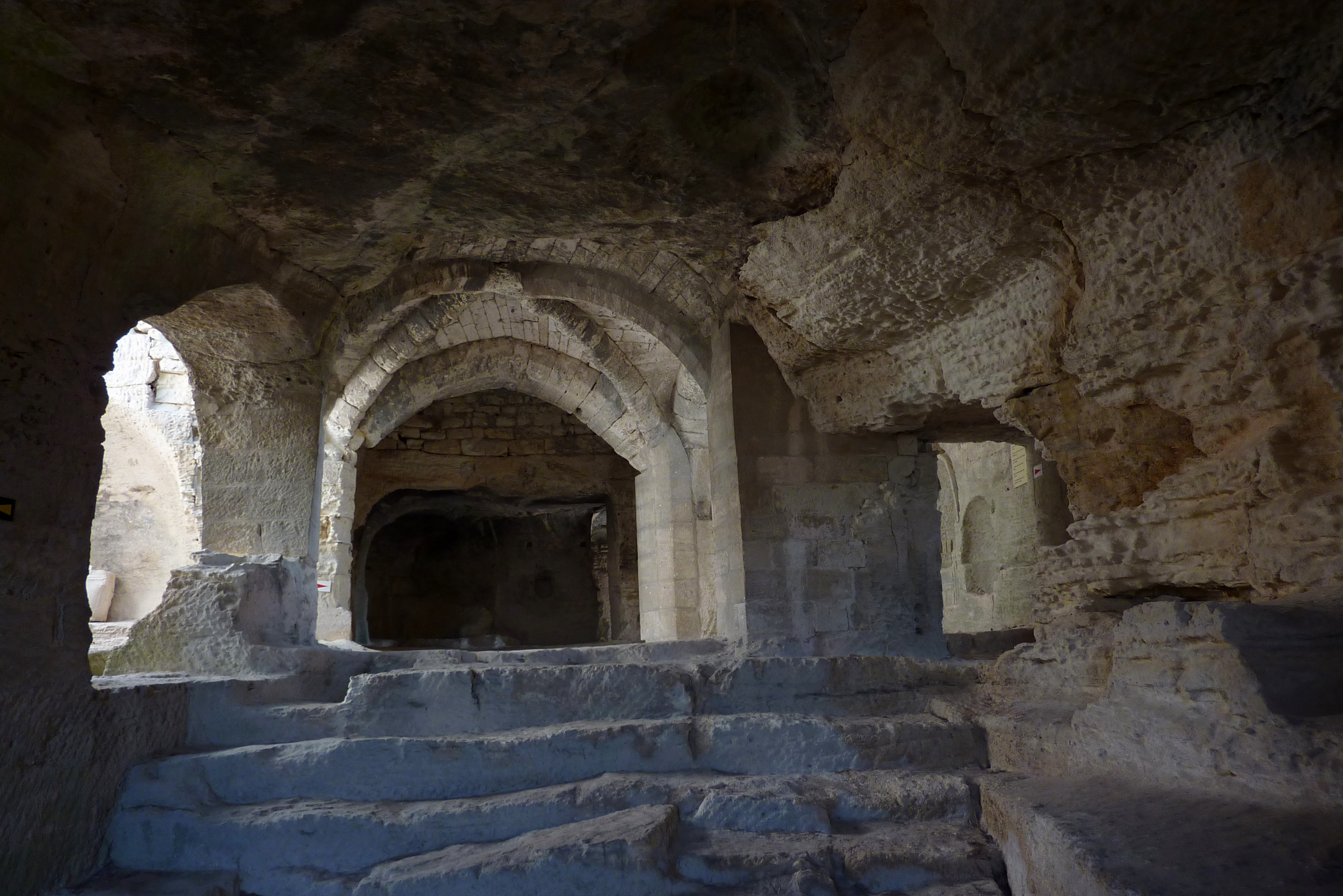
Those stone churches like the one in Vals, the rugged and humble ones are very much in harmony with the environment. Those rock formations, this time at Cote d'Azure area, in spite of being regular, are in perfect harmony with anything which surrounds them. I couldn't help myself to post this picture. They are simply a silent part of the environment, awe-inspiring. But when I was really young I couldn't warm up to this type of aesthetics, the vegetation was kind of too dried-up for me, I liked lush green seen in the North during the Summer. Now I am enthusiastic about it. But also take  a look at the cave monastery in France,  Beaucaire, abbey Saint-Roman, photo taken by G. Freihalter, (via wiki commons) you can zoom in very closely.


Cave churches or monasteries are rare, but there are still plenty for curious travelers.List of cave beauties on wikipedia

Quite a number of those is to be found in Bulgaria.And bellow is a picture from Bulgaria,  rock-hewn churches of Ivanovo, with Byzantine  frescoes.

Ivanovo rock-hewn monasteries, Bulgaria, by Denis Berthel, via wiki commons

And take a look at this photo of Todorka Mountain in Bulgaria. Makes me want to follow advice by my  Bulgarian expatriate friends and visit their home country. Sure, I would love to. Who can resist the lure of ancient art and architecture, and of such sundown  like this bellow on the magnificent mountain. But again, I need to postpone it again, even if at the momentI have what the Germans call Fernweh,  which means aching for the far away.
 The mountian bellow is Todorka Peak, in Bulgaria, by Evgeni Dinev, via. wiki common.
 Artlicle about this mountain mentions the legends too.

Todorka Peak, in Bulgaria, photo by Evgeni Dinev, via wiki commons

The author of the picture has more interesting photos of Bulgaria on Flickr, and his photo gallery there is great! Those pictures are my recent discovery on this media stream, and they make me think about maybe putting more links to Flickr albums by various photographers. Take a look at Evgeni Dinev's other awesome pictures.


Thursday, August 9, 2012

Templar Treasure Legends in Poland, Templars-part 3

The believers of  the legends about the knights Templars escaping to Poland have one valid point: Poland was one of very few regions in Europe which practiced religious tolerance. Relatively, for those days. Later in the history several hundred different believers or atheists were killed. Poland wasn't "the country without burning stakes," as sometimes was called. This is a myth. However, the level of religious tolerance was higher than in other European countries, even later in comparison to for ex. tolerant Netherlands. For long no single religion dominated. However, the popular religious movements in Europe were also rebellions of the peasant and those of  urban poor as they spoke against the excesses of the religious leaders and aristocracy. Such rebellions were gladly helped by the feudal lords, who saw those as not only rebellions against religion, but also against their "God given" privileges. The Templars were of the privileged class.

One of the Templars forum member in Poland wrote once jokingly in his post that he will reveal where the Templar treasure is located, and this revelation will cause obsessions, mental illness etc. for those who will search for it. Poland, sadly, has its own brand of treasure hunters, who illegally dig and damage historical sites which could be properly excavated by archaeologists, and properly secured by them in order to prevent further damage. There is something of a touch of madness in such enterprises too by individuals armed with metal detectors, shovels, flash lights and night visors. Directed by greed and in search for becoming another Indiana Jones.Some inhabitants of the places associated with treasures fear them, (damage not only historical sites), and chase them away. In Rennes le Chateau associated with story about Templar treasure illegal digs was also a huge problem.

There are legends associated with Templar treasure in Poland, and in an old German folk song, telling about the Templars, their castle and their treasure in Poland. In Poland the  treasure legends are relatively numerous in comparison to the legend of the location of the Holly Grail, which is bound with one location only.

 I mentioned the legend of Templar fleet which was sailing from Marseilles to the Baltic Sea down the river Vistula already. It was supposed to carry Templar treasure from France, away from the greedy hands of the king Phillipe the Bel.

Some legends mention him by name, and there are other names of people involved, their kinship, if applicable, nationality, etc.One particular legend, which according to another oral tradition, resulted in treasure hunt by the Swedish, who during the Deluge (war with Sweden) were taking apart the walls of the castle of the local lord whose predecessor allegedly took the treasure for himself. This legend is strangely detailed, with the names of all people  involved, all details mentioned above, rank in the  Templar order, events such as hunting,  injuries on parts of their bodies, emotional and family relations etc.Long and very detailed story. With lots of details, which can of course make someones head spin. This is the story how a Polish local lord together with his relatives attempted robbery, knowing about the treasure, when the plan of the robbery didn't bring any desired results-as robbery happened,but  treasure wasn't there- they spied on the treasurer who hid it. (He was form Western Europe). Than they stole the treasure, and were in fight with the treasurer, with swords, when one of the robbers killed the treasurer with an arrow shot form the distance, a very un-knightly behaviour in addition to the robbery.

 I am omitting here the details of the story, which is long, and out of respect for the past troubles which this story excited. I was born and lived not too far from one of the locations of alleged Templar treasures, I respect oral traditions, but I found out that not everyone shares similar respect. Mentioned the treasure hunters already. Not like you and me, for  some people this stuff  simply creates confusion, oral tradition is only as interesting as can allegedly point to the location of the treasure. Sad but true.

The other legends about the Templar treasures are of course bound with the locations of former Templar commanderies, of villages owned by them with sometimes telling names as Templewo. Quite often they are very similar to the legends which were  teaching social mores, and were against the vice of greed. They are very similar to the legends about the treasure connected to the Summer Solstice hoard, just the treasure was Templars' and the access there was only during the Winter Solstice, during the Midnight mass, when the guardian spirits or the devils leaved the place leaving the doors open. The versions tell about one man who found the place, and was courageous enough not to be sacred of the spirits. Each year took some of the treasure, but one year he took too big of the sack, and busy to fill it with riches was captured there forever as the doors closed again when the mass was over. He was changed into one of the guarding spirits.

What about the legends which are not fantastic at all, like the legend above, which mentions just the events, without any supernatural involved? May they be true? Maybe yes, maybe not. People were gossiping during the Middle Ages and later, and were even paid for their gossip, when they told interesting story, as today. Their story might have been a sort of bestseller when they were journeying from village tot village, and from castle to castle, story telling was a profession. As today. Those stories than took life on their own when were retold. But sometimes the stories in oral traditions give pointers to the truth which is than confirmed by archaeologists, as the tale about Johannites, one of the military orders with which the Templars merged. The legend said that those knights were growing unloyal toward the Polish king, and also were minting counterfeit coins. The angry king took over their castle. Today's excavations in the castle lead by archaeologists unearthed minting presses and fake coins of various origins, among them fake coins of the Teutonic Knights, the other crusaders present in the country .

Sometimes I wish the rumors of the treasure will be combined with the treasure found in Poland, extremely valuable, hidden during XIV.c. found during the second half of the XX c. now is possession of museums.Why not to say this was the lost Templar treasure, and stop digging for it? Among the treasure's precious objects was also this beautiful royal crown. It is difficult to appraisals of  treasures, but this one was is worth today from 50 million to 100 million dollars. Fitting rich organization, like Templars.

Via Wikipedia Commons 
 And here is a rather creepy edited video with some castles in Poland, some of them associated with Templar treasure. I dislike the soundtrack, very much to be honest.


 Ruins of the Castle Ogrodzieniec is one of the alleged sites of the Templar treasure location. There is the well, recognized by the cross bars, from which according to another tale appears a huge black hound, very terrifying beast appears from time to time.  This  is the ghost of the one's of the owners who rebuilt the castle, and he was an immensely rich man. The castle itself was very rich. Actually competed in splendor with the royal castle in Cracow. But its owner was also a sadist, very protective of his treasures, and as the legend say, he was punished for his cruelties by becoming a hunting spirit in the the form of this huge black dog.
Treasure were always stuff of the legends, and excited human emotions as lotteries and Las Vegas slot machines are. Treasure stories are also archetypical belong to the quest category.

Friday, April 20, 2012

Gothic Art Outside France? Any Good? Central Europe, etc.?

French Gothic art is very renown, and for good reason. French cathedrals are magnificent, totally awe-inspiring.

Sadly, often it is only Gothic art known to travelers in Europe, and I understand that. Time and money can be a limiting factor. I consider myself lucky, growing and living where I could just take a walk and could step in a welcoming interior of a Gothic cathedral. Or a Gothic church, or a Baroque one, and other international styles. For sure this can nourish your aesthetic sensibilities. This is one reason I write this blog, to be able to share what I got for granted.

Sure, Reims, Chartres, Notre Dame, etc. are worth the journey, are iconic. So are Paris, Giverny, Carcassonne, and other beautiful places. So is Cologne with magnificent and finished cathedral towers.Stump-like towers of French cathedrals are unfinished, you know, those towers with flat tops? Those are unfinished ones, not just the intention of the builders.

Other German cathedrals or Gothic churches are also worth the visit. They look very much like the French ones, but the towers are usually much taller, truly the intention of Gothic, often with open work spires, lacy. Gothic was architecture which ambition was to grow as much in height as possible, the ideal was  to get the numbers of the ratio of walls and floor space as much different as possible (1:1 would be a bad ratio!) Cologne cathedral has 1:4 ratio of surface vs. height. French cathedrals get to 1:3 ratio. It was like a racing toward the sky, and often the attempts of getting the ratio to the extremes resulted in collapses of the cathedrals.Here is shown what you can see, and hear at the Cologne Cathedral.


And here are the magnificent bells an the exterior of Cologne Cathedral


  But there is of course beautiful lot of Gothic art in other countries too: England, Spain, Portugal, Czech Republic, Poland, Baltic States. Poland and Baltic States have examples of brick Gothic.
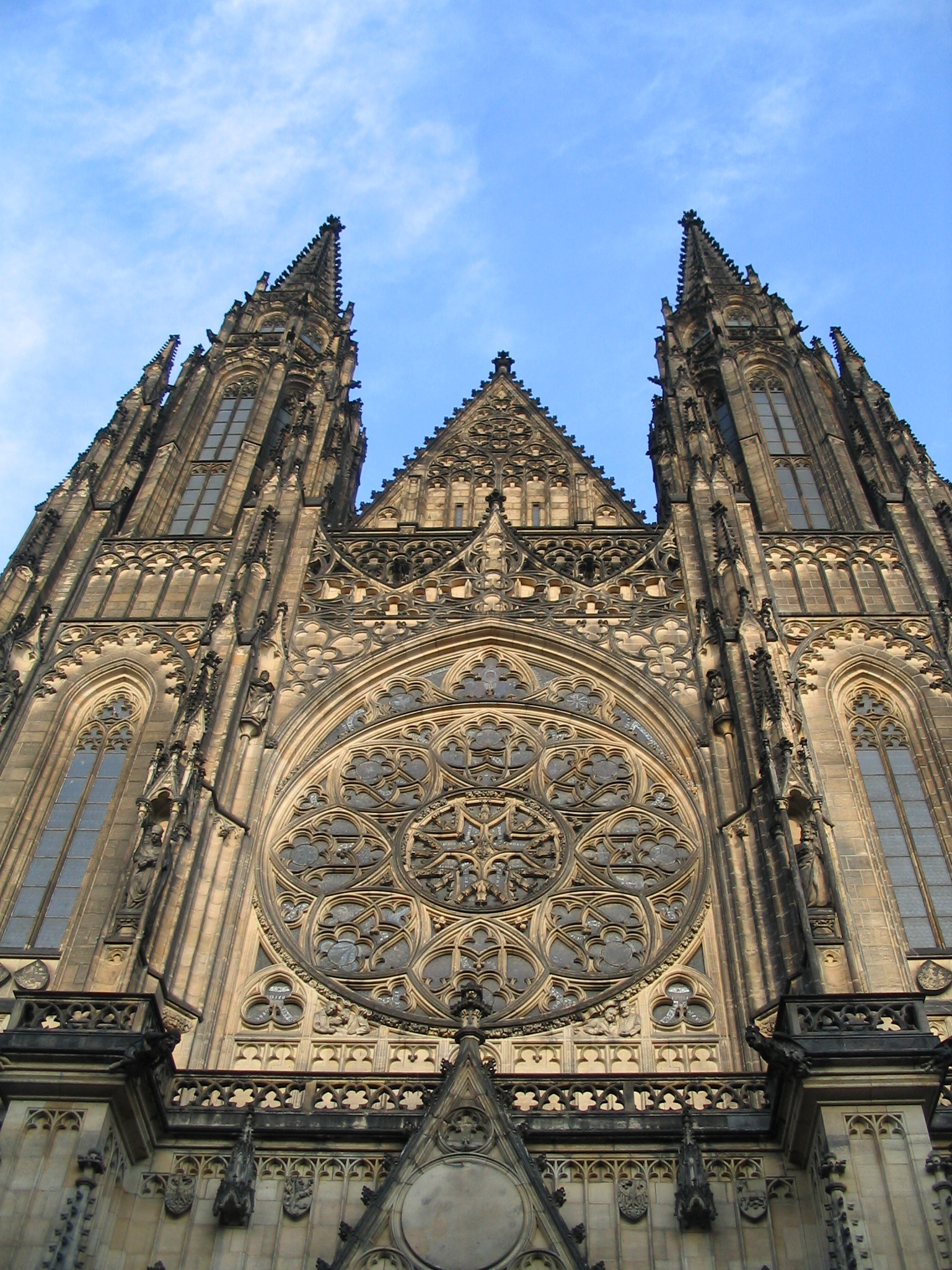
Portal of St. Vitus Cathedral wit rose window, stone masonry, Prague, via wiki commons courtesy of Vaylag

With mass tourism being such lively enterprise, many people are able to see a lot, but often this is knowledge given by the tour guides. Pity when among Gothic cathedrals only Chartres or Notre Dame rings the bell, but Amiens is a total mystery. I mean I don't argue to visit all possible sites, but to read. I wonder, maybe it is the fault of art historians, or popularizes, or people like me who can't make the subject interesting? For ex. authors who make Chartres a place of mystery reshaping its once famous cathedral school, (but one of many cathedral schools of the day) into some esoteric tradition school have the upper hand, as captivating story is given. Facts can be captivating? I think so, but then I am an art history geek.

There is also a curious situation regarding the Middle Ages: most popular knowledge deals with Western, parts of Central Europe, little with Eastern Europe. Byzantium is kind of a lost empire. Prague, luckily, developed into a tourist attraction. Krakow (Cracow) seems to be on its way now. I am Polish, and I am sometimes surprised when some people are surprised when they see that this country had Romanesque, Gothic, Renaissance, etc. It seems that it was such an empty hole in European history, regarding some countries, due to long slumber behind the iron curtain. Once I felt like someone coming totally out of empty space when I watched supposed to be educational video (US produced VHS), about Battle of Vienna. It made me laugh, as the video mentioned only prince Eugene of Savoy, as army commander. No mention about Polish army, even though it was a bi-national enterprise, and actually the Polish king, Johan III Sobieski was more in charge than Prince Eugene. Not that I care so much, and during times of Wikipedia such things are corrected, but it was really funny, how big of  a hole in knowledge can be created in one piece of material. One of the most decisive battles in European history, two big armies of two nations, and you totally forget one army plus the commander in chief? What a curious and amusing case of selective blindness! Cold War legacy? ;-)

Along the line of random info spreading, the Czechs had their own brand of Protestantism, c. one century before Luther (Jan Hus, Czech Brethren, etc.). Poland had religious tolerance guaranteed by law, including Statutes of Kalisz, about the protection of Jews. (Not as bad as in other countries, but it didn't mean it was a totally safe heaven). Religiously different people lived there, including the Cathars. The Kinghts Templars too. Or other crusaders who went for Northern Crusades, (often turned against Poles) . One blog writer from Czech Republic claims that every village in his country has some legend about the Knights Templars. Templar legends in general are not so very French-centered.

 Lots of mysterious, interesting stuff in other parts of Europe. For example devil in Polish art was treated as humorous nasty  figure and was often ridiculed, not a scary being like in the Western Europe. Devils form St. Mary Church in Cracow were painted in strong colors. In another Central European country, Germany, devil was feared, and stakes witches were burned. The conspiracy theory about witches came to Poland during the Renaissance, when the witch hunts intensified, but it was less common, and actually the Latin Church was not by law excluded form participation: only secular power did it. Strange? No. This is info is to point out the diversity of Europe during the Middle Ages and the Renaissance.

I don't have links about Gothic art in Slovenia, but Gothic went there via Prague, and Parler.I am mentioning Slovenia, as it it a very pictoresque country, (my hubby loved it), which enjoys, rightly so, many tourists visits. Very, very interesting landscapes, history, architecture, coasts in general.
A beautiful Corvin Castle in Romania you can see clicking on this sentence.

Here is a link to a site, in Polish; I apologize, but just for the sake of the pictures. There are iconic examples, such as Chartres, Nuamberg, Limbourg Brothers, Sluter, Crucifix of Geron, but also believed to be a miracle working crucifix from Cracow, and other examples, like the biggest Gothic altar in the St.Mary Church in Cracow, or probably the first authoportrait by Peter Parler in Prague, and wonderful St. Vitus Cathedral, Malbork Castle, and  "armor Madonnas" (Crusaders art, can be opened as cabinets!), and other exciting examples. The other is the link to St. Vitus Cathedral Wikipedia article. Enjoy!
http://www.historiasztuki.com.pl/001_KANON_GOT_2.html
http://en.wikipedia.org/wiki/St._Vitus_Cathedral 

Monday, April 2, 2012

History of Science at Chartres Cathedral, and Zodiac

In the previous post there was Zodiac window form Chartres, today is the astronomical clock. Strange setting for such symbols?

No way. Zodiac then was nothing unusual in churches. So, why all the mystery so many tourists talk about? Actually there is nothing mysterious about it. Explanation follows.
Chartres Cathedral Choir, Astronomical Clock, via Wikimedia Commons, thanks to Harmonia Amanda
First, the clock comes form XVI c. but its ideological roots are medieval, and proto-scientific, not really esoteric. Astronomy, astrology, the synthesizing medieval minds didn't see the difference.

 It is a common misconception that the Middle Ages were not interested in science, only in religion, or there was no reading of Classical texts before the Renaissance. Actually the classics were read, not as widely as  during the Renaissance, of course, but were not unknown, rather kept in high esteem. Many Classical and Arabic texts of science were translated into Latin. Arabic texts about astronomy, mathematics, anatomy and chemistry, and medicine contributed a lot in development of Western medical sciences, we often forget about it. Or simply don't want to know. And there was no agreement about if the Sun was the center of Universe or moved around the Earth. The official decision   in favor of the Earth as the center of the Universe came later. Science was fine as long it didn't oppose any dogma. For example the theological idea of dignity of the human body was applied to the medical field, and this particular idea didn't allow dissecting human corpses for anatomical research. Dead animals were dissected instead, specially pigs. Sometimes, rarely, human bodies were dissected also.

Chartres itself had a cathedral school, as often was the case with such buildings: there were also centers of learning, not only part of religious live of communities as today. Chartres was one of such centers, and was among the famous ones. Neo-Platonism was flourishing there, sciences were treated as separated from theology. A number of so called than natural philosophers (philosophers interested in science) came from Chartres. School of Chartres became less influential when universities started to compete with cathedral schools, but this was a case with all cathedral schools.

So, if the clerics of Chartres were so scientifically minded, why such thing as Zodiac in the cathedral?

 Here we need to understand the mind of people who lived before us, and don't project our XXI c. world view on them. The clerics form Chartres were still products of their times, and during their times astrology was science, before the Catholic Church opposed it, and before it was mocked  by the scientists of the Enlightenment era as superstition, not a scinece. Medicine was part of curriculum at Chartres school, and astrology was officially part of medicine also. Here is the illumination dealing with the human body as related to Zodiac.

Anatomical Zodiac Man, Limburg Brothers, Book of Hours of Duke de Berry, illuminated manuscript tempera on vellum, public domain, via Wikimedia Commons, thanks to Petrus Berbygere


In addition to proto-scientific reasons, Zodiac was a very popular motive in depictions of passing time. One  was very common:  the labors of the months. Frequently months and Zodiac signs were tied together, and this is often found in medieval churches and religious  manuscripts. Labors of the months showed secular world. Zodiac window at Chartres belongs to this popular category. Here is incomplete list of  zodiacs and labours of months in churches.

 Another example, most famous of this type is the series of illuminations from the mentioned  Book of Hours of Duke de Berry, (the same book from which the illumination above comes from). It is not the only example of this kind, but among the most beautiful ones, if not the most skilfully rendered, so far. Here it is, via Wikipedia article and picture gallery.

The Book of Hours of Duke de Berry is  of the most beautiful examples of book illumination in International Gothic style, and contains a very good example of Gothic blue, specially loved and used in France.

 Art history itself is an interdisciplinary endeavor, and understanding history of science or cultural history can enhance knowledge of art. Art doesn't exist in historical vacuum. It is connected to the world around, it exists in historical contexts. Striping old art form its historical context can give us only partial insight, and lead to some  misunderstanding too, some of them can be quite funny.

Saturday, March 17, 2012

History of Color in Westen Art #1: Introduction

Physics can measure color: its energy and the length of waves are measurable. Color influences us on psychological level, and certain reactions to color can be measured. Physiological responses, like for example increase of blood pressure in reaction to red, or increased appetite in reaction to orange, and other reactions to other colors are measurable also. This belongs to the domain of psychologists and other researchers in the medical field.

There is of course the realm of emotional responses to color, which are individual, but quite often also culturally influenced. But what about art history? Do we can better understand art if we know more about color? Or  is color only a part of a given artist's aesthetic preferences, matter of subjective, personal taste?

Yes, we can understand more about art if we know more about color. Any color palette of a given epoch was also reflection not only of tastes, but also the philosophy and theology of the times, as  or example in Medieval art. But color choices also depended on very mundane matters, such as the accessibility or shortage of certain pigments.

Color as simply a matter of artistic tastes of creative individuals and nothing more? Yes, very often. But it was not always so. Freedom in using color as we see today was possible first in modern times, when chemists started to produce artists paints. Before  the industrial advances in paint making the artists had a much more limited palette, which fact to some extend dictated the expressive qualities of art they created.

Take simple  examples like Old Masters, or the colors of stained glass windows in Chartres (and other cathedrals). Old Masters had quite limited choice of pigments in comparison to modern times. Also very famous Chartres blue as a  phenomenon  is a mixture of technical skills and knowledge about chemistry which the makers of the stained glass windows possessed, but also accessibility of materials played strong part in it. We  need to add in this mix also the symbolism of color during the Middle Ages, optical qualities of glass, philosophy relating to architecture which the windows were supposed to enhance, etc. Stained glass windows served as heavenly vision, were supposed to create awe, to be like precious stones, no less. And the medieval minds didn't create too much difference between the real precious stones and stained glass. So, freedom of expression was tempered by the requirements of functionality.

Blue was of course the color of the sky, spirituality, contemplation and symbolized divine wisdom. The luminosity of the stained glass itself  represented  spiritual illumination. Please click on the link to see the Notre Dame